Arqueología y Territorio Medieval 33, 2026. e9649. I.S.S.N.: 1134-3184 DOI: 10.17561/aytm.v33.9649
Medicinal uses of the olive tree and wild olive tree in al-Andalus (9th-15th centuries) (II): dermatology, dentistry, ophthalmology
Usos medicinales del olivo y el acebuche en al-Andalus (ss. IX-XV) (II): dermatología, odontología, oftalmología
Indalecio Lozano Cámara1, María Ángeles Navarro García2
Recibido: 30/07/2025
Aprobado: 16/07/2026
Publicado: 11/08/2026
ABSTRACT
Talking about the history of health, hygiene and disease in al-Andalus necessarily implies talking about the remedies used by its populations to treat their ailments and diseases. As a case study, the present research analyzes the knowledge collected in Andalusi texts of Galenic-Islamic medicine and pharmacology about the potential and therapeutic uses of Olea europaea L. in the fields of dermatology, dentistry and ophthalmology. The results include the ailments and diseases treated, the therapeutic uses, the parts of the plant used in each treatment, its preparations and forms of administration, the Andalusi authors who provide this information, and the Greek and eastern Arabic sources they cite. These data are evaluated in the light of current scientific knowledge on the therapeutic potential of Olea europaea L. as well as in the light of ethnobotanical evidence of its uses in the Mediterranean basin over the centuries.
Keywords: Olea europaea L., medicine in al-Andalus, phytotherapy, historical ethnomedicine, historical ethnopharmacology.
RESUMEN
Hablar de la historia de la salud, la higiene y la enfermedad en al-Andalus implica necesariamente hablar de los remedios utilizados por sus poblaciones para tratar sus dolencias y enfermedades. Como caso de estudio, la presente investigación analiza el conocimiento recogido en los textos andalusíes de medicina y farmacología galénicas acerca del potencial y usos terapéuticos de Olea europaea L. en el campo de la dermatología, la odontología y la oftalmología. Los resultados incluyen las dolencias y enfermedades tratadas, los usos terapéuticos, las partes de la planta empleadas en cada tratamiento, sus preparados y formas de administración, los autores andalusíes que ofrecen estas informaciones, y las fuentes griegas y árabes orientales que estos citan. Estos datos son evaluados a la luz del actual conocimiento científico sobre el potencial terapéutico de Olea europaea L. así como a la luz de las evidencias etnobotánicas de sus usos en la cuenca del Mediterráneo a lo largo de los siglos.
Palabras clave: Olea europaea L., medicina en al-Andalus, fitoterapia, etnomedicina histórica, etnofarmacología histórica.
1. INTRODUCTION
Talking about the history of health, hygiene and disease of the populations of al-Andalus necessarily implies talking about the plant species used by them to treat their ailments and illnesses. We can assume in general terms that these species were used in the Andalusi context in two different fields at the same time: in the field of Galenic-Islamic medicine and in that of traditional folk medicine. It is undeniable the great value of the data that archaeology and other related disciplines can provide in the future to the knowledge of the therapeutic use of plants in the framework of traditional medicine in al-Andalus, while the Andalusi texts of medical-pharma cological content continue to be the main source of information in the case of Galenic-Islamic medicine. Traditionally, these texts have been the object of an essentially philological interest, thanks to which we now have a significant corpus of editions and translations that usually include also historiographical data. However, there are still very few studies that deal with the analysis per se of the medical-pharmacological information recorded in the Andalusi sources.
Beyond the philological approach, the present research proposes as a case study the analysis of the knowledge reached in al-Andalus in the field of Galenic-Islamic medicine and pharmacology about the potential and therapeutic uses of Olea europaea L.3 in dermatology, dentistry and ophthalmology. The information contained in the Andalusi sources is analyzed in the light of current scientific knowledge about its potential and uses in these fields of medicine. The objective is to estimate the degree of development of knowledge about Olea europaea L. in Andalusi galenic medicine in relation to the current scientific knowledge about this plant species. In other words, the aim is to establish in each specific case whether the potential effectiveness of the therapeutic treatments with Olea europaea L. described in the Andalusi texts is ‘validated’ by the current scientific literature.
On the other hand, and despite the lack of definitive evidence in this regard, we have information that allows us to strongly hypothesize that Olea europaea L. was used as a medicinal plant in al-Andalus not only in the context of galenic medicine but also in the context of traditional medicine. In this sense, the current ethnomedicinal uses of Olea europaea L. in the Mediterranean basin can be interpreted as a reflection and an indication that the uses recorded in the Andalusi sources have survived throughout the centuries and to this day in the Mediterranean region.
Although the origins of Olea europaea L. are still a complex issue subject to discussion, it is generally accepted that the wild olive tree has coexisted with the human populations for at least twelve millennia, while the existence of the cultivated olive tree —resulting from the domestication of the former— dates back to about 6.000 years ago. Since then, and up to the present day, Olea europaea L. has coexisted with the civilizations developed in the Mediterranean basin (DE LA TORRE ROBLES, 2015: 3 ff.; UYLAŞER, YILDIZ, 2014: 1092-1093; EL-KHOLY et alii, 2012; BRUN, 2011-2012; KAPELLAKIS, TSAGARAKIS, CROWTHER, 2008; MATAIX, BARBANCHO, 2007; RODRÍGUEZ-ARIZA, MONTES, 2007). In the absence of more precise evidence, we can assume that the history of Olea europaea L. from its origins to the present day has been simultaneously that of —among others— its uses as food and medicine. An important chapter of this long and uninterrupted history corresponds to the Arab-Islamicate civilization in general and the Andalusi one in particular. Reproducing a common but no less true cliché, we will say that al-Andalus occupied from the 8th to the 15th century a preeminent place as a neuralgic center of all kinds of exchanges in the Mediterranean basin, being a melting pot of different cultural traditions and scientific knowledge, as it happened in the case of Olea europaea L. (BOLENS, 1996). Among the works published so far on different aspects of the history of the olive tree and wild olive tree in al-Andalus, some allude in passing to its therapeutic uses (GARCÍA-SÁNCHEZ, CARABAZA BRAVO, HERNÁNDEZ-BERMEJO, 2021: 349 ff., 356-358; CARABAZA et alii, 2004: 294, 303 ff.; PÉREZ, 1999). We also have a monographic publication on the subject (LOZANO, NAVARRO, 2023).
2. MATERIAL AND METHOD
A review of a large part of the works of the Andalusi naturalists that have reached us has been carried out. It is a textual corpus composed of more than forty sources, whose chronological coverage extends from the 9th century to the 15thcentury. This corpus includes texts of different typology susceptible —in principle— of containing relevant information on the subject that concerns us, especially medical-pharmacological treatises, as well as calendars, works on agronomy, botany and bromatology.
The method used to obtain, classify and analyze the data used as a basis for this research was as follows: establishment of the textual corpus of the study; identification and choice of search terms in the sources; identification of the therapeutic uses cited in these sources; systematic recording of the uses in a table (Table 1. Results) in which the parts of the plant used in each treatment, the preparations and forms of administration, and the pre-Islamic and eastern Arabic sources cited by the Andalusi naturalists are listed. These data have been contrasted with the information collected in scientific publications currently investigating the medicinal uses of Olea europaea L. Likewise, the data recorded in the Andalusi sources have been compared with ethnobotanical evidence about traditional uses of this plant species in the Mediterranean basin and in other regions of the Islamic world. To locate the scientific publications that have been used to carry out both comparisons, searches were carried out in Google Scholar, PubMed, Web of Science, Scopus and ScienceDirect.
3. RESULTS4
Table 1. Results.
THERAPEUTIC USES |
PLANT PARTS USED5 |
PREPARATIONS AND FORMS OF ADMINISTRATION |
ANDALUSI SOURCES |
PRE-ISLAMIC / EASTERN ARABIC SOURCES |
DERMATOLOGY |
||||
Erysipelas |
Leaves of wild olive tree |
Crushed and applied hot in a poultice |
IB: I, 4836; T: 205; IW: I, 107; GF: 156a; ID: I, 138 |
D |
Anti-dandruff |
Green wood Fruit Fruit of wild olive tree Unripe fruit |
Moisture that oozes out when burned, smeared Applied in poultice Spreadable oil Crushed and applied as a poultice |
IB: I, 484; IW: I, 105; T: 205; GF: 156b; ID: I, 137 IB: I, 484; IW: I, 105; GF: 156b IB: I, 485; IW: I, 108; GF: 157b ID: I, 137 |
D D D |
Al-namla7 (prevents it from spreading through the body) |
Leaves of wild olive tree |
Crushed and applied as a poultice |
IB: I, p. 483; T: 205; IW: I, 107; GF: 156a; ID: I, 138 |
D |
Crusts of the pustules of the’btrāqš/ ysrāqs’8, pluck out the |
Ripe black olives Leaves of wild olive tree |
Burned and applied in poultice Crushed and applied as a poultice |
IB: I, 484; GF: 157a IB: I, 483; GF: 156a |
D D |
Pustules, cures |
Green wood |
Moisture that oozes out when burning, smeared |
ID: I, 137 |
D |
Trichological treatments |
||||
Hair tonic |
Fruit |
Sweet oil smeared on the hair (boil sorrel in water until it cracks a little, filter it and add a similar amount of sweet oil, boiling it again until the water is consumed) |
IZ (transl.): 139-140 |
|
Weak hair, prevents hair loss and makes it thicker |
Fruit of wild olive tree |
Oil smeared |
IB: I, 485: IW: I, 108; GF: 157b; ID: I, 139 |
D / G (ID) |
Hair, slows graying and blackens the hair |
Fruit of wild olive tree |
Oil smeared daily |
IB: I, 485; IW: I, 108; GF: 157b; ID: I, 139 |
D / G (ID) |
Burns, prevents them from blistering |
Water olives or green olives, which do not yield oil and can be preserved in salt and water or in salt and vinegar |
Crushed and applied as a poultice |
IB: I, 484; IW: I, 105; GF: 156b; ID: I, 137-138 |
D |
Scabicide |
Green wood Fruit of wild olive tree Gum resin of wild olive tree9 |
Moisture that oozes out when burning, smeared Oil |
IB: I, 484; T: 205; IW: I, 105; GF: 156a; IB: I, 485; IW: I, 108; GF: 157b T: 205; IW: I, 108; GF: 156b |
D D D |
Nails, removes white spots on the nails |
Fruit Green wood + fruit |
Inner part of the olive pit mixed with fat and flour Moisture oozing from green wood when burned, mixed with the fruit |
IB: I, 484; IW: I, 105-106; GF: 156b ID: I, 137 |
D |
Whitlow |
Leaves of wild olive tree |
Crushed and applied as a poultice |
IB: I, 483; T: 205; IW: I, 107; GF: 156a; ID: I, 138 |
D |
Eczema10 |
Green wood Gum resin of wild olive tree or olive tree |
Moisture oozing out of it when it burns, smeared Dissolved in vinegar, or not, and smeared |
IB: I, 484; IW: I, 105; T: 205; GF: 156b T: 105; IW: I, 108; GF: 156b; AJ: II, 51011 |
D D |
Healing for wounds and fistulas |
Fruit Fruit Gum resin of wild olive tree or olive tree |
Olive mill wastewater boiled in a copper vessel until it acquires the texture of honey or burns, mixed with honey, or wine devoid of any additives, or mulsum wine, or vinegar, and applied as an ointment (this preparation is more effective when aged) Olive mill wastewater Smeared in the form of ointment |
IB: I, 487; IW I, 107; GF: 158b IB: I, p. 487; GF: 158a AJ: II, 510 |
D G |
Scalp torn off, conglutinates the |
Leaves of wild olive tree |
Crushed and mixed with honey, applied as a poultice |
IB: I, 483; IW: I, 107; T: 205; GF: 156a; ID: I, 138 |
D |
Scabs, tear off the |
Leaves of wild olive tree |
Crushed and mixed with honey, applied as a poultice |
IB: I, 483; IW: I, 107; GF: 156a; ID: I, 138 |
D (IB/IW) |
Emollient (softens, moisturizes the skin and protects it from cold) |
Fruit Ripe fruit |
Sweet oil smeared Aged oil |
IZ (transl.): 134GF: 157a |
D |
Ointment component |
Fruit |
Olive mill wastewater boiled in a copper pot until it acquires the texture of honey or burns, mixed with honey, or wine devoid of any additives, or mulsum wine, or vinegar (this preparation is more effective when aged) |
IB: I, 487; T: 212; GF: 158b |
D |
Smallpox marks, removes |
Unripe fruit |
Crushed and applied as a poultice |
ID: I, 137 |
|
DENTISTRY |
||||
Unstable teeth and gums, strengthens the |
Fruit Water olive Leaves of wild olive tree Leaves Fruit of wild olive tree |
Omphacine oil in rinses Brine in which it is preserved, in rinses Chewed Rinsing Oil in rinses |
IBU12 / T: 211; IB: I, 485; IW: I, 106; GF: 157a IB: I, 484; IW: I, 106; GF: 156b; ID: I, 138 T: 205; GF: 156a ID: I, 137 IB: I, 486; IW: I, 108; GF: 157b |
D (T/IB/IW/GF) D (IB/IW) / II (GF) D (T) / ANONYMOUS (GF) D |
Bleeding gums |
Fruit Fruit of wild olive tree |
Oil smeared on the gums Oil in rinses |
IB: I, 486 IW: I, 108; GF: 157b |
D D |
Gums to which humors flow |
Fruit of wild olive tree Leaves |
Heated oil applied to the gums with a woolen cloth until the gums turn white Boiled, in rinses |
IB: I, 486; IW: I, 108; GF: 157b ID: I, 137 |
D |
Inflamed gums |
Leaves |
Chewed |
IH: 95 |
|
Caries |
Leaves Leaves |
Boiled and kept in the mouth Boiled with syrup and kept in the mouth |
IB: I, 484; GF 156a IH: 95 |
IS (IB) / TB (GF) |
Decayed teeth, extraction of |
Leaves Fruit |
Boiled with sour grape juice until it acquires the consistency of honey, and smeared on the decayed teeth, it pulls them out Olive mill wastewater boiled with sour grapes until it acquires the consistency of honey, and smeared on the decayed teeth, pulls them out |
IB: I, 484; GF 156a IB: I, 487; IW: I, 107; T: 212; GF: 158b |
TY (IB) / ANONYMOUS (GF) D |
Canker sores13 and oral ulcers |
Leaves of wild olive tree Leaves of wild olive tree |
Chewed Juice or decoction |
T: 205; IW: I, 107; GF: 156a; ID: I, 138; GF: 156a; ID: I, 138. ID: I, 138 |
D |
Healing |
Leaves |
Chewed |
IH: 95 |
|
Dental pain (whether caused by caries or not) |
Fruit Gum resin of wild olive tree or olive tree |
Olive mill wastewater boiled in a copper pot, until it acquires the texture of honey or it burns, mixed with honey, or wine devoid of any additives, or mulsum wine, or vinegar, and applied as an ointment on the teeth (this preparation is more effective when aged) Applied in caries |
IB: I, 487; T: 212; IW: I, 107; GF: 158b T: 205; IW: I, 109; GF: 156b; AJ: II, 510 |
D D (T/GF) / P (IW) |
OPHTHALMOLOGY |
||||
Eyesight, sharpens and clarifies the |
Fruit Gum resin of wild olive tree or olive tree |
Aged oil administered as eye drops, or new oil boiled until it thickens like honey, applied as eye drops Applied as eye drops in the sinus of the eye |
IB: I, 485-486; T: 212; IW: I, 106-107; GF: 157b; ID: I, 139 IJT: 64 |
D (IB/IW/GF) / F14 (IB) |
Eyesight, weakness and darkening of the |
Gum resin of wild olive tree or olive tree Gum resin of wild olive tree or olive tree |
Applied as eye drops Ingested with food |
T: 205; IW: I, 109; GF: 156b; AJ: II, 510 IJT: 64 |
D (T/IW/GF) / P (IW) |
Ocular ulcers15, cleans the |
Gum resin of wild olive tree or olive tree |
Applied as eye drops |
T: 205; AJ: II, 510 |
D |
Ocular ulcers, cuts off the flow of chronic moisture to the |
Leaves of wild olive tree |
Juice elaborated in the form of pills applied to the eye, or the decoction of the leaves |
IW: I, 107-108; GF: 156a; ID: I, 138 |
D |
Ulcer called qlqṭāyā16, useful for the |
Leaves of wild olive tree |
Juice elaborated in the form of pills applied to the eye, or the decoction of the leaves |
IW: I, 107-108; GF: 156a |
D |
Leukoma, cleans its dirt and makes it disappear |
Gum resin of wild olive tree or olive tree Fruit |
Applied as eye drops Blanched oil boiled in water over low heat and applied regularly as eye drops |
IW: I, 108; GF 156b IB: I, 486; GF 158a |
D F |
Staphyloma |
Leaves of wild olive tree |
Juice elaborated in the form of pills, or the decoction of the leaves |
T: 206; IW: I, 107; GF: 156a |
D |
It cuts off the flow of chronic moisture flowing from the eye |
Leaves of wild olive tree |
Juice in tablet form |
T: 206 |
D |
Substitute for zinc oxide in ophthalmological treatments |
Leaves of wild olive tree + flowers of wild olive tree Fruit of olive tree or leaves of wild olive tree |
Burned17 Placed in an earthenware container inside a bread oven for one night, they are taken out already burned and cooled, and applied as eye drops |
IB: I, 483; T: 204; IW: I, 108; GF: 156a; ID: I, 138-139; IW: I, 108; GF: 156a; ID: I, 138-139. ID: I, 137 |
D |
Pannus, makes it disappear |
Fruit of wild olive tree |
Olive oil mixed with a bit of aged olive oil |
IB: I, 486; GF: 158a |
F |
Eliminates the thick, cold and dry eyelid humors |
Fruit of wild olive tree |
Olive oil mixed with a bit of aged olive oil |
IB: I, 486; GF: 158a |
F |
Ailments derived from the excess of humors, cures all the |
Fruit |
Blanched oil boiled in water over low heat and left to age for at least one year, applied regularly as eye drops |
IB: I, 486; GF: 158a |
F |
Cataract18, alternative remedy to cataract surgery |
Fruit |
Blanched oil boiled in water over low heat and left to age for at least one year, applied regularly as eye drops |
IB: I, 486; GF: 158a |
F |
Component of eye drops and ophthalmic drugs |
Leaves of wild olive tree Fruit |
Juice elaborated in the form of pills, or the decoction of the leaves Olive mill wastewater boiled in a copper pot until it acquires the texture of honey or burns, mixed with honey, or wine devoid of any additives, or mulsum wine, or vinegar (this preparation is more effective when aged) |
T: 206; IW: I, 107-108; GF: 156a IB: I, 487; T: 212; IW: I, 107; GF: 158b |
D D |
Eyelids, beneficial for itching and inflammation of the |
Leaves of wild olive tree |
Juice elaborated in the form of pills, or the decoction of the leaves |
IB: I, 483; IW: I, 107-108; GF 156a |
D |
Children’s strabismus |
Leaves |
Juice administered nasally |
ID: I, 137 |
4. DISCUSSION
4.1. ‘Temperament’ of Olea europaea L.
The description of the therapeutic potential of Olea europaea L. in the Andalusi sources is based on the principles of Galenic-Islamic medicine. According to these principles, the sources qualify it in general terms as an astringent and detail its different degrees of cold/warmth and humidity/dryness depending on whether they refer to one part or another of the plant, or to the different types of olives and oils.
4.2. Frequency of olive tree and wild olive tree use
As shown in Figure 1, in general, olive tree is used in more treatments (41) than wild olive tree (31). This is the case in dermatology (olive tree: 19; wild olive tree: 12) and dentistry (olive tree: 12; wild olive tree: 7), but not in ophthalmology, where wild olive tree is used more (12) than olive tree (10).
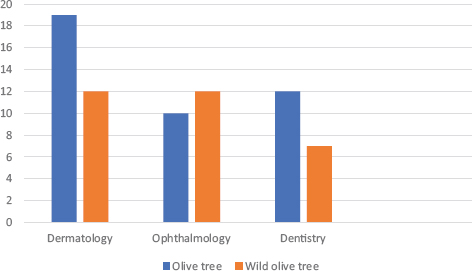
Figure 1. Frequency of olive and wild olive tree use. Source: own elaboration.
4.3. Plant parts used
As displayed in Figure 2, in general terms, the fruit is the most used (olive tree: 23; wild olive tree: 9), followed by the leaves (wild olive tree: 17; olive tree: 9), the gum resin (wild olive tree: 6; olive tree: 4), the green wood of the olive tree (5), and the pit of the olive tree fruit (1). More specifically, in dermatology the most commonly used part is the fruit of the olive tree (14), followed by the leaves of the wild olive tree (9) and the green wood of the olive tree (5). In dentistry, the leaves (olive tree: 7; wild olive tree: 3), and the fruit (olive tree: 4; wild olive tree: 3) were used. In ophthalmology, the most used parts are the leaves (wild olive tree: 8; olive tree: 2), the fruit (olive tree: 5; wild olive tree: 2) and the gum resin (olive tree: 3; wild olive tree: 2).
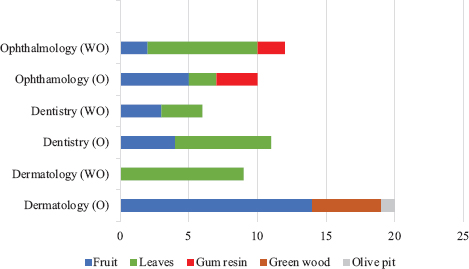
Figure 2. Frequency of use of plant parts in the three specialties, being olive tree (O) and wild olive tree (WO). Source: own elaboration.
4.4. Preparation and administration methods
Dermatological treatments are prescribed topically in the form of ointments (oil, moisture exuded by burning green wood, olive mill wastewater) and plasters (leaves, fruit). In dentistry it is prescribed mouthwashes (oil, olive brine, decoction of leaves), chewed leaves, and ointments on gums and decayed teeth (oil, decoction of leaves with grape sour, olive mill wastewater boiled with grape sour). In ophthalmology it was administered as eye drops (aged oil, new boiled oil, fruit of the olive tree, wild olive gum resin19, juice of leaves of wild olive tree, burnt fruit of the olive tree, leaves of wild olive tree, boiled olive mill wastewater).
4.5. Dermatological treatments
The great therapeutic potential of Olea europaea L. for the treatment of various dermatological conditions is the subject of numerous investigations (FILARDO et alii, 2024: 7, 10-11; PATITUCCI et alii, 2024; DE OLIVEIRA et alii, 2024: 403, 412; JANUSZEWSKI et alii, 2024: 1, 11; NUNES et alii, 2022; CARRARA et alii, 2021; VENDITTI et alii, 2013; CANO, MARTÍNEZ, 2009a: 219; CANO, MARTÍNEZ, 2009b: 302; BATTINELLI et alii, 2006). This potential is due to the antimicrobial, antioxidant, anti-inflammatory and emollient activity of polyphenols and terpene derivatives present in olive oil. The repair capacity of oleic acid and the antioxidants present in it endow it with a unique power to treat skin conditions (SÁNCHEZ-RODRÍGUEZ, MESA, 2018: 90-91). On the other hand, the ethanolic, methanolic and hydroalcoholic extracts present in the leaves of Olea europaea L. have antimicrobial effects, so they also have great potential for the treatment of dermatological diseases caused by different infectious agents, as is the case of Staphylococcus aureus (CRUGEIRA et alii, 2023; SELIM et alii, 2022: 17). This therapeutic potential of Olea europaea L. for dermatological treatments was already well known to Andalusi naturalists, who mention the emollient properties of olive oil and indicate in general terms that it softens, moisturizes and protects the skin from cold. However, these naturalists did not make a significant original contribution to the knowledge they inherited from the pre-Islamic period, since, out of a total of eighteen uses recorded by them, seventeen had already been mentioned previously by Dioscorides (1st c.), whom they quote recurrently in this respect.
One of the therapeutic uses of Olea europaea L. recorded in Andalusi texts are trichological treatments. Among them is the use of wild olive oil smeared as a hair tonic, which is said to strengthen weak hair, preventing hair loss and thickening it. In the 12th century Ibn Zuhr formulated a new tonic that was made by boiling sorrel (Melia azedarach L.) in water until it cracked a little. This decoction was then filtered and a similar amount of sweet olive oil was added and boiled again until the water was consumed. The potential effectiveness of these trichological treatments is validated nowadays by several research studies (AL-OWAMRI et alii, 2023; SHETH, DANDE, 2021: 8-9; KUMAR et alii, 2016: 40; HASHMI et alii, 2015: 10). It has been shown that emulsions containing olive oil —among other vegetable oils— have a positive effect on hair growth (KALONDA et alii, 2021). Likewise, there is a patented product to stimulate hair growth containing among other components hydroalcoholic extract of leaves of olive tree with 10 % oleuropein (LACHEVA, 2019: 13). Andalusi naturalists also recommend using Olea europaea L. for cosmetic purposes to delay graying of the hair and blacken it, for which they prescribe daily smearing it with wild olive oil (Ibn al-Bayṭār, Ibn Wāfid, al-Gāfiqī, al-Idrīsī).
Another interesting aspect is the use of Olea europaea L. as an anti-dandruff agent. Various ways of treating this condition are described in Andalusi texts (Ibn al-Bayṭār; Ibn Wāfid; al-Tignarī; al-Gāfiqī; al-Idrīsī). One of them consists of smearing the moisture oozing from the green wood when it burns (Ibn al-Bayṭār; Ibn Wāfid; al-Tignarī; al-Gāfiqī; al-Idrīsī); others prescribed a poultice of crushed olives, or smeared olive oil (Ibn al-Bayṭār; Ibn Wāfid; al-Gāfiqī). The potential effectiveness of these treatments is validated at present by some scientific publications that point out that olive oil is useful to temporarily remove dandruff flakes from the scalp, penetrating the scalp and moisturizing dry areas that may flake (SHETH, DANDE, 2021: 8-9; ZONDI, 2017).
Andalusi naturalists also prescribed the use of Olea europaea L. as a scabicide to treat scabies. In this regard they mention three different treatments consisting of smearing the affected area with the moisture that oozes from the green wood when it burns, applying wild olive oil, or gum resin of wild olive tree or olive tree. At present, there do not seem to be scientific studies that validate the potential effectiveness of this treatment applied to people, but there are studies that validate its effectiveness in veterinary treatments (MEJIA, 2015).
Another of the dermatological uses of Olea europaea L. most frequently described in Andalusi sources is its use as a vulnerary and healing agent for wounds, fistulas and burns, to remove scabs from wounds and pustules, to eliminate pockmarks and to conglutinate the scalp. The wide variety of medicinal preparations described in this respect gives an idea of the high degree of knowledge that Galenic-Islamic medicine and pharmacology reached in al-Andalus. However, it should not be forgotten that the Andalusi naturalists are absolutely indebted to Dioscorides on this point as well. For the elaboration of the plasters, they used boiled olive mill wastewater, gum resin of wild olive tree or olive tree, crushed leaves of wild olive tree and honey, water olives or green olives preserved in salt and water or in vinegar and crushed, crushed unripe olives, burned ripe black olives and the humidity that oozes the humid wood when it is burned. There is now ample scientific evidence to demonstrate that Olea europaea L. —and in particular the extract of its leaves — has a high potential as a vulnerary and healing agent for wounds and burns (DE OLIVEIRA et alii, 2024: 403; AL-OWAMRI et alii, 2023; RIVAS-GARCIA et alii, 2023: 198; ESMAEILI et alii, 2023: 19-20, 22; TORRECILLAS-BAENA et alii, 2023; AL-WARHI et alii, 2022; ELNAHAS et alii, 2021; POLJŠAK, KREFT, KOČEVAR, 2020: 257-258; WANITPHAKDEEDECHA et alii, 2020: 1662; LACHEVA, 2019: 12; MEJIA, 2015: 40-41; KOCA et alii, 2010; CANO et alii, 2002).
The Andalusi naturalists also prescribed the use of Olea europaea L. for the treatment of nail ailments. To make the ‘white spots on the nails’ disappear20 it was recommended to use the inner part of the pits of the olive mixed with fat and flour. Another treatment —which may have originated in al-Idrīsī (12th c.), the only author to mention it— prescribes using the moisture oozing from green wood when burned, mixed with olives. In relation to periungual ailments, a poultice of crushed wild olive leaves is mentioned in the texts to treat whitlow. The potential effectiveness of these nail and periungual treatments is not scientifically validated to date, although we have some ethnobotanical evidence of these uses in Italy (MAZZEI et alii, 2020: 6) and Turkey (AKBULUT, YILMAZ, 2022: 1899).
Another of the dermatological conditions treated with Olea europaea L. in Andalusi Galenic-Islamic medicine was erysipelas, for which a hot poultice based on crushed leaves of wild olive tree was prescribed. No scientific studies seem to have been published so far to validate the potential effectiveness of the treatment of this disease with Olea europaea L., although we have some ethnobotanical evidence of it in Italy (MAZZEI et alii, 2020: 6) and in Spain (BRITO DA SILVA et alii, 2018: 202).
Finally, it is worth mentioning the treatment of eczema by means of two ointments: the first based on the humidity that oozes from the green wood when it burns (Ibn al-Bayṭār; Ibn Wāfid; al-Tignarī; al-Gāfiqī); the second, based on gum resin of wild olive tree or olive tree dissolved in vinegar or not (al-Tignarī; Ibn Wāfid; al-Gāfiqī; Abū l-Jayr). The potential effectiveness of this treatment does not seem to have been scientifically validated so far. However, it should not be forgotten what has already been said about the antimicrobial properties of Olea europaea L., whose effectiveness has been validated in the treatment of dermatological conditions that have their origin in infectious processes, such as can sometimes be the case of the eczema.
4.6. Dental treatments
The therapeutic potential of Olea europaea L. in the field of dentistry was already known to Andalusi naturalists at least since the 9th century, when it is first mentioned by Ibn Ḥabīb. However, as it was the case in the field of dermatology, these naturalists also did not make a noteworthy original contribution to the knowledge they inherited from Dioscorides in that respect, since, out of a total of nine dental uses of Olea europaea L. recorded by them, eight had already been mentioned previously by the Greek naturalist, whom they cite recurrently.
One of the dental treatments of Olea europaea L. described in Andalusi texts is the treatment of caries. For this purpose, rinses are prescribed with a decoction of leaves of olive tree, a mouthwash that was also elaborated by boiling these leaves in syrup, although it is not specified which syrup it is. Nowadays, the potential effectiveness of this treatment is scientifically validated. Olive oil is rich in oleic acid and other phenolic compounds, thanks to which it is useful in combating Streptococcus mutans, bacterium normally found in the human oral cavity as part of dental plaque or biofilm, which is associated with the onset and development of dental caries and is the most influential agent in the development of this disease. In addition, the antimicrobial properties (antibacterial, antifungal and antiviral) of ethanolic, methanolic and hydroalcoholic extracts of the leaves of the olive tree (CRUGEIRA et alii, 2023; SELIM et alii, 2022: 17) also exhibit activity against Streptococcus mutans, and can be used as a natural preservative to prevent dental caries (GOLESTANNEJAD et alii, 2020; NARDI et alii, 2020; MATH, KATTIMANI, GAWALI, 2020; SINGH et alii, 2016) and for the manufacture of toothpastes (RAJHI et alii, 2021). On the other hand, Andalusi naturalists mention the use of Olea europaea L. for the extraction of decayed teeth, for which they prescribe smearing them with leaves of the olive tree, or olive mill wastewater, that were boiled with sour grape juice until this decoction acquired the consistency of honey. To date, the effectiveness of this treatment has not been scientifically validated.
Andalusi sources also speak of how to use Olea europaea L. to treat various periodontal diseases and symptoms and prescribe various treatments to strengthen gums and unstable teeth (Ibn Buklāriš; al-Tignarī; Ibn al-Bayṭār; Ibn Wāfid; al-Gāfiqī; al-Idrīsī). The most frequent are rinses with omphacine oil, or with the brine in which the so-called water olives were preserved, or with the oil of wild olive tree. For the same purpose, chewing leaves of wild olive tree or rinsing with a decoction of these leaves was also prescribed. Likewise, bleeding gums were treated by smearing them with olive oil or rinsing them with oil from the wild olive tree. For gums affected by ‘influx of humors’ they prescribed oil of wild olive tree heated and applied with a woolen cloth until the gums turned white, or rinsing with a decoction of leaves of olive tree. On the other hand, Ibn Ḥabīb recommends chewing the leaves of the olive tree to treat inflamed gums, a treatment that only he mentions, which leads one to believe that he would have been its precursor. Olea europaea L. was also used as a healing remedy to cure canker sores and oral ulcers, for which chewing the leaves of olive tree or wild olive tree was prescribed. The effectiveness of Olea europaea L. in the treatment of periodontal diseases is widely contrasted from the scientific point of view (DE OLIVEIRA et alii, 2024: 413; ÁLVAREZ-HERNÁNDEZ et alii, 2024; RIVAS-GARCIA et alii, 2023: 206; HERAWATI, PERTIWI, 2021; IWASAKI et alii, 2021; SHAH et alii, 2021; ZHANG et alii, 2021; CARROL et alii, 2020; HERAWATI, ANGGRAENI, DAMAYANTI, 2020; MATH, KATTIMANI, GAWALI, 2020; SHOUKHEBA, ALI, 2014; PATEL et alii, 2012).
Another dental use of Olea europaea L. described in Andalusi sources is the treatment of dental pain caused by caries or other causes. For this purpose it was prescribed to spread on the painful teeth olive mill wastewater boiled in a copper pot until it acquired the texture of honey or burned, mixed with honey, or with wine devoid of any additives, or with mulsum wine, or with vinegar, preparations that were considered more effective if they were left to age (Ibn al-Bayṭār; Ibn Wāfid; al-Gāfiqī; al-Tignarī; Abū l-Jayr). Currently, the analgesic properties of Olea europaea L. have been scientifically proven and we know that olive oil has analgesic, antipyretic and anti-inflammatory activity, acting in synergy with ibuprofen, whose properties it enhances (SÁNCHEZ-RODRÍGUEZ, MESA, 2018; MEJIA, 2015: 41). Also, the extract of the leaf of olive tree has analgesic properties (ESMAEILI-MAHANI et alii, 2010).
4.7. Ophthalmological treatments
As in the fields of dermatology and dentistry, the Andalusi naturalists found in Dioscorides their main source of knowledge about the different possibilities of therapeutic application of Olea europaea L. in the field of ophthalmology, since twelve of the sixteen uses recorded in the Andalusi sources had already been previously cited by him. These sources indicate in general terms that Olea europaea L. was an essential component of eye drops and other ophthalmic drugs, and mention two ad hoc preparations: juice of leaves of wild olive tree elaborated in the form of pills21 or the decoction of these leaves (al-Tignarī; Ibn Wāfid; al-Gāfiqī); olive mill wastewater boiled in a copper vessel until it acquired the texture of honey or burned, mixed with honey, or with wine devoid of any additives, or with mulsum wine, or with vinegar (Ibn al-Bayṭār; al-Tignarī; Ibn Wāfid; al-Gāfiqī). Likewise, they indicate that Olea europaea L. strengthens, sharpens and clears the eyesight, for which they prescribed several eye drops based on aged olive oil, or new olive oil boiled until it thickened like honey (Ibn al-Bayṭār; al-Tignarī; Ibn Wāfid; al-Gāfiqī; al-Idrīsī), or gum resin of wild olive tree or olive tree applied in the sinuses of the eyes (al-Tignarī; Ibn Wāfid; al-Gāfiqī; Abū l-Jayr), or this same gum resin ingested with food (Ibn al-Jaṭīb).
The therapeutic potential of Olea europaea L. for the treatment of some ocular diseases has been the subject of several scientific investigations that attribute it to its anti-inflammatory and antioxidant properties (SOLTANI et alii, 2022; KATSINAS, RODRÍGUEZ-ROJO, ENRÍQUEZ-DE-SALAMANCA, 2021; SANTANA-GARRIDO et alii, 2020: 2). We know that the hydroxytyrosol present in the fruit of Olea europaea L. protects the retina and ocular health from macular degeneration and glaucoma caused by oxidative stress (SANTANA-GARRIDO et alii, 2021; SÁNCHEZ-RODRÍGUEZ, MESA, 2018: 91). Likewise, it is very interesting to note that the potential effectiveness of ophthalmological treatments with olive mill wastewater recorded in Andalusi texts is scientifically validated nowadays. The polyphenols present in this product resulting from the olive oil production process possess antioxidant and anti-inflammatory properties, which can serve as a basis for developing new drugs for the treatment of inflammatory diseases of the ocular surface (DI MAURO et alii, 2019). On the other hand, this and other medicinal uses of olive mill wastewater by Andalusi naturalists present them as precursors of the integral use of Olea europaea L., which is today a subject of great importance —in the framework of what has been called recently circular economy— for researchers interested in exploring the therapeutic potential of this plant species (MALLAMACI et alii, 2021).
Among the different ophthalmological uses of Olea europaea L. mentioned by the Andalusi naturalists the treatment of cataracts stands out. They knew of the usefulness of Olea europaea L. to treat this disease at least since the 12th century, when al-Gāfiqī speaks of it for the first time in al-Andalus. The latter prescribes assiduously applying an eye drop based on blanched olive oil boiled in water over low heat and left to age for at least a year. It should be noted that in this case al-Gāfiqī’s source is al-Filāḥa al-nabaṭiyya [Nabataean agriculture] (10th c.), a work that collects many magical beliefs that were in circulation within the Chaldean agricultural community of Babylonia between the end of the Hellenistic era and the beginning of the Islamic era (FAHD, 1986; FAHD, 1977: 284, 369). Given the nature of this work, it could be thought a priori that the information it offers us is not relevant to the subject at hand. However, today there is scientific evidence on the usefulness of Olea europaea L. for the treatment of cataracts, an ailment for which there is still no pharmacological remedy. It has been demonstrated that the active components of olive leaf extracts serve to treat cataracts at the molecular level and have a preventive action (BADRIA, ELGAZAR, 2021: 454).
The use of Olea europaea L. to treat leukoma has also been recorded in the sources (Ibn al-Bayṭār; al-Gāfiqī). The earliest mention of this treatment in al-Andalus is due to al-Gāfiqī himself, who also reproduces on this point the information he found in the Nabataean Agriculture, where it is prescribed to assiduously apply an eye drop based on blanched olive oil boiled in water over low heat. Andalusi texts also mention the treatment of staphyloma, for which the juice of the leaves of the wild olive tree prepared in the form of pills, or a decoction of these leaves, was prescribed (al-Tignarī; Ibn Wāfid; al-Gāfiqī). In addition, al-Gāfiqī prescribes —again citing the Nabataean Agriculture— wild olive oil mixed with a little aged olive oil to treat pannus22. Apparently, no scientific research has been published so far about the potential effectiveness of treating leukoma, staphyloma, and pannus with Olea europaea L. However, one should not forget what has already been said about the anti-inflammatory and antioxidant properties of the extract of its leaf for the treatment of inflammatory diseases of the ocular surface. This, together with some ethnobotanical evidence on the use of Olea europaea L. in traditional medicine (HASHMI et alii, 2015: 10) and in ethnoveterinary practices to treat ocular infections (SINMEZ, ASLIM, YAŞAR, 2018: 80), allows glimpsing new perspectives of pharmacological research on its possible therapeutic potential for the treatment of those three eye diseases mentioned above.
Andalusi sources also mention the use of Olea europaea L. for the treatment of eye ulcers. To clean them an eye drop based on gum resin of wild olive tree or olive tree was prescribed (al-Tignarī; Abū l-Jayr); to cut the ‘flow of chronic moisture that flows’ to those ulcers it was prescribed to apply in the affected eye juice of leaves of wild olive tree elaborated in the form of pills or a decoction based on the same leaves (al-Tignarī). Although there is no scientific validation of the potential effectiveness of Olea europaea L. for the treatment of eye ulcers, it should be remembered its properties and use as a vulnerary and healing agent and for the treatment of infections of different etiology.
Finally, mention should be made of a remedy —recorded only by al-Idrīsī— to treat children’s strabismus with olive leaf juice administered nasally. The potential effectiveness of this treatment is not scientifically validated at present.
4.8. Olea europaea L. in the traditional medicine of al-Andalus?
The practice of Galenic-Islamic medicine coexisted in al-Andalus with the practice of traditional folk medicine. Although both forms of medicine constituted well differentiated spheres from a conceptual and social point of view, they were by no means watertight compartments, since it is plausible that traditional medicine was somehow permeable to the influence of galenic medicine23, while the latter incorporated some magical, credential, or other elements of the former (IBN ḤABĪB, 1992: 24-25). In this sense it is worth remembering that Dioscorides already declares to have written his De materia medica on the basis of “experience [...] rigorously investigating other [plants] from the consistent information of all and from the questions to the local inhabitants for each of them”24 (DIOSCÓRIDES, 2002: XV). It follows that the Greek naturalist integrated into his rational and scientific knowledge about plants elements of traditional folk medicine that circulated in the many areas of the Mediterranean that he traveled during his lifetime. These ethnobotanical practices and knowledge recorded among other naturalists by Dioscorides were received in al-Andalus in two ways: in the field of Galenic-Islamic medicine, mainly through the Arabic translation of De materia medica and other works; in the field of traditional medicine, as a result of the Islamic conquest of North Africa, the Iberian Peninsula and other areas of the Mediterranean from the end of the 7th century, which allowed the new conquerors to learn first-hand about those practices and knowledge that would have survived in that region from the time of Dioscorides until then.
As regards the specific case of Olea europaea L. —despite the lack of textual evidence and pending future contributions from archaeology and other related disciplines in this regard— there are some facts that allow us to think that in general terms in al-Andalus the therapeutic treatments recorded in the galenic medical-pharmacological texts had a correlate in the field of traditional folk medicine. This question is relevant to obtain an accurate picture of the true dimension of the therapeutic uses of Olea europaea L. in the context of Andalusi societies, beyond the strict framework of galenic treatments, whose degree of diffusion and real application at the social level we are not in a position to evaluate due to the lack of information on the subject.
We know that Olea europaea L. had a very prominent presence in the Andalusi agricultural landscape, of which it became one of its protagonists (GARCÍA-SÁNCHEZ, CARABAZA BRAVO, HERNÁNDEZ-BERMEJO, 2021: 353). In this sense, it should not be forgotten that the pre-Islamic populations of the Iberian Peninsula were already familiar with the wild olive tree and the olive tree, whose cultivation was extended by the Romans to Galicia, northern Portugal, areas of Castilla y León, La Rioja and Navarra (GARCÍA-SÁNCHEZ, CARABAZA BRAVO, HERNÁNDEZ-BERMEJO, 2021: 342). Moreover, the regular presence of Olea europaea L. in some of the agricultural areas of al-Andalus was accompanied by an abundant and rich geoponic literature on this species, which could also have contributed —in some way— to making its properties and medicinal uses better known among the Andalusi populations. Likewise, it is well known the wide diffusion and the great importance that olives and olive oil had in the diet of the Andalusi populations (GARCÍA, 1996), which leads us to think that in general terms it was an affordable product from the economic point of view, at least for a significant part of the people, especially in the olive-growing areas. In addition, the inhabitants of these areas would have had easy access —it can be assumed that with little or no economic cost— to the leaves, the olive mill wastewater, the gum resin and the humidity oozed by the green wood when burning, which were used as a base for a great number of treatments. From all these factors it could be concluded that the populations living in the olive-growing areas of al-Andalus were quite, or very, familiar with Olea europaea L., with its different products and —it can be inferred— with its bromatological and medicinal properties to a certain extent.
On the other hand, we have ethnobotanical evidence of various uses of Olea europaea L. in the field of traditional medicine in the Mediterranean region. The comparison of these uses with those recorded in the Andalusi sources shows the existence of very significant coincidences between them that can hardly be explained as mere coincidences and that, on the contrary, seem to indicate the existence of a close connection between both groups of uses. Unfortunately, we lack data that would allow us to completely understand this connection and its scope. However, it is possible to advance the hypothesis that the uses of Olea europaea L. in traditional Mediterranean medicine are —to a greater or lesser extent, in one way or another— a reflection, an indication, perhaps a witness that the uses recorded in the Andalusi sources —and hypothetically also present in the traditional medicine of al-Andalus— survived throughout the centuries in the Mediterranean region.
To illustrate this hypothesis we will focus on the field of dermatology, where these coincidences are particularly clear and numerous, since, out of a total of eighteen uses recorded in the Andalusi sources, sixteen have a correlate in the traditional medicine of the Mediterranean and other areas of the Islamic world. The use of olive oil to treat erysipelas is documented in Italian traditional medicine (MAZZEI et alii, 2020: 6) and in the western area of the province of Granada (Spain) (BRITO DA SILVA et alii, 2018: 202). Regarding trichological treatments, in the West Bank olive oil is currently among the most widely used traditional household remedies to repair damaged hair and to treat hair loss and baldness (ZAID et alii, 2017: 4, 6, 8). The latter utility is also documented in Persian traditional medicine (PARVIZI et alii, 2021: 177), in Morocco (AJJOUN et alii, 2022: 22), in Alexandria (Egypt) (ELANSARY et alii, 2015: 119) and in the Datça peninsula (Muğla, Turkey) (AKBULUT, YILMAZ, 2022: 1899). In Morocco, olive oil is used alone or with other oils as a brilliantine to give vigor, softness and shine to the hair, as well as an excipient to make ointments, liniments and hair oils (BELLAKHDAR, 2020: I, 280). In traditional Moroccan medicine, the leaves and olives are also used as anti-dandruff (AJJOUN et alii, 2022: 22). Likewise, the use of Olea europaea L. is documented in the Amhara region (Ethiopia) for the treatment of eczema (LULEKAL et alii, 2013: 8, 10), and the use of olive oil for the treatment of impetigo in Italian (MAZZEI et alii, 2020: 6) and Persian (PARVIZI et alii, 2021: 177) traditional medicine. The use of Olea europaea L. as a vulnerary and healing remedy is possibly one of the most widespread and frequent uses in the framework of Mediterranean ethnobotanical practices. Olive oil has been traditionally used to treat burns in Spain (BRITO DA SILVA et alii, 2018: 202), in Sardinia (LEONTI et alii, 2009: 262), in Morocco (AJJOUN et alii, 2022: 40) and in traditional Persian medicine (PARVIZI et alii, 2021: 177). In Castellón (Spain), an emulsion of leaves of wild olive tree or an ointment made with its flowers was used externally due to its antiseptic and vulnerary virtues to treat wounds (PARDO DE SANTAYANA et alii, 2018: 280). This use is also documented in the Datça peninsula (Muğla, Turkey) (AKBULUT, YILMAZ, 2022: 1899). Likewise, in the ethnoveterinary field, there is evidence of its use for the treatment of sunburn in Central Anatolia (SINMEZ, ASLIM, YAŞAR, 2018: 75) and as a vulnerary in the Turkish province of Giresun (GÜLER et alii, 2021: 58). On the other hand, the use of Olea europaea L. as a scabicide in ethnoveterinary practices in Central Anatolia and Sardinia has been documented (SINMEZ, ASLIM, YAŞAR, 2018: 75, 79). Finally, the treatment of whitlow with olive oil in Italian traditional medicine (MAZZEI et alii, 2020: 6) and of nail affections in general in the Datça peninsula (Muğla, Turkey) should be noted (AKBULUT, YILMAZ, 2022: 1899).
5. CONCLUSION
The results of the present research are relevant to better understand an important aspect of the history of health, hygiene and disease among the populations of al-Andalus, but they are also relevant from the perspective of historical ethnobotany, ethnopharmacology and ethnomedicine (EL-SEEDI et alii, 2019; EL-GHARBAOUI et alii, 2017; MARTÍNEZ-FRANCÉS et alii, 2015; DA SILVA et alii, 2014; HEINRICH et alii, 2006; GILANI, ATTA-UR-RAHMAN, 2005; HERNÁNDEZ, GARCÍA, 1998; HERNÁNDEZ, LORA-GONZÁLEZ, 1996). The information provided by the Andalusi texts complements the contribution of these disciplines to the knowledge of the history of the therapeutic uses of Olea europaea L. in the field of traditional medicine in the Mediterranean region. In turn, the contributions of these disciplines are of great value to scientists interested today in investigating the therapeutic potential of Olea europaea L., as these contributions suggest new lines of research on the multiple possibilities of medicinal use of this species with a view to the development of new drugs (BADRIA, ELGAZAR, 2021: 445; KALONDA et alii, 2021: 13).
Andalusi naturalists achieved a high degree of knowledge about the therapeutic potential and uses of Olea europaea L. in dermatology, dentistry and ophthalmology.
These naturalists anticipated in several centuries an important part of what science knows today about the multiple possibilities of therapeutic application of Olea europaea L.
The potential effectiveness of a very significant part of the treatments with Olea europaea L. recorded in the Andalusi sources is validated at present by numerous scientific investigations.
It is very plausible that Olea europaea L. would have been used in al-Andalus in the field of Galenic-Islamic medicine and in that of traditional folk medicine at the same time.
The numerous coincidences between the dermatological ethnobotanical uses of Olea europaea L. recorded in the context of traditional Mediterranean medicine and those recorded in Andalusi sources allow us to hypothesize that these uses have survived in the Mediterranean region throughout the centuries and up to the present day.
Notwithstanding the above, some dermatological and a significant part of the dental and ophthalmological uses of Olea europaea L. recorded in Andalusi sources have no correspondence in traditional Mediterranean medicine. Following EL-GHARBAOUI et alii (2017: 222), this could be interpreted as indicative of a loss of knowledge about the use of this plant species.
The effectiveness of a significant percentage of the therapeutic uses recorded in the Andalusi texts has not been validated so far by modern scientific literature. This, together with the loss of knowledge on the medicinal uses of Olea europaea L. mentioned above, may inspire new directions in research on other possible therapeutic applications of Olea europaea L. not explored so far.
Dioscorides’ De materia medica is by far the most recurrent and extensively cited work by the Andalusi naturalists when discussing almost all the therapeutic uses they record. References to Galen are very sporadic and brief, with only al-Idrīsī, Ibn al-Bayṭār and al-Gāfiqī mentioning him. The same is true of Paul of Aegina, cited only once by Ibn Wāfid. On the other hand, the Andalusi naturalists also occasionally report the authority of some eastern Arabic sources: Isḥāq Ibn cImrān and al-Ṭabarī (cited by al-Gāfiqī), Ibn Sīnā (cited by Ibn al-Bayṭār), al-Filāḥa al-nabaṭiyya (cited by Ibn al-Bayṭār and al-Gāfiqī).
The Andalusi naturalists do not seem to have made a really significant original contribution to the information they found in their sources. There are very few therapeutic uses mentioned by them that had not been previously mentioned by other pre-Islamic or eastern Arab scholars. They acted mainly as transmitters of the knowledge about the medicinal potential of Olea europaea L. that they inherited from the Greek and eastern Arab traditions, in general, and from Dioscorides, in particular.
The only treatments recorded in the sources that could have originated in al-Andalus are: leaves of olive tree chewed for inflamed gums and as a healing remedy (Ibn Ḥabīb); olive gum resin administered as eye drops to clear and sharpen eyesight (Ibn al-Jaṭīb); leaves of olive tree and wild olive tree as a substitute for zinc oxide in ophthalmological treatments; juice of the leaves of olive tree administered nasally for children’s strabismus (al-Idrīsī)25.
The use by the Andalusi naturalists of the olive mill wastewater, the leaves, and even the gum resin and the humidity that the green wood exudes when burned, presents these naturalists as precursors avant la lettre of the integral use of Olea europaea L., within the framework of what has recently been called circular economy.
From a prospective point of view, it is concluded that future research studies similar to the one presented here requires the collaboration of arabists, archaeologists, researchers in the field of ethnobotany and experts in medicine and pharmacology.
ACKNOWLEDGEMENTS
Our most sincere thanks to our dear friend and colleague Dr. Julia María Carabaza Bravo, for her valuable bibliographic guidance on the history of the olive tree in al-Andalus
REFERENCES
Primary sources
(AJ) ABŪ L-JAYR (2004-2010) [11th c.]: Kitābu ʻUmdati ṭṭabīb fī maʻrifati nnabāti likulli labīb [Libro base del médico para el conocimiento de la Botánica por todo experto] (edited and translated by J. Bustamante; F. Corriente; M. Tilmatine), 4 vols. Madrid: CSIC.
AL-ARBŪLĪ (2000) [14th-15th c.]: Un tratado nazarí sobre alimentos: al-Kalām calà l-agḏiya (edited and translated by Amador Díaz García). Almería: Ayuntamiento de Arboleas–Arráez editores.
(D) DIOSCRIDES (2002) [1st c.]: Plantas y remedios medicinales (De materia medica) libros I-II (translated by Manuela García Valdés). Barcelona: Editorial Gredos.
(GF) AL-GĀFIQĪ (2014) [12th c]: The Herbal of al-Ghafiqi: a facsimile edition of MS 7508 in the Osler Library of the History of Medicine, McGill University, with Critical Essays (edited by F. Jamil Ragep; Faith Wallis; Pamela Miller; Adam Gacek). Montreal–Kingston–London–Ithaca: McGill-Queen’s University Press.
(IB) IBN AL-BAYṬĀR (1987) [13th c.]: Traité des simples (translated by Lucien Leclerc), 3 vols. París: IMA.
(IB) IBN AL-BAYṬĀR (1992) [13th c.]: Kitāb al-Ŷāmic li-mufradāt al-adwiya wa-l-agḏiya. 2 vols. Bayrūt: Dār al-Kutub al-cIlmiyya.
(ID) AL-IDRĪSĪ (1995) [12th c.]: Al-Ŷāmic li-ṣifāt aštāt al-nabāt wa-ḍurūb anwā’ al-mufradāt [Facs. edn. by Fuat Sezgin], 2 vols. Frankfurt: Machad Ta’rīj al-cUlūm al-cArabiyya wa-l-Islāmiyya.
(IH) IBN ḤABĪB (1992) [9th c.]: Mujtaṣar fī l-ṭibb [Compendio de medicina] (edited and translated by Camilo Álvarez de Morales y Fernando Girón Irueste). Madrid: CSIC–ICMA.
(IJT) IBN AL-JAṬĪB (1972) [14th c.]: Kitāb cAmal man ṭabba li-man ḥabba (edited by María Concepción Vázquez de Benito). Salamanca: Universidad de Salamanca.
(IW) IBN WĀFID (1995) [11th c.]: Kitāb al-Adwiya al-mufrada [Libro de los medicamentos simples] (edited and translated by Luisa Fernanda Aguirre de Cárcer), 2 vols. Madrid: CSIC–AECI.
(IZ) IBN ZUHR (1992) [12th c.]: Kitāb al-Agḏiya [Tratado de los alimentos] (edited and translated by Expiración García Sánchez), 2 vols. Madrid: CSIC–ICMA.
(T) AL-ṬIGNARĪ (2006) [11th c.]: Kitāb Zuhrat al-bustān wa-nuzhat al-aḏhān [Esplendor del jardín y recreo de las mentes] (edited by Expiración García Sánchez). Madrid: CSIC.
References
AJJOUN, Mohammed; KHARCHOUFA, Loubna; MERROUNI, Ilyass Alami; ELACHOURI, Mostafa (2022): “Moroccan medicinal plants traditionally used for the treatment of skin diseases: From ethnobotany to clinical trials”. Journal of Ethnopharmacology, 297, 1-60. https://doi.org/10.1016/j.jep.2022.115532
AKBULUT, S.; YILMAZ, D. (2022): “Ethnobotanical knowledge on the plants used by people on the Datça peninsula (Muğla, Turkey)”. Applied ecology and environmental research, 20(2), 1887-1910. http://doi.org/10.15666/aeer/2002_18871910
AL-OWAMRI, Fatma Said Nasser; AL SIBAY, Lamya Saleh Abdullah; HEMADRI REDDY, Salla; HUSSAIN, Shaik Althaf; GANGIREDDYGARI, Venkata Subba Reddy (2023): “Phytochemical, Antioxidant, hair growth and wound healing property of Juniperus excelsa, Olea oleaster and Olea europaea”. Journal of King Saud University – Science, 35(2), 1-6. https://doi.org/10.1016/j.jksus.2022.102446
ÁLVAREZ-HERNÁNDEZ, José Carlos; FERNÁNDEZ-GONZÁLEZ, Olga Lis; MACHADO-CANO, María Julia; PÉREZ-GARCÍA, Lizandro Michel (2024): “Aceites vegetales ozonizados y sus propiedades antimicrobianas en el tratamiento de afecciones bucodentales”. Revista de Ciencias Médicas de Pinar del Río, 28(1), 1-8. Retrieved from http://scielo.sld.cu/pdf/rpr/v28n1/1561-3194-rpr-28-01-e6073.pdf
AL-WARHI, Tarfah; ELMAIDOMY, Abeer H.; MAHER, Sherif A.; ABU-BAIH, Dalia H.; SELIM, Sami; ALBQMI, Mha (…) ABDELMOHSEN, Usama Ramadan (2022): “The Wound-Healing Potential of Olea europaea L. Cv. Arbequina Leaves Extract: An Integrated In Vitro, In Silico, and In Vivo Investigation”. Metabolites, 12(9), 1-21. https://doi.org/10.3390/metabo12090791
BADRIA, Farid A.; ELGAZAR, Abdullah A. (2021): “Revealing the molecular mechanism of Olea europaea L. in treatment of cataract”, in Olives and Olive Oil in Health and Disease Prevention (Second Edition), 445-456. https://doi.org/10.1016/B978-0-12-819528-4.00008-0
BATTINELLI, L.; DANIELE, C.; CRISTIANI, M.; BISIGNANO, G.; SAIJA; A.; MAZZANTI, G. (2006): “In vitro antifungal and anti-elastase activity of some aliphatic aldehydes from Olea europaea L. fruit”. Phytomedicine: International Journal of Phytotherapy and Phytopharmacology, 13(8), 558–563. https://doi.org/10.1016/j.phymed.2005.09.009
BELLAKHDAR, Jamal (2020): La pharmacopée marocaine traditionnelle. Médecine arabe ancienne et savoirs populaires (2 vols). Casablanca: Éditions le Fennec.
BOLENS, Lucie (1996): “Riquezas de la tierra andaluza y primacía del aceite de oliva en la sociedad y civilización de al-Andalus (siglos X-XVI)”. Agricultura y Sociedad, 80-81, 181-21. Retrieved from https://www.mapa.gob.es/ministerio/pags/biblioteca/revistas/pdf_ays/a080_08.pdf
BRITO DA SILVA, Ivanise; DAMASCENO SÁ, Rafaela; CERQUEIRA MACÊDO, Danielle Patrícia; PERRELLI RANDAU, Karina (2018): “Use of Medicinal Plants in the Treatment of Erysipelas: A Review”. Pharmacognosy Reviews, 12(24), 200-207. https://doi.org/10.4103/phrev.phrev_5_18
BRUN, Jean-Pierre (2011-2012): “Los usos antiguos de los productos de la viña y el olivo y sus implicaciones arqueológicas”. Anales de Prehistoria y Arqueología, 27-28, 19-35. Retrieved from https://revistas.um.es/apa/article/view/229931
CANO, C.; BERMÚDEZ, V.; ESCALONA, D.; RESTREPO, H.; MENGUAL, E.; VILLARREAL, L. (…) VANEGAS, E. (2002): “La Fracción del Aceite de Oliva (FG-30), disminuye el área de la Quemadura con Costra Hipotrófica, escasa Secreción y Analgesia en Ratas con quemaduras de tercer grado”. Archivos Venezolanos de Farmacología y Terapéutica, 21(2), 156-161. Retrieved from http://ve.scielo.org/scielo.php?script=sci_arttext&pid=S0798-02642002000200004&lng=es&nrm=iso&tlng=es
CANO ORTIZ, Ana; MARTÍNEZ LOMBARDO, M.ª Carmen (2009a): “Cultivo de plantas medicinales en la provincia de Jaén”. Boletín Instituto de Estudios Giennenses, 200, 195-230. Retrieved from https://scholar.google.es/scholar?hl=es&as_sdt=0%2C5&q=Cultivo+de+plantas+medicinales+en+la+provincia+de+Jaén&btnG
CANO ORTIZ, Ana; MARTÍNEZ LOMBARDO, M.ª Carmen (2009b): “Algunas plantas medicinales de la comarca de Andújar: usos, aplicaciones, ecología y cultivo”. Boletín Instituto de Estudios Giennenses, 200, 289-322. Retrieved from https://scholar.google.es/scholar?hl=es&as_sdt=0%2C5&q=ALGUNAS+PLANTAS+MEDICINALES+DE+LA+COMARCA+DE+ANDÚJAR%3A+USOS%2C+APLICACIONES%2C+ECOLOGÍA+Y+CULTIVO&btnG
CARABAZA BRAVO, Julia María; GARCÍA SÁNCHEZ, Expiración; HERNÁNDEZ BERMEJO, Jacinto Esteban; JIMÉNEZ RAMÍREZ, Alfonso (2004): Árboles y arbustos en al-Andalus. Madrid: CSIC.
CARRARA, Morgane; KELLY, Mary T.; ROSO, Florence; LARROQUE, Michel; MARGOUT, Delphine (2021): “Potential of Olive Oil Mill Wastewater as a Source of Polyphenols for the Treatment of Skin Disorders: A Review”. Journal of Agricultural and Food Chemistry, 69(26), 7268-7284. https://doi.org/10.1021/acs.jafc.1c00296
CARROL, Danielle H.; CHASSAGNE, François; DETTWEILER, Micah; QUAVE, Cassandra L. (2020): “Antibacterial activity of plant species used for oral health against Porphyromonas gingivalis”. PLOS ONE, 15(10), 1-22. https://doi.org/10.1371/journal.pone.0239316
CORRIENTE, Federico (1977): Diccionario árabe–español. Madrid: ICMA.
CORTÉS, Julio (2008): Diccionario de árabe culto moderno: Árabe – Español. Madrid: Editorial Gredos.
CRUGEIRA, Pedro J. L.; ALMEIDA, Heloisa H. L.; TEIXEIRA, Liandra G.; BARREIRO, M. Filomena (2023): “Photodynamic inactivation of Staphylococcus aureus by ecological antibacterial solutions associating LED (ʎ 450 ± 10 nm) with curcumin and olive leaf extracts”. Journal of Photochemistry and Photobiology B: Biology, 238, 1-7. https://doi.org/10.1016/j.jphotobiol.2022.112626
DA SILVA, Taline Cristina; MUNIZ MEDEIROS, Patrícia; LOZANO BALCAZÁR, Alejandro; SOUSA DE ARAÚJO, Thiago Antônio; PIRONDO, Analia; TRINDADE MEDEIROS, Maria Franco (2014): “Historical ethnobotany: an overview of selected studies”. Ethnobiology and Conservation, 3(4), 1-12. https://doi.org/101545/ec2014-6-3.4-1-12
DE LA TORRE ROBLES, Amalia María (2015): Aceite de oliva virgen. Calidad nutricional y propiedades saludables (Tesis doctoral). Granada: Universidad de Granada. Retreived from https://hera.ugr.es/tesisugr/25937145.pdf
DE OLIVEIRA, Natália M.; MACHADO, Jorge; CHÉU, María Helena; LÓPEZ, Lara; CRIADO, María Begoña (2024): “Therapeutic Potential of Olive Leaf Extracts: A Comprehensive Review”. Applied Biosciences, 3(3), 392-425. https://doi.org/10.3390/applbiosci3030026
DICCIONARIO TERMINOLÓGICO DE CIENCIAS MÉDICAS (1980). Barcelona [etc.]: Salvat editores [reimpresión de la edición de 1974].
DI MAURO, Maria Domenica; FAVA, Giovanni; SPAMPINATO, Marcella; ALEO, Danilo; MELILLI, Barbara; SAITA, Maria Grazia (…) D’ANTONA, Nicola (2019): “Polyphenolic Fraction from Olive Mill Wastewater: Scale-Up and in Vitro Studies for Ophthalmic Nutraceutical Applications”. Antioxidants, 8(462), 1-21. https://doi.org/10.3390/antiox8100462
DOZY, Reinhart (1981): Supplément aux dictionnaires arabes (2 vols). Beyrouth: Librairie du Liban [facs. edn. of 1881, Leyde: E. J. Brill].
DURÁN, J. M.; ALVARADO, M.; GONZÁLEZ, M. I.; JIMÉNEZ, N.; SÁNCHEZ, A.; SERRANO, A. (2004): “Control del taladro amarillo, Zeuzera pyrina L. (Lepidoptera, Cossidae), en olivar mediante confusión sexual”. Boletín de Sanidad Vegetal Plagas, 30, 451-462. Retrieved from https://www.researchgate.net/profile/Armand-Sanchez/publication/28160568_Control_del_taladro_amarillo_Zeuzera_pyrina_L_Lepidoptera_Cossidae_en_olivar_mediante_confusion_sexual/links/56810c3108aebccc4e0b6246/Control-del-taladro-amarillo-Zeuzera-pyrina-L-Lepidoptera-Cossidae-en-olivar-mediante-confusion-sexual.pdf
ELANSARY, Hosam O.; MAHMOUD, Eman A.; SHOKRALLA, Shadi; YESSOUFOU, Kowiyou (2015): “Diversity of Plants, Traditional Knowledge, and Practices in Local Cosmetics: A Case Study from Alexandria, Egypt”. Economic Botany, 69(2), 114–126. https://doi.org/10.1007/s12231-015-9308-9
EL-GHARBAOUI, Asmae; BENÍTEZ, GONZÁLEZ-TEJEROSA, M. Reyes; MOLERO-MESA, Joaquín; MERZOUKI, Abderrahmane (2017): “Comparison of Lamiaceae medicinal uses in eastern Morocco and eastern Andalusia and in Ibn al-Baytar’s Compendium of Simple Medicaments (13th century CE)”. Journal of Ethnopharmacology, 202, 208-224. https://doi.org/10.1016/j.jep.2017.03.014
EL-KHOLY, Mohamed; AVANZATO, Damiano; CABALLERO, Juan M.; CHARTZOULAKIS, Kostas S.; VITA SERMAN; Facundo; PERRI, Enzo (eds.) (2012): Following olive footprints (Olea europaea L.). Cultivation and Culture, Folklore and History, Tradition and Uses. Córdoba: AARINENA–IOC–ISHS.
ELNAHAS, Ashraf Reem; ELWAKIL, Bassma Hassan; ELSHEWEMI, Salma Sameh; OLAMA, Zakia Ahmed (2021): “Egyptian Olea europaea leaves bioactive extract: Antibacterial and wound healing activity in normal and diabetic rats”. Journal of Traditional and Complementary Medicine, 11(5), 427-434. https://doi.org/10.1016/j.jtcme.2021.02.008
EL-SEEDI, Hesham R.; KHALIFA, Shaden A. M.; YOSRI, Nermeen; KHATIB, Alfi; CHENG, Lei; SAEED, Aamer (…) VERPOORTE, Rob (2019): “Plants mentioned in the Islamic Scriptures (Holy Qur’ân and Ahadith): Traditional uses and medicinal importance in contemporary times”. Journal of Ethnopharmacology, 243, 1-18. https://doi.org/10.1016/j.jep.2019.112007
ESMAEILI, Alireza; PARSAEI, Pouya; NAZER, Mohammadreza; BAKHTIARI, Ronak; MIHBERESI, Halleh; BOLDAJI, Hossein Dafian (2023): “Phytotherapy in Burn Wound Healing: A Review of Native Iranian Medicinal Plants”. Journal of Chemical Health Risks, 13(1), 17-29. https://doi.org/10.22034/jchr.2021.1932188.1322
ESMAEILI-MAHANI, Saeed; REZAEEZADEH-ROUKERD, Maryam; ESMAEILPOUR, Khadije; ABBASNEJAD, Mehdi; RASOULIAN, Bahram; SHEIBANI, Vahid (…) HAJIALIZADEH, Zahra (2010): “Olive (Olea europaea L.) leaf extract elicits antinociceptive activity, potentiates morphine analgesia and suppresses morphine hyperalgesia in rats”. Journal of ethnopharmacology, 132(1), 200-205. https://doi.org/10.1016/j.jep.2010.08.013
FAHD, Toufy (1977): “Matériaux pour l’histoire de l’agriculture en Irak: al-Filâha n-Nabatiyya” en Handbuch der Orientalistik, I. Abt., 6. Band, 6. Abschn., Teil I., pp. 276-377. Leyde – Cologne: E. J. Brill. [Repr. in Toufic Fahd (ed.). L’Agriculture Nabatéenne. Traduction en arabe attribuée à Abū Bakr Aḥmad b. Aḥmad al-Kasdānī connu sous le nom d’IBN WAḤŠIYYA (IVe/Xe siècle), T. III, pp. 175-287. Damas: Institut Français d’Études Arabes de Damas.
FAHD, Toufic (1986): “Ibn Waḥshiyya”, in B. Lewis, V. L. Menage, Ch. Pellat, J. Schacht (eds.), The Encyclopaedia of Islam, III, pp. 963-965. Leiden-London: E. J. Brill–Luzac & Co.
FILARDO, Simone; ROBERTO, Mattioli; DI RISOLA, Daniel; MOSCA, Luciana; DI PIETRO, Marisa; ROSA, Sessa (2024): “Olea europaea L-derived secoiridoids: Beneficial health effects and potential therapeutic approaches”. Pharmacology and Therapeutics, 254, 1-17. https://doi.org/10.1016/j.pharmthera.2024.108595
GARCÍA SÁNCHEZ, Expiración (1996): “El consumo de aceite de oliva y otras grasas vegetales en al-Andalus”, in La Mediterrània, àrea de convergència de sistemes alimentaris (segles V-XVIII). XIV Jornades d’Estudis Històrics Locals: Palma... 1995. Palma de Mallorca: Institut d’Estudis Baleàrics, pp. 15-38. Retrieved from https://digital.csic.es/bitstream/10261/187057/1/garcia_sanchez_aceite_oliva.pdf
GARCÍA-SÁNCHEZ, Expiración; CARABAZA BRAVO, Julia María; HERNÁNDEZ-BERMEJO, J. Esteban (2021): Flora agrícola y forestal de al-Andalus. Volumen II: Especies leñosas. Madrid: Ministerio de Agricultura, Pesca y Alimentación.
GILANI, Anwarul Hassan; ATTA-UR-RAHMAN (2005): “Trends in ethnopharmacology”. Journal of Ethnopharmacology, 100(1–2), 43-49. https://doi.org/10.1016/j.jep.2005.06.001
GOLESTANNEJAD, Zahra; KHOZEIMEH, Faezeh; ABTAHI, Reihaneh; ZAREI, Zahra; SADEGHALBANAEI, Leila; SADEGHIAN, Rastin (2020): “Inhibitory effects of ethanolic, methanolic, and hydroalcoholic extracts of olive (Olea europaea) leaf on growth, acid production, and adhesion of Streptococcus mutans”. Dent Res J (Isfahan), 17(3), 179–185. Retrieved from https://pubmed.ncbi.nlm.nih.gov/32774794/
GUÍA DE RECONOCIMIENTO DE PLAGAS, OLIVO (Olea europaea) (2005): Gobierno de Chile. Servicio Agrícola y Ganadero. División protección agrícola. Vigilancia agrícola (eds.), GR-01/05. 1. Retrieved from https://www2.sag.gob.cl/agricola/vigilancia/plagasOlivo_05.pdf
GÜLER, Osman; POLAT, Rıdvan; KARAKÖSE, Mustafa; ÇAKILCIOĞLU, Uğur; AKBULUT, Sefa (2021): “An ethnoveterinary study on plants used for the treatment of livestock diseases in the province of Giresun (Turkey)”; South African Journal of Botany, 142, 53-62. https://doi.org/10.1016/j.sajb.2021.06.003
HASHMI, Muhammad Ali; KHAN, Afsar; HANIF, Muhammad; FAROOQ, Umar; PERVEEN, Shagufta (2015): “Traditional Uses, Phytochemistry, and Pharmacology of Olea europaea (Olive)”. Evidence-Based Complementary and Alternative Medicine, 1-29. https://doi.org/10.1155/2015/541591
HEINRICH, Michael; KUFER, Johanna; LEONTI, Marco; PARDO-DE-SANTAYANA, Manuel (2006): “Ethnobotany and ethnopharmacology—Interdisciplinary links with the historical sciences”. Journal of Ethnopharmacology, 107(2), 157-160. https://doi.org/10.1016/j.jep.2006.05.035
HERAWATI, Dahlia; ANGGRAENI, Deassy; DAMAYANTI, Ariska Ratih (2020): “Effect of Ozonated Olive Oil in Topical Application towards Osteoblast Number and Angiogenesis of Alveolar Bone in Periodontitis Healing Process (in vivo study in Sprague dawley Rats)”. Traditional Medicine Journal, 25(1), 59-66. https://doi.org/10.22146/mot.55176
HERAWATI, Dahlia; PERTIWI, Etty Cahya (2021): “Application of Ozonated Olive Oil as Adjunctive Therapy After Periodontal Pocket Curettage Towards Collagen Density of Alveolar Bone in Periodontitis Healing Process (In Vivo Study with Sprague dawley)”. Traditional Medicine Journal, 26(2), 129-135. https://doi.org/10.22146/mot.65984
HERNÁNDEZ BERMEJO, Jacinto Esteban; GARCÍA SÁNCHEZ, Expiración (1998): “Economic Botany and Ethnobotany in al-Andalus (Iberian Peninsula: Tenth-fifteenth Centuries), an Unknown Heritage of Mankind”. Economic Botany, 52(1), 15-26. Retrieved from https://link.springer.com/content/pdf/10.1007/BF02861292.pdf
HERNÁNDEZ BERMEJO, Jacinto Esteban; LORA-GONZÁLEZ, Ángel (1996): “La documentación histórica y bibliográfica como fuente de información y evidencia etnobotánica”. Monografías del Jardín Botánico de Córdoba, 3, 39-50. Retrieved from LaDocumentacionHistoricaYBibliograficaComoFuenteDe-187825.pdf
IWASAKI, Masanori; ENNIBI, Oum Keltoum; BOUZIANE, Amal; ERRAJI, Samir; LAKHDAR, Leila; RHISSASSI, Meryem; ANSAI, Toshihiro (…) MIYAZAKI, Hideo (2021): “Association between periodontitis and the Mediterranean diet in young Moroccan individuals”. Journal of Periodontal Research, 56(2), 408-414. https://doi.org/10.1111/jre.12833
JANUSZEWSKI, Jacek; FORMA, Alicja; ZEMBALA, Julita; FLIEGER, Mitcha; TYCZYŃSKA, Magdalena; CURTIS DRING, James; DUDEK, Iga (…) BAJ, Jacek (2024): “Nutritional Supplements for Skin Health—A Review of What Should Be Chosen and Why”. Medicina 60(68), 1-27. https://doi.org/10.3390/medicina60010068
KALONDA MUTOMBO, Emery; MBAYO KITAMBALA, Marsi; NGAMBI NYAMBI, Victor; MBAYO MUKALA, Joseph; NUMBI WA ILUNGA, Evodie; KALONJI NDUMBA, Jean-Baptiste (…) LUMBU SIMBI, Jean-Baptiste (2021): “Emulsion formulation assays based on natural substances stimulating the hair growth and evaluation of its biological activity”. World Journal of Advanced Research and Reviews, 10(3), 12-24. https://doi.org/10.30574/wjarr.2021.10.3.0119
KAPELLAKIS, Iosif Emm.; TSAGARAKIS, Konstantinos. P.; CROWTHER, John C. (2008): “Olive oil history, production and by-product management”, Reviews in Environmental Sciences and Bio/Technology, 7, pp. 1–26. https://doi.org/10.1007/s11157-007-9120-9
KATSINAS, Nikolaos; RODRÍGUEZ-ROJO, Soraya; ENRÍQUEZ-DE-SALAMANCA, Amalia (2021): “Olive Pomace Phenolic Compounds and Extracts Can Inhibit Inflammatory- and Oxidative-Related Diseases of Human Ocular Surface Epithelium”. Antioxidants, 10, 1-25. https://doi.org/10.3390/antiox10071150
KAZIMIRSKI, A. de Biberstein (n. d.): Dictionnaire arabe-français, 2 vols. Beyrouth: Librairie du Liban, [Facs. edn. Of 1860. Paris: Maisonneuve et Cie].
KOCA, Ufuk; PESIN SÜNTAR, Ipek; KUPELI AKKOL, Esra; YILMAZER, Demet; ALPER, Murat (2010): “Wound Repair Potential of Olea europaea L. Leaf Extracts Revealed by In Vivo Experimental Models and Comparative Evaluation of the Extracts’ Antioxidant Activity”. Journal of Medicinal Food, 1-20. https://doi.org/10.1089/jmf.2010.0039
KUMAR, Davinder; RAJORA, Gajendra; PARKASH, Om; HIMANSHU, Mamta; ANTIL, Virender; KUMAR, Virender (2016): “Herbal cosmetics: An overview”. International Journal of Advanced Scientific Research, 1(4), 36-41. Retrieved from https://www.researchgate.net/publication/315671169_Herbal_cosmetics_An_overview
LACHEVA, Ginka Ilieva (2019): Hoja de Olivo: Interés Farmacológico y Patentes de sus Principios Activos [Undergraduate thesis project]. Madrid: Facultad de Farmacia de la Universidad Complutense. Retrieved from http://147.96.70.122/Web/TFG/TFG/Memoria/GINKA%20ILIEVA%20LACHEVA.pdf
LANE, Edward William (1980): An Arabic – English Lexicon (8 vols). Beirut: Librairie du Liban [Facs. edn. of 1863-1893]. London–Edinburgh: Williams and Norgate.
LEONTI, Marco; CASU, Laura; SANNA, Francesca; BONSIGNORE, Leonardo (2009): “A comparison of medicinal plant use in Sardinia and Sicily–De Materia Medica revisited?”. Journal of Ethnopharmacology, 121, 255–267. https://doi.org/10.1016/j.jep.2008.10.027
LOZANO CÁMARA, Indalecio; NAVARRO GARCÍA, María Ángeles (2023): “Usos medicinales del olivo y el acebuche en al-Andalus (ss. IX-XV)”. eHumanista: IVITRA, 23, 393-419. Retrieved from https://www.ehumanista.ucsb.edu/sites/default/files/sitefiles/ivitra/volume23/4.1.%20Lozano.pdf
LULEKAL, Ermias; ASFAW, Zemede; KELBESSA, Ensermu; VAN DAMME, Patrick (2013): “Ethnomedicinal study of plants used for human ailments in Ankober District, North Shewa Zone, Amhara Region, Ethiopia”. Journal of Ethnobiology and Ethnomedicine, 9(63), 1-13. https://doi.org/10.1186/1746-4269-9-63
MALLAMACI, Rosanna; BUDRIESI, Roberta; CLODOVEO, Maria Lisa; BIOTTI, Giulia; MICUCCI, Matteo; RAGUSA, Andrea (…) FRANCHINI, Carlo (2021): “Olive Tree in Circular Economy as a Source of Secondary Metabolites Active for Human and Animal Health Beyond Oxidative Stress and Inflammation”. Molecules, 26, 2-23. https://doi.org/10.3390/molecules26041072
MARTÍNEZ-FRANCÉS, V.; RIVERA, D.; HEINRICH, M.; OBÓN, C.; RÍOS, S. (2015): “An ethnopharmacological and historical analysis of “Dictamnus”, a European traditional herbal medicine”. Journal of Ethnopharmacology, 175, 390-406. https://doi.org/10.1016/j.jep.2015.09.011
MATAIX VERDÚ, Francisco José; BARBANCHO CISNEROS, Francisco (2007): “El aceite de oliva en la alimentación mediterránea”, in I Congreso de la Cultura del Olivo, pp. 707-761. Jaén: Universidad de Jaén. Retrieved from https://dialnet.unirioja.es/servlet/articulo?codigo=2523870
MATH, M. V.; KATTIMANI, Y. R.; GAWALI, S. R. (2020): “Olive oil for dental caries”. British Dental Journal, 229(2), 73-74. https://doi.org/10.1038/s41415-020-1944-5
MAZZEI, Rosalucia; LEONTI, Marco; SPADAFORA, Santo; PATITUCCIA, Alessandra; TAGARELLI, Giuseppe (2020): “A review of the antimicrobial potential of herbal drugs used in popular Italian medicine (1850s–1950s) to treat bacterial skin diseases”. Journal of Ethnopharmacology, 250, 1-27. https://doi.org/10.1016/j.jep.2019.112443
MEJIA RECINOS, Denise Ivette (2015): Evaluación del efecto de dos concentraciones de ajo (Allium sativum) con aceite de oliva (Olea europaea) administrado por vía tópica, para el control de Sarcoptes scabiei en perros (Canis lupus familiaris) infestados naturalmente, provenientes de diferentes refugios de la ciudad de Guatemala (Undergraduate thesis project). Guatemala: Universidad de San Carlos de Guatemala. Retrieved from http://www.repositorio.usac.edu.gt/736/1/Tesis%20Med%20Vet%20Denisse%20.pdf
NARDI, Gianna Maria; FAIS, Sara; CASU, Cinzia; MAZUR, Marta; DI GIORGIO, Roberto; GRASSI, Roberta (…) ORRÙ, Germano (2020): “Mouthwash Based on Ozonated Olive Oil in Caries Prevention: A Preliminary In-Vitro Study”. International Journal of Environmental Research and Public Health, 17, 1-9. https://doi.org/10.3390/ijerph17239106
NAVARRO GARCÍA, M. Ángeles (1996): “Clasificación temática de las fuentes del Kitāb al-Ŷāmic”, in C. Álvarez de Morales (ed.), Ciencias de la naturaleza en al-Andalus. Textos y estudios IV, pp. 215-234. Granada: CSIC–EEAA.
NUNES, Andreia; MARTO, Joana; GONÇALVES, Lidia; MARTINS, Ana Margarida; FRAGA, Carmo; RIBEIRO, Helena Margarida (2022): “Potential therapeutic of olive oil industry by-products in skin health: a review”. International Journal of Food Science and Technology, 57, 173-187. https://doi.org/10.1111/ijfs.15384
PARDO DE SANTAYANA, Manuel; MORALES, Ramón; TARDÍO, Javier; ACEITUNO, Laura; MOLINA, María (eds.) (2018): Inventario español de los usos tradicionales relativos a la biodiversidad. SEGUNDA FASE [Tomo 3]: Fichas. Madrid: Ministerio de Agricultura y Pesca, Alimentación y Medio ambiente. Retrieved from https://www.miteco.gob.es/content/dam/miteco/es/biodiversidad/temas/inventarios-nacionales/ict_2018_tomo3web_tcm30-448314.pdf
PARVIZI, Mohammad Mahdi; SAKI, Maryam; HANDJANI, Farhad; HEYDARI, Mojtaba (2021): “Olive in traditional Persian medicine: an overview”, in V. R. Preedy, R. R. Watson (eds.), Olives and Olive Oil in Health and Disease Prevention (Second Edition), 175-192. Amsterdam: Academic Press. https://doi.org/10.1016/B978-0-12-819528-4.00002-X
PATEL, P. V.; PATEL, A.; KUMAR, S.; HOLMES, J. C. (2012): “Effect of subgingival application of topical ozonated olive oil in the treatment of chronic periodontitis: a randomized, controlled, double blind, clinical and microbiological study”. Minerva Stomatologica, 61(9), 381-398. Retrieved from https://europepmc.org/article/med/22976566
PATITUCCI, Francesco; MOTTA, Marisa Francesca; DATTILO, Marco; MALIVINDI, Rocco; LEONETTI, Adele Elisabetta, PEZZI, Giuseppe (…) PUOCI, Francesco (2024): “3D-Printed Alginate/Pectin-Based Patches Loaded with Olive Leaf Extracts for Wound Healing Applications: Development, Characterization and In Vitro Evaluation of Biological Properties”. Pharmaceutics, 16(1), 1-26. https://doi.org/10.3390/pharmaceutics16010099
PÉREZ JIMÉNEZ, Francisco (1999): “El aceite de oliva: producto saludable desde la época califal al umbral del nuevo milenio”. Boletín de la Real Academia de Córdoba de Ciencias, Bellas Letras y Nobles Artes, 137, 301-307. Retrieved from https://helvia.uco.es/bitstream/handle/10396/6835/braco137_1999_4.pdf?sequence=1
POLJŠAK, Nina; KREFT, Samo; KOČEVAR GLAVAČ, Nina (2020): “Vegetable butters and oils in skin wound healing: Scientific evidence for new opportunities in dermatology”. Phytotherapy Research, 34, 254-269. https://doi.org/10.1002/ptr.6524
RAJHI, Haifa; BARDI, Anouar; DAKHLI, Amira; ARTHAOUI, Siwar; SACRAFI, Najah; BOUSNINA, Habib; ABICHOU, Mounir (2021): “Valorization of olive by-products in new biobased toothpaste: health and sustainability advantages”. Biomass Conversion and Biorefinery, 13, 10275-10284. https://doi.org/10.1007/s13399-021-01905-z
RIVAS-GARCÍA, Lorenzo; NAVARRO-HORTAL, María D.; ROMERO-MÁRQUEZ, José M.; LLOPIS, Juan, FORBES-HERNÁNDEZ, Tamara Y. (…) SÁNCHEZ-GONZÁLEZ, Cristina (2023): “Chapter Six-, Valorization of Olea europaea and olive oil processing by-products/wastes”, in E. Capanoglu, M. D. Navarro-Hortal, T. Y. Forbes-Hernández, Maurizio Battino (eds.), Advances in Food and Nutrition Research, 107, pp. 193-212. Cambridge, United States–San Diego–Oxford–London: Academic Press. https://doi.org/10.1016/bs.afnr.2023.07.001
RODRÍGUEZ-ARIZA, María Oliva; MONTES MOYA, Eva (2007): “Origen y domesticación del olivo en Andalucía (España) a partir de los hallazgos arqueológicos de Olea Europea L.”, in I Congreso de la cultura del olivo, pp. 221-243. Jaén: Instituto de Estudios Gienneses. Retrieved from https://scholar.google.es/scholar?hl=es&as_sdt=0%2C5&q=Origen+y+domesticación+del+olivo+&btnG
SÁNCHEZ-RODRÍGUEZ, Estefanía; MESA, María D. (2018): “Compuestos bioactivos del aceite de oliva virgen”. Nutrición Clínica en Medicina, XII(2), 80-94. https://doi.org/10.7400/NCM.2018.12.2.5064
SANTANA-GARRIDO, Álvaro; REYES-GOYA, Claudia; MILLA-NAVARRO, Santiago; DE LA VILLA, Pedro; ANDRÉ, Helder; VÁZQUEZ, Carmen M.; MATE, Alfonso (2021): “Anti-Inflammatory Action of Dietary Wild Olive (Acebuche) Oil in the Retina of Hypertensive Mice”. Foods, 10, 1-18. https://doi.org/10.3390/foods10091993
SANTANA-GARRIDO, Álvaro; REYES-GOYA, Claudia; PÉREZ-CAMINO, M. Carmen; ANDRÉ, Helder; MATE, Alfonso; VÁZQUEZ, Carmen M. (2020): “Retinoprotective Effect of Wild Olive (Acebuche) Oil-Enriched Diet against Ocular Oxidative Stress Induced by Arterial Hypertension”. Antioxidants, 9(885), 1-32. https://doi.org/10.3390/antiox9090885
SELIM, Sami; ALBQMI, Mha; AL-SANEA, Mohammad M.; ALNUSAIRE, Taghreed S.; ALMUHAYAWI, Mohammed S.; ABDALGAWAD, Hamada (…) EL-SAADONY, Mohamed T. (2022): “Valorizing the usage of olive leaves, bioactive compounds, biological activities, and food applications: A comprehensive review”. Frontiers in Nutrition, 9, 1-27. https://doi.org/10.3389/fnut.2022.1008349
SHAH, Rohit; CHAVAN, Rishi; MITRA, Dipika K.; PRITHYANI, Saurabh (2021): “Efficacy of Ozone Oil in treating Chronic Periodontitis as an Adjunct to Scaling and Root Planning as compared to Scaling and Root Planning alone”. JIDA – Journal of Indian Dental Association, 15(1), 20-25. Retrieved from https://publication.ida.org.in/ArticleDocument/2d5c34d6-4a0e-4763-aaab-24e8d67ec67c.pdf
SHETH, Umang; DANDE, Payal (2021): “Pityriasis capitis: Causes, pathophysiology, current modalities, and future approach”. Journal of Cosmetic Dermatology, 20(1), 35–47. https://doi.org/10.1111/jocd.13488
SHOUKHEBA, M. Y. M.; ALI, SH. A. (2014): “The effects of subgingival application of ozonated olive oil gel in patient with localized aggressive periodontitis. A clinical and bacteriological study”. Tanta Dental Journal, 11, 63-73. https://doi.org/10.1016/j.tdj.2014.04.001
SINGH, Ricky; BAFNA, Harshal; KALANTHARAKATH, Thanveer; CG, Ajithkrishnan & KALYAN, Pulkit (2016): “An In-vitro Evaluation of the Effect of Anti-candidal Herb (Olive) on Streptococcus Mutans”. Indian Journal of Oral Health Research, 1(1), 20-23. https://doi.org/10.4103/2393-8692.158905
SINMEZ, Çağrı Çağlar; ASLIM, Gökhan; YAŞAR, Aşkın (2018): “An Ethnoveterinary Study on Plants Used in the Treatment of Dermatological Diseases in Central Anatolia, Turkey”. Journal of Complementary Medicine Research, 8(2), 71–84. https://doi.org/10.5455/jcmr.20180510044255
SOLTANI, Motahareh; KARAMI-MOHAJERI, Somayyeh; ALLAHDADI, Reza; PARIZI, Mohammad Sohrobiyan (2022): “Olive improves eyesight: a study of the Qur’anic evidence and literature”. International Journal of Early Childhood Special Education (INT-JECSE), 14(3), 4158-4163. https://doi.org/10.9756/INT-JECSE/V14I3.531
THE UNIFIED MEDICAL DICTIONARY (English-Arabic-French (1983)). Switzerland: Medlevant AG – Council of Arab Ministers of Health–W.H.O.–Arab Medical Union–ALECSO.
TORRECILLAS-BAENA, Bárbara; CAMACHO-CARDENOSA, Marta; CARMONA-LUQUE, María Dolores; DORADO, Gabriel; BERENGUER-PÉREZ, Miriam, QUESADA-GÓMEZ, José Manuel (…) CASADO-DÍAZ, Antonio (2023): “Comparative Study of the Efficacy of EHO-85, a Hydrogel Containing Olive Tree (Olea europaea) Leaf Extract, in Skin Wound Healing”. International Journal in Molecular Sciences, 24(17), 1-16. https://doi.org/10.3390/ijms241713328
UYLAŞER, Vildan; YILDIZ, Gökçen (2014): “The Historical Development and Nutritional Importance of Olive and Olive Oil Constituted an Important Part of the Mediterranean Diet”. Critical Reviews in Food Science and Nutrition, 54(8), 1092-1101. https://doi.org/10.1080/10408398.2011.626874
VENDITTI, Alessandro; SERRILLI, Anna Maria; RIZZA, Luisa; FRASCA, Giuseppina; CARDILE, Venera; BONINA, Francesco Paolo; BIANCO, Armandodoriano (2013): “Aromadendrine, a new component of the flavonoid pattern of Olea europaea L. and its anti-inflammatory activity”. Natural Product Research, 27(4-5), 340-349. https://doi.org/10.1080/14786419.2012.693924
WANITPHAKDEEDECHA, Rungsima; NATASHA, Janice; JUNSUWAN, Natchaya; PHAITOONWATTANAKIJ, Sutasinee; PHOTHONG, Weeranut; EIMPUNTH, Sasima; MANUSKIATTI, Woraphong (2020): “Efficacy of olive leaf extract–containing cream for facial rejuvenation: A pilot study”. Journal of Cosmetic Dermatology, 9, 1662-1666. https://doi.org/10.1111/jocd.13457
ZAID, Abdel Naser; JARADAT, Nidal Amin; MUSTAFA EID, Ahmad; AL ZABADI, Hamzeh; ALKAIYAT, Abdulsalam; DARWISH, Saja Adam (2017): “Ethnopharmacological survey of home remedies used for treatment of hair and scalp and their methods of preparation in the West Bank-Palestine”. BMC Complementary and Alternative Medicine, 17(355), 1-15. https://doi.org/10.1186/s12906-017-1858-1
ZHANG, Xiaorong; JIANG, Yun; MAO, Jiajie; REN, Xuekun; JI, Yinghui; MAO, Yixin (…) HUANG, Shengbin (2021): “Hydroxytyrosol prevents periodontitis-induced bone loss by regulating mitochondrial function and mitogen-activated protein kinase signaling of bone cells”. Free Radical Biology and Medicine, 176, 298–311. https://doi.org/10.1016/j.freeradbiomed.2021.09.027
ZONDI, Silindelo Minenhle (2017): The efficacy of a topical application comprising Calendula officinalis ø and Olea europaea in the management of seborrheic dermatitis of the scalp (dandruff) [Master’s final dissertation]. Durban: Durban University of Technology. Retrieved from https://openscholar.dut.ac.za/bitstream/10321/2899/1/ZONDI_SM_2017.pdf
_______________________________
1 Department of Semitic Studies. University of Granada (Spain). ORCID: https://orcid.org/0000-0002-5745-5626
2 Department of Semitic Studies. University of Granada (Spain). ORCID: https://orcid.org/0000-0003-4175-2180
3 Six subspecies of Olea europaea are recognized, including Olea europaea subsp. europaea, typical of the Mediterranean region and of which two varieties are recognized: the type of the species, that is, the var. europaea (the olive tree) and the oleaster variant (the wild olive tree) (GARCÍA-SÁNCHEZ, CARABAZA BRAVO, HERNÁNDEZ-BERMEJO, 2021: 342).
4 Abbreviations and chronology of sources cited in the table: AJ = Abū l-Jayr (11th c.); D = Dioscorides (1st c.); F = al-Filāḥa al-nabaṭiyya (10th c.); G = Galen (2nd c.); GF = al-Gāfiqī (12th c.); IB = Ibn al-Bayṭār (13th c.); IBU = Ibn Buklāriš (11th-12th c.); ID = al-Idrīsī (12th c.); IH = Ibn Ḥabīb (9th c.); II = Isḥāq Ibn cImrān (9th-10th c.); IJT = Ibn al-Jaṭīb (14th c.); IS = Ibn Sīnā (10th-11th c.); IW = Ibn Wāfid (11th c.); IZ = Ibn Zuhr (12th c.); P = Paul of Aegina (7th c.); T = al-Tignarī (11th c.); TB = al-Ṭabarī (9th c.); TY = al-Taŷribatayn (12th c.).
5 When the variety of Olea europaea used in the different treatments is not explicitly mentioned, it should be understood that it is the olive tree. Otherwise, the wild olive tree is explicitly mentioned.
6 The references to Ibn al Bayṭār collected in this table are taken from the Arabic edition published in 1992, not from the French translation by Leclerc (IBN AL-BAYṬĀR, 1987).
7 Itchy skin disease (DICCIONARIO TERMINOLÓGICO, 1980: 504, s.v. hormiga). It should be noted that this Arabic term also has the general meaning of ‘pustules’ (CORRIENTE, 1977: 785, s.v. naml), and we cannot rule out that the sources refer to these pustules.
8 It is not possible to know to which specific disease these terms —the correct vocalization of which we ignore— refer. Ibn al-Bayṭār explains that this ’btrāqš is also known by the name al-nār al-fārisiyya. According to DOZY, 1981: II, 743, s.v. nār, the term nār fārisī designates anthrax or carbuncle, a skin disease characterized by the accumulation of boils (DICCIONARIO TERMINOLÓGICO, 1980: 68, s.v. anthrax, 169, s.v. carbunco o carbúnculo). This is consistent with the fact that DIOSCÓRIDES, 2002: 105, says: “they tear off the crust of carbuncles” (own translation). See also IBN WĀFID, 1995: I, 105, n. 5.4. However, DOZY, 1981: II, 743, s.v. nār indicates that the term al-nār al-fārisiyya means ‘erysipelas’. On the other hand —and for further confusion— it should be noted that the editor of IBN AL-JAṬĪB, 1972: 81, s.v. nār fārisiyya, translates this term as ‘fuego persa o de San Antón’, which, according to the DRAE, s.v. fuego pérsico, is a now disused Spanish medical term designating shingles.
9 DIOSCÓRIDES, 2002: 106, attributes this and other scabicidal properties to “the tear of the Ethiopian olive tree”, that is, to the gum resin of the wild olive tree. However, in this and other cases, the Andalusi sources are neither unanimous nor, sometimes, clear, in indicating whether they refer to the gum resin of the olive tree and/or of the wild olive tree.
10 In Arabic: qūbā’ (pl., qawābī). This term is the subject of different translations: ‘impetigo’, ‘eczema’, ‘shingles’ (CORTÉS, 2008: 937, s.v. qūbā’; THE UNIFIED MEDICAL DICTIONARY, 1983: 68, s.v. qūbā’; DOZY, 1981: II, 424, s.v. qūbā’; KAZIMIRSKI, n. d.: II, 830, s.v. qūbā’; CORRIENTE, 1977: 646, s.v. qūbā’; IBN AL-JAṬĪB, 1972: 67, s.v. qūbā’). For his part, DIOSCÓRIDES, 2002: 105, says that this “foam that oozes from green wood when it burns [...] cures [...]eczema” (own translation). Likewise, DIOSCÓRIDES, 2002: 106, says that the gum resin of the wild olive tree “heals eczema” (own translation).
11 It should be noted that, unlike the rest of the sources, Abū l-Jayr points out here —and when referring to other treatments— that gum resin of a red to purplish color like hyacinth (mineral) that forms large drops and does not sting the tongue should be used, without specifying whether it is from the olive tree or the wild olive tree.
12 This quote from Ibn Buklāriš is collected in AL-ARBŪLĪ, 2000: 78, no. 103.
13 The term al-qulāc found in al-Ṭignarī and al-Gāfiqī, and translated here as ‘canker sores’, also means ‘lip pustule’ and ‘ulcerative stomatitis’. See, for example, CORTÉS, 2008: 927, s.v. qulāc; CORRIENTE, 1977: 640, s.v. qulāc. However, we opt for the proposed translation attending to the information offered by DIOSCÓRIDES, 2002: 104.
14 We understand, following NAVARRO, 1996: 232, that it is al-Filāḥa al-nabaṭiyya [Nabataean agriculture].
15 In al-Ṭignarī we find the term al-ḥiŷāb al-qawwī, while Abū l-Jayr mentions its plural (ḥuŷub) meaning ‘membrane’. However, we interpret from the context to mean ‘eye ulcers’. On the other hand, it should be noted that al-ḥiŷāb al-qawwī could be a corruption —in the manuscript material used for the edition— of the term al-ḥiŷāb al-qarnī, meaning ‘cornea’, a meaning that we nevertheless only find collected in CORTÉS, 2008: 212, s.v. ḥiŷāb.
16 In reading this word —which we find in al-Gāfiqī as qlqṭānā— we follow the translator of IBN WĀFID, 1995: I, 107, n. 5.16, but like her we ignore what ailment it designates.
17 The sources describe in detail, although with some differences, the process of elaboration of this preparation, which they copy from DIOSCÓRIDES, 2002: 105.
18 We follow here Leclerc (IBN AL-BAYṬĀR, 1987: II, 229), who translates in this way the expression al-cayn al-nāzil fī-hā al-mā’ (lit. ‘the eye in which water flows’) that we find in the Arabic original.
19 Following in part the information found in DIOSCÓRIDES, 2002: 106, the Andalusi naturalists specify that the gum resin of the wild olive tree that should be used in therapeutic treatments is the one that exudes in the form of small drops, stings the tongue and is of a color similar to that of the red hyacinth (mineral). On the contrary, they point out that the one that exudes in the form of large drops and does not sting the tongue is not useful for such treatments. On the other hand —to the best of our knowledge— a healthy olive tree or wild olive tree does not exude any type of resinous substance. However, those that suffer the attack of external agents can suffer from gummosis, that is to say, produce gum resin to protect themselves from these agents. This is the case of olive trees attacked by larvae of Zeuzera pyrina L. (DURÁN et alii, 2004: 455) or larvae of Euzophera semifuneralis (GUÍA DE RECONOCIMIENTO DE PLAGAS, 2005: 11).
20 It could be nails affected by leukonychia. For his part, DIOSCÓRIDES, 2002: 105, says that the preparation mentioned here “makes the mangy nails fall down” (own translation).
21 The Andalusi naturalists copy this way of elaborating the juice from Dioscorides, 2002: 104, who describes it as follows: “To extract the juice, it is necessary to crush the leaves and, pouring wine or water on them, squeeze them; and, drying it in the sun, give it the form of pills” (own translation). Although in the case of this and other treatments it is a priori much easier to think of the liquid juice than of these solid pills, nevertheless, the information that we find in Dioscorides leaves no room for doubt, which leaves open the question of how they were administered to the patient. Perhaps these pills were elaborated to —as some Arab naturalists indicate— facilitate the storage and conservation of the juice, and it is possible that before being administered they were diluted in water.
22 Arabic: rīḥ al-sabal, which we translate here as ‘pannus’ following THE UNIFIED MEDICAL DICTIONARY, 1983: 45, s.v. sabal. For their part, KAZIMIRSKI, n. d.: I, 1047, s.v. sabal, and LANE, 1980: IV, 1302, s.v. rīḥ al-sabal, say that this term designates ‘an eye disease’, but do not specifically mention pannus.
23 EL-GHARBAOUI et alii, 2017: 222, mention a possible example of this influence of Galenic-Islamic medicine on traditional medicine. According to them, 43 % of the ethnobotanical uses of Lamiaceae recorded in eastern Morocco could have been derived directly from Ibn al-Bayṭār’s Kitāb al-Ŷāmic.
24 The translation and the italics are ours.
25 In any case, it goes without saying that the fact that the Andalusi authors do not cite any source in these cases does not necessarily mean that they had not taken the information from one without mentioning it.
Cómo citar: Indalecio Lozano Cámara, María Ángeles Navarro García (2026): Medicinal uses of the olive tree and wild olive tree in al-Andalus (9th-15th centuries) (II): dermatology, dentistry, ophthalmology. Arqueología y Territorio Medieval, 33, e9649. https://doi.org/10.17561/aytm.v33.9649