RISK MITIGATION STRATEGIES IN LATIN AMERICAN HIGHER EDUCATION INSTITUTIONS
ESTRATEGIAS DE MITIGACIÓN DE RIESGO EN LOS CENTROS DE EDUCACIÓN SUPERIOR LATINOAMERICANOS
Washington Guevara-Piedra (Universidad Estatal de Milagro, Milagro, Ecuador)1
Carmen González-Zapatero (Unidad de Excelencia Gestión Económica para la Sostenibilidad GECOS. Instituto Multidisciplinar de Empresa (IME). Universidad de Salamanca, Salamanca, España)*2
Javier González-Benito (Unidad de Excelencia Gestión Económica para la Sostenibilidad GECOS. Instituto Multidisciplinar de Empresa (IME). Universidad de Salamanca, Salamanca, España)3
Abstract
Risk management represents a relevant consideration for organisational survival; it similarly should be pertinent in higher education settings. Yet in contrast with other sectors (e. g. manufacturing), for which clear risk management parameters (e. g., risk drivers, risk dimensions, mitigation strategies) have been compiled and specified, conceptual frameworks for analysing risk management do not exist for university management efforts. The peculiarities of university management make it difficult to extrapolate conclusions reached in other contexts, highlighting the need to generate conceptual frameworks that identify relevant parameters and reveal the relationships among them. In pursuit of these objectives, the current study identifies and classifies potential risks according to the three main processes of university activity (i. e. teaching, research and knowledge transfer), as well as different management practices with the potential to mitigate such risks. An empirical analysis of the effect of these practices on risk reduction in turn identifies the most effective options.
Keywords: risk management, higher education, university, risk mitigation.
JEL Codes: D810, D220, L230
Resumen
La adecuada gestión del riesgo resulta imprescindible para la supervivencia de cualquier organización. Las instituciones de educación superior no son una excepción. Sin embargo, a diferencia de otros sectores (por ejemplo, la manufactura), para los cuales se han recopilado y especificado parámetros claros de gestión del riesgo (por ejemplo, factores de riesgo, dimensiones del riesgo y estrategias de mitigación del riesgo), no existen marcos conceptuales claros para analizar la gestión del riesgo en el ámbito de la gestión universitaria. Las particularidades de la gestión universitaria dificultan extrapolar las conclusiones alcanzadas en otros contextos, lo que pone de manifiesto la necesidad de generar marcos conceptuales que identifiquen parámetros relevantes y revelen las relaciones entre ellos. En la consecución de estos objetivos, el presente estudio identifica y clasifica los riesgos potenciales según los tres principales procesos de la actividad universitaria (es decir, docencia, investigación y transferencia de conocimiento), así como diferentes prácticas de gestión orientadas a mitigar dichos riesgos. Un análisis empírico del efecto de estas prácticas sobre la reducción del riesgo permite, a su vez, identificar las opciones más eficaces.
Palabras clave: gestión del riesgo, educación superior, universidad, mitigación del riesgo.
Códigos JEL: D810, D220, L230
Fecha de envío: 23/04/2025. Fecha de aceptación: 01/05/2026
1. INTRODUCTION
Higher education today faces greater challenges than ever before. Some examples of these challenges include an increasing number of competitors, both public and private, operating on a global scale (Shanahan and McParlane, 2005; Brewer and Walker, 2011; Tilak and Kumar, 2022); more students than ever before choosing to pursue higher education in online and transnational programmes (Wessels and Sandler, 2015; Kmiotek-Meier and Powell, 2020); an increasing number of complex regulations to comply with (Cameron and Klopper, 2015); external evaluations that put pressure on institutions to achieve certain teaching and research outcomes (Brewer and Walker, 2011; Veretennik and Okulova, 2023); a society that is increasingly demanding in terms of the knowledge transfer it expects from its higher education institutions or universities (Brewer and Walker, 2011; Tagliaventi and Carli, 2021), as well as the uncertainties arising from new technologies (Kimmons et al., 2023; Setyadi et al., 2025). In addition to this demanding context, some countries and regions face additional challenges such as war or lack of resources (Brewer and Walker, 2011; Jesry et al., 2022). In conclusion, the risks to which universities are currently exposed and the need to manage them are receiving increasing attention.
As a result, whether required by government agencies or initiated by individual institutions, risk management is evident in universities in different regions, including the United Kingdom, Australia, Russia, Ukraine, Ecuador, Kenya, and Malaysia (Amuya and Kariuki, 2023, 2024; Anchundia et al., 2018, Christopher and Sarens, 2015; Edwards, 2012; Huber, 2011; Klochkova et al., 2017; Malki and Aldwais, 2019; Seale, 2017; Yokoyama, 2018; Syreyshchikova et al., 2020; Khaw and Teoh, 2023). Many universities also pursue ISO 9001 certification, which includes a risk analysis requirement in its latest version. In general, then, it appears that risk management is an increasingly common consideration in the world of higher education (Syreyshchikova et al., 2020), which in turn suggests the need for in-depth research into its application.
Prior risk management literature, conducted in other industry contexts, has produced a fairly well-accepted conceptual framework of critical parameters. For example, supply chain risk management studies offer typologies of risk drivers (e. g., human factors, natural factors), performance factors that may be at risk (e. g., operational, financial, reputational outcomes), and the practices or strategies that members of the supply chain can use to mitigate their risks (e. g., strategic stockpiling at different points in the supply chain, versatile work teams) (Ho et al., 2015). Such broad conceptual frameworks help to provide an informed overview of the requirements for risk management. It also helps to identify the key relationships between the variables in the framework that need to be explored. But the distinctiveness of the higher education industry, with its focus on three main missions (teaching, research, knowledge transfer), makes it difficult to extrapolate studies carried out in other sectors to this context. Rather, we need context-specific studies to identify and address the main challenges related to risk management in higher education in particular.
As some authors point out (Amuya and Kariuki, 2023; Edwards, 2012), applying a risk management lens to higher education is not straightforward. Some prior studies analyse a single type of risk, such as the regulatory burden (Edwards, 2012), cyber threat (Jesry et al., 2022), human error (Johan et al., 2019), work-related stress (Kinman and Court, 2010), a failure to meet quality requirements (Brewer and Walker, 2011; Edwards, 2012; Jesry et al., 2022), failures in IT systems (Johan et al., 2019; Aljuhami and Bamasoud, 2021), insufficient internationalization (Beecher and Streitwieser, 2019; Shanahan and McParlane, 2005), or not achieving sufficient levels of security in facilities (Bubka and Coderre, 2010). Yet, with few exceptions (Bamber and Elezi, 2024), this research domain lacks a comprehensive perspective that encompasses multiple types of risk and diverse mitigation strategies. Nor do we find many studies of the relationships of various risk management parameters that take an aggregated approach; most research remains conceptual or based on isolated case studies. To complement existing contributions, we aim to gather information from a wide range of universities in order to identify a comprehensive set of risk mitigation practices and empirically confirm their effectiveness in reducing academic risk.
Accordingly, in the next section, we review some relevant prior literature and develop our conceptual framework. In Section 3, we propose a model of practices that might mitigate the risk of not achieving adequate performance, and then Section 4 details the methodology. With Section 5, we present and discuss the results before moving to the conclusions in Section 6.
2. LITERATURE REVIEW: RISK MANAGEMENT IN HIGHER EDUCATION
Risk refers to the probability of the occurrence of adverse events or catastrophes (e. g., floods, pandemics, economic crises) that have severe impacts on desirable outcomes of any kind (e. g., health, finance, reputation) (Higher Education Funding Council for England [HEFCE], 2001; Society for Risk Analysis [SRA], 2024). Risk management in turn requires multiple activities and phases (e. g., Fan and Stevenson, 2018; Syreyshchikova et al., 2020), specifically, risk identification, risk assessment, and the implementation of risk mitigation strategies. To articulate or analyse risk management for any given sector of activity, we therefore must consider both a catalogue of potential risks and a catalogue of practices or strategies that offer mitigating potential.
2.1. Risks in higher education
The language of risk allows specific reference to the cause of the risk (e. g. the risk of fire in classrooms) or the consequence (e. g. the risk of not being able to teach in burnt buildings). There are several risk typologies in the risk management literature that reflect both perspectives. For example, Ho et al. (2015) cite risk factors, which refer to the events that cause an adverse effect, and risk types, which represent the negative consequences triggered by these events. In our analysis, we focus primarily on risks that are specific in terms of their consequences: the risk of universities not achieving their expected outcomes.
As noted, universities are responsible for providing three main services to society, which in turn can be characterised as three areas of expected outcomes or three processes to manage, namely, teaching, research, and knowledge transfer. In line with this approach, Huber (2011) analyses the core risks facing the UK university system and identifies two types: teaching risks and research risks. Similarly, Syreyshchikova et al. (2020), with a case study of the implementation of a university risk management system, note the provision of educational services and research and innovation activities as subject to university risk. Syreyschchikova et al. (2020) do not further define these three risks, but we assume that innovation activities represent a form of knowledge transfer. Reviewing applications of risk management systems by Higher Education Institutions, Raanan (2008; 2017) also identifies teaching risks and research risks; Brewer and Walker (2011) mention risks associated with teaching, research, and community engagement activities, which they group in a category they call operational risks.
Some authors highlight other risks, linked to deviations from desired performance or intended university outcomes, such as reputational and financial risk (Huber, 2011; Klochkova et al., 2017; Johan et al., 2019), a generic risk of not reaching a certain level of quality (Edwards, 2012), the risk of failing to comply with different regulations (Klochkova et al., 2017), or the risk of a poorly functioning information management system (Johan et al., 2019). However, we argue that each of these situations actually arises from a malfunctioning of one of the three fundamental processes. In that sense, these considerations represent a different level of analysis.
Accordingly, for the purposes of this study, we define “teaching risk” as the probability of serious deviations from teaching performance that is deemed adequate; “research risk” as the probability of serious deviations from research performance that is deemed adequate; and “knowledge transfer risk” as the probability of serious deviations from knowledge transfer outcomes that are deemed acceptable. As existing research does not provide further detail on which specific situations reflect each type of risk, we rely on generally accepted ideas to generate the list in Table 1.
TABLE 1. TEACHING RISK, RESEARCH RISK, AND KNOWLEDGE TRANSFER RISK
TEACHING RISK |
Worsening evaluations of my graduates by labour market |
Reduction in the employability rate of my graduates |
Loss of attractiveness/updating of degrees/educational programs |
Increase in the percentage of students who abandon university degrees/educational programs without completing them |
Worsening of my university’s position in teaching rankings |
RESEARCH RISK |
Fall in scientific production (publications, doctoral theses, etc.) of my institution’s researchers |
Reduction of national and international recognition of my institution’s researchers |
Worsening of my university’s position in research rankings |
KNOWLEDGE TRANSFER RISK |
Fall in the transfer of knowledge from my intuition to the society (e. g., royalties, patents, utility models, brands, advisory and consultancy work) |
Reduction of recognition of my institution as a source of problem-solving/consultancy resources for business, institutional, and social actors |
Fall in the reputation of my university as a driver of economic and social development |
Worsening of the image of my university as a promoter of sustainable development goals |
Source: Own elaboration.
2.2. Practices with risk mitigating potential
No agreed compilation of risk mitigation practices exists to date, so we chose to derive a list of world-class practices that appear highly valued in university accreditation processes. These practices also are aligned with the postulates of international organisations such as the European Union (EU) and United Nations Educational Scientific and Cultural Organization (UNESCO). For example, the EU highlights the importance of matching degrees to labour markets, promoting international mobility for academics and students, and developing the role of the student in the university. Furthermore, UNESCO emphasises the importance of contributing to the improvement of society and the environment. Various national and international quality certificates and accreditations also call for planning and process control and constant development and evaluations of teachers and researchers. We label these collected practices, as listed in Table 2, “advanced university management practices” (AUMPs).
TABLE 2. ADVANCED UNIVERSITY MANAGEMENT PRACTICES
PLANNING AND CONTROL |
Approval and implementation of a medium-/long-term strategic plan in which the main priorities and lines of development are established |
Strengthened internal and external control and audit mechanisms on administrative and management processes |
DEGREES AND EDUCATIONAL PROGRAMS DEVELOPMENT |
Creation and development of committees for the review and updating of educational programs/degrees |
Design and implementation of educational programs/degrees taught in other languages |
Design and implementation of educational programs/degrees in blended or online modalities |
TEACHING STAFF DEVELOPMENT |
Design and implementation of teacher training programs (e. g., courses to improve pedagogical, technological, language skills) |
Setting incentives (e. g., salary supplements, reductions in teaching time, project funding) linked to teaching performance (e. g., degree of involvement, success rates, student satisfaction) |
Creation and development of competitive calls to finance innovative projects proposed by instructors |
Setting incentives linked to the creation and publication of teaching materials (e. g., books, videos, websites) by instructors |
RESEARCH STAFF DEVELOPMENT |
Design and implementation of research training programs (e. g., doctoral programs, seminars, courses in research techniques) |
Creation of contracts or research grants to attract postgraduate students |
Design and implementation of incentives linked to promoting collaboration with researchers in other prestigious institutions |
Requirement of evidence of international research quality for the hiring and promotion of teaching staff (e. g., publications in journals indexed in Scopus/JCR, H index threshold) |
RESOURCE ENDOWMENT |
Strengthening investments in renewal/expansion of technologies (e. g., teaching technologies, management systems) |
Strengthening investments in renovation/expansion of infrastructure (e. g., buildings, classrooms, laboratories) |
Strengthening investments in renewal/expansion of bibliographic resources (e. g., databases, bibliographic funds) |
Strengthening income from patronage and sponsorships |
STUDENT ROLE DEVELOPMENT |
Offer scholarships to students to carry out studies at my university |
Promote the participation of students in the structures and management bodies of the university |
Development, continuous updating, and enhancement of my university’s website |
Development, updating, and strengthening the presence of my university on social networks (e. g., Instagram, Ticktock, Twitter, LinkedIn, Facebook) |
INTERNATIONALIZATION |
Development of grants and scholarships to students to finance stays at prestigious universities abroad |
Development of grants and scholarships to academic staff to carry out research stays at prestigious universities abroad |
Promotion of students’ access to aid and scholarships financed by other entities (e. g., companies, the state, international organizations) to carry out studies at prestigious universities abroad |
Promotion of academics’ access to aid and scholarships financed by other entities (e. g., companies, the state, international organizations) to carry out teaching or research stays at prestigious universities abroad |
Establishment and development of student exchange agreements with other universities abroad |
Creation and development of actions to attract international students |
Incorporation of stays abroad as mandatory activities in training programs |
COMMITMENT TO SOCIETY AND THE ENVIRONMENT |
Creation and development of university–society forums (university–company, university–different social groups) |
Incentives linked to the collaboration of teaching, research, or administrative staff with companies, non-profit organizations, or different public administration entities |
Incentives for transferring knowledge and creating new companies (spin-offs, start-ups) and economic activity |
Design and implementation of training plans and programs for university staff (teachers and administrators) related to sustainable development objectives |
Incentives for projects that support sustainable development objectives in the region |
Source: Own elaboration.
3. MODEL AND HYPOTHESES
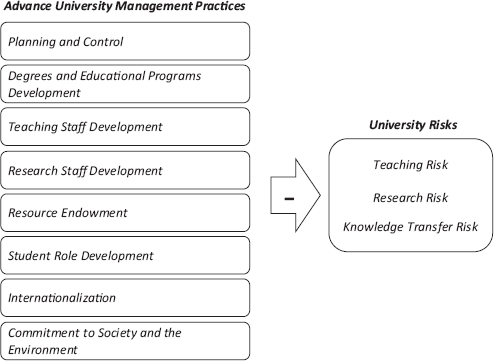
Figure 1 depicts our conceptual model, in which we propose a mitigating effect of AUMPs on teaching, research, and knowledge transfer risks.
FIGURE 1. CONCEPTUAL MODEL
Source: Own elaboration.
Through planning and control, organisations can clarify their objectives and establish a time frame for their fulfilment, reducing the risk of failing to achieve teaching, research, and knowledge transfer goals effectively (Yokoyama, 2018; Khaw & Teoh, 2023). For example, by developing degree and training programs, universities can update the capacities of their graduates and ensure they are adjusted to the latest demands of the labour market and society; such developments also serve as guides for research and knowledge transfer efforts (Klochkova et al., 2017). Similarly, teaching development efforts among university staff should have an evident impact on teaching but also might help identify research and knowledge transfer needs (Khaw & Teoh, 2023; Bamber & Elezi, 2024). Encouraging teaching staff to enhance their research profile improves their chances of publications; elements of such quantitative and qualitative training also might inform their teaching and knowledge transfer activities. By developing closer links with students, staff can adjust the university to better meet their demands and those of society, which in turn reduces the risk of not adapting teaching, research, or transfers to the demands of society (Klochkova et al., 2017). Because internationalisation represents a way of learning, updating, and benchmarking, with effects on all areas of university activity, it also should lower the risk of not meeting standards across the three domains of teaching, research, and knowledge transfer (Klochkova et al., 2017). Finally, the services provided to society and the environment are a sources of learning; generating novel ideas can exert an impact on the university’s future knowledge transfer processes and also seems likely to improve teaching activity (which increasingly must include sustainability concepts), as well as providing inspiration for research (Bamber & Elezi, 2024). On the basis of these arguments, we offer a general exploratory hypothesis.
H1: Advanced university management practices mitigate teaching, research and knowledge transfer risk.
4. METHODOLOGY
4.1. Data
To test the proposed model, we conducted a census of 379 universities in four countries in northern Latin America (Ecuador, Colombia, Venezuela, and Peru). University chancellors or members of governing boards were identified as the primary respondents, as they typically occupy senior strategic positions within institutional management (Martínez, 2016; Sánchez, 2022; Davis, 2025). Their professional experience ensures familiarity with the variables examined and accountability for their effective implementation. Prior to data collection, both the questionnaire and the administration protocol were pilot-tested with five chancellors or vice-chancellors from Latin America and one from Europe. The methodological literature widely supports this type of procedure as a reliable source of empirical evidence (Hsu & Sandford, 2007; Okoli & Pawlowski, 2004). The survey was designed and distributed online through Qualtrics, following the Dillman Method (2000) to enhance participation rates. Initially, chancellors or governing board members from each institution were contacted by telephone to introduce the project and request an email address for sending detailed information and the survey link. Subsequently, two additional follow-up rounds were conducted by phone and email. This process resulted in a random sample of 119 valid responses, corresponding to a 29% response rate and a sampling error of 7.2% at a 95% confidence level.
To check for non-response bias, we conducted a mean difference analysis of variance, comparing the first 25 responding universities with the last 25 in terms of size, measured by the number of students and professors, which we gathered from the universities’ websites. For 12 universities, this information was not available (9 universities in Venezuela, 2 in Colombia, 1 in Ecuador), so we excluded them from the analysis. However, the test revealed no significant differences between groups (Table 3), which suggests non-response bias is not a concern. In addition, we performed a Harman test with all items for the constructs in the model. The items load on 11 different factors that explain 74.077% of the variance. Thus, we can rule out common method bias in the sample.
TABLE 3. ANOVA RESULTS FOR NON-RESPONSE BIAS
25 first vs. 25 last F |
|
Number of Students |
1.226 (p =.274) |
Number of Academics |
.740 (p =.394) |
Source: Own elaboration.
In Table 4, we present the distribution of the sample by country, governance type, and size, measured both by the number of students and by the number of academic staff.
TABLE 4. CHARACTERISTICS OF THE UNIVERSITIES SAMPLED
Frequency |
Percentage |
|
Country |
||
Colombia |
41 |
38% |
Ecuador |
36 |
34% |
Perú |
20 |
19% |
Venezuela |
10 |
9% |
Total |
107 |
100% |
Governance type |
||
Public |
49 |
46% |
Private |
58 |
54% |
Total |
107 |
|
University size (by number of students) |
||
<4000 |
31 |
29% |
4000-12000 |
24 |
23% |
12001-26000 |
26 |
24% |
>26000 |
26 |
24% |
Total |
107 |
100% |
University size (by number of academics) |
||
<200 |
30 |
28% |
200-900 |
38 |
36% |
901-1800 |
12 |
11% |
>1800 |
27 |
25% |
Total |
107 |
100% |
Source: Own elaboration.
4.2. Measures
4.2.1. Dependent variables: Teaching, research, and knowledge transfer risk
We used three multi-item constructs to measure each of the dependent variables, consistent with concepts proposed in prior literature (Huber, 2011; Raanan 2017; Syreyshchikova et al., 2020). In the absence of existing scales though, we used the items in Table 1. In accordance with the generally accepted concept of risk (Baryannis et al., 2019; Hallikas et al., 2004; Harland et al., 2003), we asked respondents to rate, on 7-point Likert scales (1 = very low, 7 = very high) the likelihood of the occurrence of each situation described by an item, as well as the seriousness or severity of each situation, in terms of the harm it could cause to the university. By multiplying the probability and severity assessments for each item, we obtained measures of teaching risk, research risk, and knowledge transfer risk by computing the mean of the products for each group of items. To confirm that the structure of the data conforms with the proposed measurement model, we performed a confirmatory factor analysis (CFA), the results of which are in Table 5.
TABLE 5. CONFIRMATORY FACTOR ANALYSIS FOR UNIVERSITY RISK COMPONENTS
Standardized Coefficients |
||||
F1 |
F2 |
F3 |
||
Teaching Risk |
Worsening of the evaluation of my graduates by the labour market |
.751 |
||
Reduction in the employability rate of my graduates |
.700 |
|||
Loss of attractiveness/updating of my degrees/educational programs |
.763 |
|||
Increase in the percentage of students who abandon my university degrees/educational programs without completing them |
.602 |
|||
Worsening of my university’s position in teaching rankings |
.873 |
|||
Research Risk |
Fall in scientific production (publications, doctoral theses, etc.) of my institution’ researchers |
.881 |
||
Reduction of national and international recognition my institution’ researchers |
.906 |
|||
Worsening of my university’s position in research rankings |
.872 |
|||
Knowledge Transfer Risk |
Fall in the transfer of knowledge from my intuition to the society (e. g. royalties, patents, utility models, brands, advisory and consultancy work). |
.833 |
||
Reduction of recognition of my institution as a source of problem solving/consultancy resources for the business, institutional and social actors. |
.828 |
|||
Fall in the reputation of my university as a driver of economic and social development. |
.949 |
|||
Worsening of the image of my university as a promoter of sustainable development goals |
.927 |
|||
Model Fit Indicators |
Chi-square/degrees of freedom2/g. l. = 2.17, GFI = .867, AGFI = .796, TLI = .935, CFI = .950 |
|||
Composite Reliability |
.859 |
.831 |
.934 |
|
Cronbach’s Alpha |
.863 |
.915 |
.933 |
|
Average Variance Extracted |
.552 |
.786 |
.783 |
|
Source: Own elaboration.
The model fit indicators reach values above or very close to those recommended in the literature (.9 for goodness-of-fit index, Tucker-Lewis index, and confirmatory fit index; .8 for adjusted goodness-of-fit index; values between 1 and 3 for chi-square/degrees of freedom) (Browne and Cudeck, 1992; Chau, 1997; Hair et al., 2007). The values for both the composite reliability index and Cronbach’s alpha are greater than .7 (Hair et al., 2007), in support of the reliability of the scale. The standardised coefficients are higher than the recommended values (.5) and significant (Chau, 1997; Hair et al., 2007), confirming convergent validity. We also find evidence of discriminant validity, because the average variance extracted values exceed .5 for each construct (Fornell and Larcker, 1981). In addition, alternative CFAs that fit all items to a single factor or merge two factors provide, in all cases, poorer fit indicators. At a nomonological level, using three dimensions makes more sense than merging conceptually distinct types of risks. Therefore, taking into account the best CFA, across conceptual, nomological, and statistical aspects, we retained the three constructs initially conceived of at the theoretical level.
4.2.2. Independent variables: Advanced university management practices
To measure AUMPs, the chancellors rated, on Likert-type scales (1 = not at all, 7 = to a great extent), the degree to which each of the initiatives or strategies listed in Table 2 had been implemented at their university. These practices are not complementary; some institutions may decide to implement some of them and not others. Using the first two items in the list as an example, we can clearly conclude that a university might work intensively on medium/long-term strategic planning but still not carry out audits and controls on administrative management processes. That is, each practice represents an alternative way to improve management and reduce university risk. But the more strategies are applied, the more developed the institution’s management system should be. These practices therefore meet the definition of formative measures (Jarvis et al., 2003). The measure of each strategy category detailed in Table 2 reflects the mean of the respondents’ scores for the implementation of each item in that category.
4.2.3. Control variables: General and specific environmental risk
Variables other than AUMP can influence teaching, research, or knowledge transfer risk, such as the risk of external events—war, globalisation, migratory movements, financial crises, budget cuts, the emergence of new universities, cyber-attacks—in the broader environment in which each educational institution operates (Amuya and Kariuki, 2023; Jesry et al., 2022; Johan et al., 2019). We distinguish events that affect all organisations in the region (e. g., natural disasters; political, economic, sociological, or technological adversities) from those that particularly affect universities (e. g., adversities related to the student body, competition with other universities, suppliers). The former represent “general environment risk” and the latter are “specific environment risks” (Table 6). This typology is inspired by the popular PEST analysis (Ho, 2014) and Porter’s 5 Forces analysis (Porter, 1985), frequently used to characterize the environment in which companies compete.
TABLE 6. UNIVERSITY ENVIRONMENT RISK
GENERAL ENVIRONMENT RISK |
Natural disasters (e. g., floods, earthquakes, fires) |
Health crises (e. g., diseases, pandemics) |
Political adversities (e. g., political instability, war, terrorism, strikes, adverse laws and regulations, tariffs) |
Economic adversities (e. g., crisis, inflation, financing difficulties) |
Sociological adversities (e. g., adverse changes in society’s behaviour, lifestyles or preferences, demographic declines, migrations) |
Technological adversities (e. g., changes in technology that negatively affect me, cyber-attacks) |
ESPECIFIC ENVIRONMENT RISK |
Decrease in the number of new students |
Sudden increase in the number of new students above the available capacity (in cases where regulations prevent limiting access) |
Supply alternatives decrease and dependence on current suppliers increases (e. g., technology providers, services) |
Increase in competitive aggressiveness of other higher education institutions/universities |
Emergence of alternative higher education programs (e. g., non-university education, training specific to the business world, self-training) |
Emergence of new competing universities |
Source: Own elaboration.
To measure environmental risks, in each case (general and specific), we take the average of the product of the probability of each type of risk listed in Table 6 and the degree to which this risk was serious for the university surveyed. Both these dimensions also were rated by the chancellors on 7-point Likert scales.
4.3. Analysis
To examine the hypothesized relationships, a series of multiple regression analyses were performed. As shown in Table 7, several variables present significant intercorrelations. In order to minimize potential collinearity effects and ensure robustness in interpretation, separate regression models were estimated for the independent variables. Subsequently, a stepwise regression procedure was employed to determine which predictors contributed most strongly to explaining the variance in each dependent variable.
TABLE 7. CORRELATIONS
1 |
2 |
3 |
4 |
5 |
6 |
7 |
8 |
9 |
10 |
11 |
12 |
13 |
|
1. General environment risk |
1 |
||||||||||||
2. Specific environment risk |
.651 *** |
1 |
|||||||||||
3. Planning and control |
.094 |
.060 |
1 |
||||||||||
4. Degrees and educational program development |
.040 |
-.062 |
.636 *** |
1 |
|||||||||
5. Teaching staff development |
.075 |
-.054 |
.696 *** |
.612 *** |
1 |
||||||||
6. Research staff development |
.053 |
-.071 |
.517 *** |
.546 *** |
.759 *** |
1 |
|||||||
7. Resource endowment |
.112 |
.033 |
.639 *** |
.661 *** |
.703 *** |
.679 *** |
1 |
||||||
8. Student role development |
.082 |
.047 |
.605 *** |
.517 *** |
.679 *** |
.568 *** |
.696 *** |
1 |
|||||
9. Internationali-zation |
.085 |
-.114 |
.463 *** |
.516 *** |
.596 *** |
.759 *** |
.681 *** |
.489 *** |
1 |
||||
10. Commitment to society and environment |
.051 |
-.105 |
.432 *** |
.534 *** |
.611 *** |
.700 *** |
.647 *** |
.564 *** |
.761 *** |
1 |
|||
11. Teaching Risk |
.507 ** |
.561 ** |
-.103 |
-.095 |
-.161+ |
-.242* |
-.126 |
-.136 |
-.166+ |
-.187+ |
1 |
||
12. Research risk |
.346 ** |
.371 *** |
-.057 |
-.093 |
-.113 |
-.227* |
-.084 |
-.125 |
-.160 |
-.243* |
.704 *** |
1 |
|
13. Knowledge transfer risk |
.412 *** |
.437 *** |
-.134 |
-.120 |
-164+ |
-.243 ** |
-.142 |
.163+ |
-.147 |
-.203* |
.787 *** |
.862 *** |
1 |
† p < .1, * p < .05, ** p < .01, *** p < .001; Pearson correlation coefficients (bilateral).
Source: Own elaboration.
5. RESULTS
Tables 8–10 contain the results of the estimated regression models. In each table, Model 1 provides the results of the regression model with just the control variables, Models 2-9 indicate the results for each AUMP independently, and Model 10 depicts the results of the stepwise regression. From Table 8, we can determine which variables predict decreased teaching risk. Among the control variables, risk present in both the general university environment (political, economic, sociological, and technological issues) and its specific environment (students, suppliers, alternative training programs) exerts positive, significant effects on teaching risk. In the case of AUMPs, the following practices have negative, significant effects on teaching risk: investing in the development of teaching staff, investing in the development of research staff, improving the resource provision of teaching centres, the incremental role of students in universities, investing in internationalization, and developing programs that help improve society and the environment. In the stepwise regression model, the only significant AUMP is the development of the research staff, implying that this variable has the greatest explanatory power for reducing teaching risk. As we predicted, improving the research profile of academics reduces not only research risk, as expected, but also teaching risk. Attending doctoral programs, research techniques courses, and seminars helps researchers move closer to the frontier of knowledge. Such research development efforts can help prevent educational programs and degrees from becoming obsolete. In turn, the degrees remain attractive to students, and the degree abandonment rate should decline.
TABLE 8. EFFECT OF ADVANCED UNIVERSITY MANAGEMENT PRACTICES ON TEACHING RISK
Teaching Risk |
||||||||||
Independent Variable |
Mod1 |
Mod2 |
Mod3 |
Mod4 |
Mod5 |
Mod6 |
Mod7 |
Mod8 |
Mod9 |
Mod 10 |
Planning and control |
-.061 |
|||||||||
Degrees and educational program development |
-.081 |
|||||||||
Teaching staff development |
-.161* |
|||||||||
Research staff development |
-.232** |
-.232** |
||||||||
Resource endowment |
-.170* |
|||||||||
Student role development |
-176* |
|||||||||
Internationalization |
-.149+ |
|||||||||
Commitment to society and environment |
-.163* |
|||||||||
General environment risk |
.246* |
.252* |
.257* |
.277** |
.286** |
.273** |
.262* |
.287** |
.280** |
.286** |
Specific environment risk |
.401 *** |
.401 *** |
.389 *** |
.373 *** |
.359** |
.389 *** |
.399 *** |
.357** |
.362** |
.359** |
R2 |
.350 |
.354 |
.356 |
.375 |
.402 |
.378 |
.381 |
.353 |
.357 |
.402 |
ΔR2 |
.350 *** |
.004 |
.006 |
.025* |
.052** |
.028* |
.031* |
.021+ |
.026* |
.052** |
F |
27.990 *** |
18.778 *** |
19.010 *** |
20.625 *** |
23.111 *** |
20.894 *** |
21.100 *** |
20.250 *** |
20.653 *** |
23.111 *** |
Over model |
Mod1 |
Mod1 |
Mod1 |
Mod1 |
Mod1 |
Mod1 |
Mod1 |
Mod1 |
||
+ p < .1, * p < .05, ** p < .01, *** p < .001.
Source: Own elaboration.
TABLE 9. EFFECT OF ADVANCED UNIVERSITY MANAGEMENT PRACTICES ON RESEARCH RISK
Research Risk |
||||||||||
Independent Variable |
Mod1 |
Mod2 |
Mod3 |
Mod4 |
Mod5 |
Mod6 |
Mod7 |
Mod8 |
Mod9 |
Mod 10 |
Planning and control |
-.090 |
|||||||||
Degrees and educational program development |
-.086 |
|||||||||
Teaching staff development |
-.116 |
|||||||||
Research staff development |
-.223* |
|||||||||
Resource endowment |
-.114 |
|||||||||
Student role development |
-.153+ |
|||||||||
Internationalization |
-.155+ |
|||||||||
Commitment to society and environment |
-.234* |
-.234* |
||||||||
General environment risk |
.182 |
.190 |
.194 |
.204+ |
.220+ |
.200+ |
.195 |
.225+ |
.230+ |
.230+ |
Specific environment risk |
.253* |
.253* |
.240* |
.232+ |
.212+ |
.245* |
.251* |
.207+ |
.197+ |
.197+ |
R2 |
.157 |
.165 |
.164 |
.170 |
.206 |
.170 |
.180 |
.156 |
.210 |
.210 |
ΔR2 |
.157*** |
.008 |
.007 |
.013 |
.049* |
.013 |
.023+ |
.023 |
.053 |
.053 |
F |
9.664 |
6.774 *** |
6.733 *** |
7.024 |
8.881 *** |
7.010 *** |
7.535 *** |
7.507 *** |
9.100 ** |
9.100 ** |
Over model |
Mod1 |
Mod1 |
Mod1 |
Mod1 |
Mod1 |
Mod1 |
Mod1 |
Mod1 |
||
+ p < .1, * p < .05, ** p < .01, *** p < .001.
Source: Own elaboration.
TABLE 10. EFFECT OF ADVANCED UNIVERSITY MANAGEMENT PRACTICES ON KNOWLEDGE TRANSFER RISK
Knowledge Transfer Risk |
||||||||||
Independent Variable |
Mod1 |
Mod2 |
Mod3 |
Mod4 |
Mod5 |
Mod6 |
Mod7 |
Mod8 |
Mod9 |
Mod 10 |
Planning and control |
-.173* |
|||||||||
Degrees and educational program development |
-.112 |
|||||||||
Teaching staff development |
-.169+ |
|||||||||
Research staff development |
-.270** |
-.270** |
||||||||
Resource endowment |
-.179* |
|||||||||
Student role development |
-.196* |
|||||||||
Internationalization |
-.141 |
|||||||||
Commitment to society and environment |
-.190* |
|||||||||
General environment risk |
.221+ |
.237* |
.253* |
.268* |
.249* |
.238* |
.260* |
.261* |
.268* |
|
Specific environment risk |
.293* |
.293* |
.276* |
.263* |
.244* |
.281* |
.291* |
.252* |
.248* |
.244* |
R2 |
.219 |
.249 |
.232 |
.247 |
.290 |
.251 |
.258 |
.238 |
.254 |
.290 |
ΔR2 |
.219*** |
.030* |
.012 |
.028+ |
.071** |
.032* |
.038* |
.019 |
.035* |
.071** |
F |
14.607*** |
11.391*** |
10.358*** |
11.278*** |
14.049*** |
11.497*** |
11.912*** |
10.723*** |
11.702*** |
14.049*** |
Over Model |
Mod1 |
Mod1 |
Mod1 |
Mod1 |
Mod1 |
Mod1 |
Mod1 |
Mod1 |
||
+ p < .1, * p < .05, ** p < .01, *** p < .001.
Source: Own elaboration.
According to Table 9, pertaining to reduced research risk, perceived risk in the specific university environment has a significant and positive effect, such that more adverse conditions surrounding the specific university increase research risk. In the case of the AUMPs, we find several that exert significant and negative effects on research risk, namely, investing in the development of research staff, empowering students, internationalization and development of collaboration programs with society on social and environmental issues. The stepwise regression only includes one AUMP in its result: developing collaborative projects with other types of organizations (companies, government agencies, non-profit organizations). Expressing a commitment to society and the environment through these collaborations emerges as the variable with the greatest explanatory power for reducing research risk. Such collaborations help researchers identify the problems that society is trying to solve, such that they discover topics of interest for research and also gain access to valuable data with which to test possible models and hypotheses. These benefits help reduce the risk of poor quality publications or scoring lower in research rankings.
Finally, Table 10 reveals which variables have predictive capacity for reducing the risk surrounding knowledge transfers. Among the control variables, risk in both the general environment and the specific environment have significant and positive effects. Among the AUMPs, those with a confirmed significant, negative effect on knowledge transfer risk include improved planning and control, investing in the development of teaching staff, investing in the development of research staff, increased provision of resources to university centres, increased student empowerment, and internationalization and development of collaboration programs with society (companies, government agencies, non-profit organizations). In this case, the stepwise regression only includes the development of research personnel; this AUMP offers the greatest explanatory capacity for reducing knowledge transfer risk. Developing academics’ research skills can help them identify and find solutions for societal challenges.
6. CONCLUSIONS
Using a risk analysis prism, we seek to identify which practices can help mitigate the risk that a university is not able to fulfil the fundamental missions that define it: teaching, research, and the transfer of knowledge to society. In so doing, we make several contributions to university risk management literature. First, by adopting a broad perspective, this study includes many of the risk management parameters that universities may leverage. On the one hand, we recognize the three main processes that constitute university activity and accordingly account for teaching risk, research risk, and knowledge transfer risk as performance variables. On the other hand, in support of this broad analytical framework, we compile an extensive list of AUMPs, as potential risk-mitigation practices. Furthermore, we account for both risk in the general university environment (political, economic, sociological, and technological factors) and university-specific risk (adversities related to students, suppliers, existing or potential competitors that provide society with other alternatives for higher education).
Second, the empirical evidence affirms the capacity of AUMPs to mitigate risk in university performance and confirm one particular AUMP as an effective solution to teaching and knowledge transfer risk: investing in the development of research personnel. Such efforts might include the development of training programs, attracting graduate students, hiring and promoting academic staff on the basis of their research quality, or collaborating with prestigious external researchers. These practices help not only to reduce research risk, as might be expected, but also indirectly affect teaching risk and knowledge transfer risk. The development of research personnel provides tools for enhancing the attractiveness and relevance of educational offers. Likewise, developing personnel research skills with training programs or by offering incentives for research results can decrease the risk of failing to transfer knowledge to society.
Another AUMP emerges as a main mitigator of research risk: commitment to society and the environment. This commitment implies incentivising collaboration initiatives with other organizations (e. g., companies, non-profit organizations, public entities) to undertake projects linked to sustainability. These collaborations contribute directly to mitigate the risk of failing to transfer knowledge to society; they also indirectly provide research ideas and data that help mitigate research risk. Thus, the transfer of knowledge and value across the university and society works in both directions; both can benefit from collaborative projects. Beyond these two AUMPs that act as the main mitigators of university risks, our study confirms the beneficial influences of several other practices, as we summarise in Table 11.
TABLE 11. MITIGATION CAPACITY OF EACH ADVANCED UNIVERSITY MANAGEMENT PRACTICE
Teaching Risk |
Research Risk |
Knowledge Transfer Risk |
|
Research staff development |
Main Mitigator |
Mitigator |
Main Mitigator |
Commitment to society and environment |
Mitigator |
Main Mitigator |
Mitigator |
Teaching staff development |
Mitigator |
--- |
Mitigator |
Resource endowment |
Mitigator |
--- |
Mitigator |
Student role development |
Mitigator |
Mitigator |
Mitigator |
Internationalization |
Mitigator |
Mitigator |
--- |
Planning and control |
--- |
--- |
Mitigator |
Source: Own elaboration.
6.1. Implications for academia
This study emphasises the need to identify, classify, and homogenise risk management analysis parameters in higher education systems into (1) risk-causing factors, (2) types of performance parameters that can be at risk, and (3) practices that act as risk mitigators. In other domains (e. g., supply chain risk management), similar parameter classifications already are well-advanced, but for university management, they have yet to be defined. Some previous studies offer key contributions in this sense (e. g., Brewer and Walker, 2011), but no clear conceptual framework of risk management by universities has been established. For example, Brewer and Walker (2011) mix causes with consequences when defining a risk, such as citing strategic risk as something that affects the long-term performance of the university and is caused by external and governance factors. Separating the identification of risks that are specific to their cause, from those that are specific to their consequence, helps clarify the analysis. Furthermore, Brewer and Walker collect several different types of specific risks, but their analysis is not exhaustive, such that they analyse existing competition between universities but do not comment on other risk drivers, such as competitors’ actions; number of students; or political, economic or sociological factors. Finally, they do not specify which practices can mitigate risks or provide empirical evidence on mitigating effects. Our findings thus represent an encouragement for further academic work to classify the factors and empirically verify their relationships.
6.2. Implications for managers of higher education institutions
This article provides academic managers with a broad choice of parameters they can use to assess the level of risk in the environment in which their institutions operate, the performance dimensions that are subject to risk, and the practices they can use to manage these risks. It also presents evidence of the interrelation among these parameters, revealing some less expected effects. For example, participating in different projects with other social agents (public institutions or companies) can indirectly reduce research risk—in other words, it can enhance and ensure research performance at the university.
6.3. Limitations
This study has certain limitations that point to promising avenues for future research. First, although our data do not show evidence of common method bias—as detailed in the methodological section—future studies could benefit from incorporating additional, objective measures of the same constructs. Second, while theoretical frameworks such as institutional theory suggest that patterns observed in our geographical context may be similar to those found elsewhere, replicating this analysis across different geographical settings would represent a valuable direction for further investigation. Moreover, examining the impact of these mitigating practices on other potential dimensions of risk performance (e. g., reputational risk), and studying its links with other risk management variables (e. g., risk management formalization) would also constitute a relevant extension of this research.
7. FUNDING
This paper has been developed within the framework of Grant PID2022-136496NB-I00, funded by the Spanish Ministry of Science and Innovation (MCIN), the State Research Agency (AEI/10.13039/501100011033), and the European Union. Additional financial support was provided by the Department of Education of the Junta de Castilla y León and the European Regional Development Fund (FEDER) under Grants CLU-2025-2-03 and SA070G24.
8. AUTHOR’S CONTRIBUTIONS
Conceptualization, Guevara-Piedra, W., González-Zapatero, C. y González-Benito, J.; Methodology, Guevara-Piedra, W., González-Zapatero, C. y González-Benito, J.; Data Collection, Guevara-Piedra, W.; Writing – Original Draft Preparation, Guevara-Piedra, W.; Writing – Review and Editing, González-Zapatero, C. y González-Benito, J.; Supervision, González-Zapatero, C. y González-Benito, J.
9. DISCLOSURE STATEMENT
No potential conflict of interest was reported by the author(s).
10. REFERENCES
Aljuhami, A. M., & Bamasoud, D. M. (2021). A survey of the impact of cyber threat intelligence on saudi higher education risk management. International Journal of Advanced Computer Science and Applications, 12(10), 156-163. https://doi.org/10.14569/IJACSA.2021.0121018
Amuya, L. O., & Kariuki, P. M. (2023). Organisational characteristics as antecedents of enterprise security risk management adoption in Kenya’s accredited universities. Journal of Higher Education Policy and Management, 1-17. https://doi.org/10.1080/1360080X.2023.2235772
Amuya, L. O., & Kariuki, P. M. (2024). Organisational characteristics as antecedents of enterprise security risk management adoption in Kenya’s accredited universities. Journal of Higher Education Policy and Management, 46(1), 1-17. Available at: https://doi.org/10.1057/s41284-024-00376-8
Anchundia, P. Q., Romero, X. V., & Perez, A. O. (2018, June). Risk management and process management in universities. Application in the University Laica Eloy Alfaro Manabí. In Proceedings of International Academic Conferences (No. 6408929) International Institute of Social and Economic Sciences. https://doi.org/10.20472/IAC.2018.935.039
Bamber, C., & Elezi, E. (2024). Enterprise-wide risk management in higher education: beyond the paradigm of managing risk by categories. Business Process Management Journal. Available at: https://doi.org/10.1108/BPMJ-05-2024-0409
Baryannis, G., Validi, S., Dani, S., & Antoniou, G. (2019). Supply chain risk management and artificial intelligence: state of the art and future research directions. International Journal of Production Research, 57(7), 2179-2202. https://doi.org/10.1080/00207543.2018.1530476
Beecher, B., & Streitwieser, B. (2019). A risk management approach for the internationalization of higher education. Journal of the Knowledge Economy, 10, 1404-1426. https://doi.org/10.1007/s13132-017-0468-y
Brewer, A., & Walker, I. (2011). Risk management in a university environment. Journal of Business Continuity & Emergency Planning, 5(2), 161-172.
Browne, M. W., & Cudeck, R. (1992). Alternative ways of assessing model fit. Sociological Methods & Research, 21(2), 230-258. https://doi.org/10.1177/0049124192021002005
Bubka, M. A., & Coderre, P. (2010). Best practices in risk management for higher education: Addressing the “what if” scenarios. Retrieved on June, 4, 2014.
Cameron, C., & Klopper, C. (2015). University lawyers: A study of legal risk, risk management and role in work integrated learning programmes. Journal of Higher Education Policy and Management, 37(3), 344-360. https://doi.org/10.1080/1360080X.2015.1034423
Chau, P. Y. (1997). Reexamining a model for evaluating information center success using a structural equation modeling approach. Decision Sciences, 28(2), 309-334. https://doi.org/10.1111/j.1540-5915.1997.tb01313.x
Christopher, J., & Sarens, G. (2015). Risk management: its adoption in Australian public universities within an environment of change management-A management perspective. Australian Accounting Review, 25(1), 2-12. https://doi.org/10.1111/auar.12057
Davis. (2025). Academic Duties. Retrieved from https://academicaffairs.ucdavis.edu/academic-duties
Dillman, D. A. (2000). Mail and Internet: The Tailored Design Method. John Wiley & Sons, New York, NY.
Edwards, F. (2012). The evidence for a risk-based approach to Australian higher education regulation and quality assurance. Journal of Higher Education Policy and Management 34(3), 295-307. https://doi.org/10.1080/1360080X.2012.678725
Fan, Y., & Stevenson, M. (2018). A review of supply chain risk management: Definition, theory, and research agenda. International Journal of Physical Distribution & Logistics Management, 48(3), 205-230. https://doi.org/10.1108/IJPDLM-01-2017-0043
Fornell, C., & Larcker, D. F. (1981). Evaluating structural equation models with unobservable variables and measurement error. Journal of Marketing Research, 18(1), 39-50. https://doi.org/10.1177/002224378101800104
Hair, J. F., Anderson, R. E., Tatham, R. L., & Black, W. C. (2007). Análisis Multivariante. Prentice Hall, Madrid, Spain.
Hallikas, J., Karvonen, I., Pulkkinen, U., Virolainen, V. M., & Tuominen, M. (2004). Risk management processes in supplier networks. International Journal of Production Economics 90, 47-58. https://doi.org/10.1016/j.ijpe.2004.02.007
Harland, C., Brenchley, R., & Walker, H. (2003). Risk in supply networks. Journal of Purchasing & Supply Management, 9, 51-62. https://doi.org/10.1016/S1478-4092(03)00004-9
Higher Education Funding Council for England (HEFCE). (2001). Risk management: A guide to good practice for higher education institutions. Higher Education Funding Council for England.
Ho, J. K. K. (2014). Formulation of a systemic PEST analysis for strategic analysis. European Academic Research, 2(5), 6478-6492. https://doi.org/10.1080/00207543.2015.1030467
Ho, W., Zheng, T., Yildiz, H., & Talluri, S. (2015). Supply chain risk management: a literature review. International Journal of Production Research, 53(16), 5031-5069. https://doi.org/10.1080/00207543.2015.1030467
Hsu, C. C., & Sandford, B. A. (2007). The Delphi technique: Making sense of consensus. Practical Assessment, Research & Evaluation, 12(10), 1-8. Available at: https://doi.org/10.7275/pdz9-th90
Huber, M. (2011). The risk university: Risk identification at higher education institutions in England (CARR Discussion Paper No. 69). ESRC Centre for Analysis of Risk and Regulation, London School of Economics and Political Science.
Jarvis, C. B., Mackenzie, S. B., & Podsakoff, P. M. (2003). A critical review of construct indicators and measurement model misspecification in marketing and consumer research. Journal of Consumer Research, 30(2), 199-218. https://doi.org/10.1086/376806
Jesry, M., Alhaj Omar, F., Rashwani, A., Bark, I., Jammo, K., Ajam, S., & Kassab, Z. (2022). Exploring the value of a risk-management quality-assurance model to support delivery of quality higher education in the conflict-affected northwest of Syria. International Journal of Educational Research Open, 3. https://doi.org/10.1016/j.ijedro.2022.100134
Johan, M. E., Rizqon, M. F., & Suroso, I. J. S. (2019). University information system security risk assessment using NIST 800-30. International Journal of Recent Technology and Engineering, 8(3), 8380-8385. https://doi.org/10.35940/ijrte.C6511.098319
Khaw, T. Y., & Teoh, A. P. (2023). Risk management in higher education research: a systematic literature review. Quality Assurance in Education, 31(2), 296-312. Available at: https://doi.org/10.1108/QAE-08-2022-0124
Kimmons, R., Veletsianos, G., & Woodward, S. (2023). Decoding academic integrity policies: implications for generative AI risk in higher education. Higher Education Policy, 36(4), 912-930. Available at: https://doi.org/10.1057/s41307-023-00290-x
Kinman, G., & Court, S. (2010). Psychosocial Hazards in UK Universities: Adopting a Risk Assessment Approach. Higher Education Quarterly 64(4), 413-428. https://doi.org/10.1111/j.1468-2273.2009.00447.x
Klochkova, T. I., Sbruieva, A. A., & Pshenychna, L. V. (2017). Risk management in the activities of a modern university: a comparative analysis of British and Ukrainian experience. Science and Education, 10, 13. https://doi.org/10.24195/2414-4665-2017-10-2
Kmiotek-Meier, E., Karl, U., & Powell, J. J. (2020). Designing the (most) mobile university: The centrality of international student mobility in Luxembourg’s higher education policy discourse. Higher Education Policy, 33(1), 21-44. https://doi.org/10.1057/s41307-018-0118-4
Malki, S., & Aldwais, N. K. (2019). Enterprise risk management at the state university of New York: A benchmark for Saudi universities. The Journal of Applied Business and Economics 21(9), 54-74. https://doi.org/10.33423/jabe.v21i9.2684
Martínez, R. (2016). Planeamiento estratégico en universidades de América Latina. Revista GUAL, 9(1), 257-277. Retrieved from https://www.redalyc.org/pdf/3193/319345197014.pdf
Okoli, C., & Pawlowski, S. D. (2004). The Delphi method as a research tool: An example, design considerations and applications. Information & Management, 42(1), 15-29. Available at: https://doi.org/10.1016/j.im.2003.11.002
Porter, E. M. (1985). Competitive Advantage. The Free Press/Macmillan: New York.
Raanan, Y. (2008). Risk management in higher education: do we need it? Risk Management in Higher Education, 1000-1007.
Raanan, Y. (2017). Risk Management in Higher Education - Do We Need it? Sinergie, 78(9), 43-56.
Sánchez, M. (2022). La función administrativa del docente universitario apoyados en las tecnologías de la información y comunicación del Instituto de Admisión y Nivelación de la Universidad Técnica de Manabí, Ecuador. Ciencia Latina Revista Científica Multidisciplinar, 6(3). Retrieved from https://ciencialatina.org/index.php/cienciala/article/view/4997/7585
Seale, T. (2017). Factors influencing the decision to adopt an Information Technology Risk Management framework at universities in South Africa. Master’s thesis, University of Cape Town.
Setyadi, A., Pawirosumarto, S., Damaris, A., & Dharma, R. (2025). Risk management, digital technology literacy, and modern learning environments in enhancing learning innovation performance: a framework for higher education. Education and Information Technologies, 30, 15095-15123. https://doi.org/10.1007/s10639-025-13380-4
Shanahan, P., & McParlane, J. (2005). Serendipity or strategy? An investigation into entrepreneurial transnational higher education and risk management. On the Horizon, 13(4), 220-228. https://doi.org/10.1108/10748120510627349
Society for Risk Analysis (SRA). https://www.sra.org. Retrieved 2 January 2024.
Syreyshchikova, N. V., Pimenov, D. Y., Mikolajczyk, T., & Moldovan, L. (2020). Development of a Risk Management Technique in Strategic Planning of Universities. Case study of a Polytechnical Institute. Procedia Manufacturing, 46, 256-262. https://doi.org/10.1016/j.promfg.2020.03.038
Tagliaventi, M. R., & Carli, G. (2021). The effect of service on research performance: A study on Italian academics in management. Higher Education Policy, 34(4), 812-840. https://doi.org/10.1057/s41307-019-00167-9
Tilak, J. B., & Kumar, A. G. (2022). Policy changes in global higher education: What lessons do we learn from the covid-19 pandemic? Higher Education Policy, 35(3), 610-628. https://doi.org/10.1057/s41307-022-00266-0
Veretennik, E., & Okulova, O. (2023). Of Performance and Impact: How AACSB Accreditation Contributes to Research in Business Schools. Higher Education Policy, 36, 758-780. https://doi.org/10.1057/s41307-022-00284-y
Wessels, J. S., & Sadler, E. (2015). Risk management in higher education: An open distance learning perspective. Southern African Business Review, 19(2), 74-98.
Yokoyama, K. (2018). The rise of risk management in the universities: a new way to understand quality in university management. Quality in Higher Education, 24(1), 3-18. https://doi.org/10.1080/13600869.2018.1425080
______________________________________
* Autora de correspondencia: carmengz@usal.es
1 ORCID: https://orcid.org/0000-0002-6391-1624