HUMAN-AI COLLABORATION IN RECRUITMENT: ORCHESTRATING PERSON-JOB-FIT (PJF) AND PERSON-ORGANIZATION-FIT (POF) FOR QUALITY OF HIRE
COLABORACIÓN HUMANO-IA EN RECLUTAMIENTO: ORQUESTANDO EL AJUSTE PERSONA–PUESTO (APP, PJF) Y EL AJUSTE PERSONA–ORGANIZACIÓN (APO, POF) PARA LA CALIDAD DE LA CONTRATACIÓN
Dr. Musrrat Parveen (Associate Professor, Faculty of Economics and Administration, Department of Human Resource Management, King Abdulaziz University, Jeddah, Saudi Arabia)*1
Dr. Abrar Rizq (Assistant Professor, Faculty of Economics and Administration, Department of Human Resource Management, King Abdulaziz University, Jeddah, Saudi Arabia)2
Abstract
This research explores the transformative role of artificial intelligence (AI) in talent acquisition, focusing on its influence on screening efficiency, candidate–role alignment, hiring precision, and bias reduction. Adopting an organizational lens rooted in fit theory, the study applies a qualitative, manager-focused methodology. Semi-structured interviews were conducted and examined through a three-level thematic analysis, complemented by neural-network-assisted mapping to deepen pattern recognition. NVivo 14 was used to support systematic coding, cross-case comparison, and theme development. In parallel, Python 3.11, together with Keras (2.15.0) and TensorFlow (2.14.0), facilitated cluster analysis and visualization of relationships, particularly those associated with person–job fit (PJF) and person–organization fit (POF). The findings are interpreted through the dual mediating mechanisms of PJF and POF. Results indicate that, when guided by robust governance frameworks, AI improves resume screening, strengthens candidate–role matching, and enhances fairness in hiring decisions. Nonetheless, AI tools show limitations in evaluating interpersonal competencies and cultural compatibility, underscoring the continued importance of human judgment. Consequently, the study proposes a hybrid recruitment framework in which AI conducts initial triage to assess PJF, while structured human evaluations address POF. This balanced model improves efficiency, quality of hire, and overall candidate experience. The study further recommends algorithmic audits, explainable AI practices, strategic human intervention points, HR capability development, and strong privacy and accountability standards to ensure responsible AI integration in recruitment processes.
Keywords: ethical AI, hybrid recruitment model, bias mitigation, person–job fit, person–organization fit, neural-network-assisted analysis.
JEL Codes: D63, M12, M51, M15, O33, J24
Resumen
Esta investigación explora el papel transformador de la inteligencia artificial (IA) en la adquisición de talento, centrándose en su influencia sobre la eficiencia del cribado, la alineación candidato–puesto, la precisión en la contratación y la reducción de sesgos. Adoptando una perspectiva organizacional fundamentada en la teoría del ajuste, el estudio aplica una metodología cualitativa centrada en directivos. Se realizaron entrevistas semiestructuradas que fueron examinadas mediante un análisis temático de tres niveles, complementado con mapeo asistido por redes neuronales para profundizar en el reconocimiento de patrones. NVivo 14 se utilizó para apoyar la codificación sistemática, la comparación entre casos y el desarrollo de temas. Paralelamente, Python 3.11, junto con Keras (2.15.0) y TensorFlow (2.14.0), facilitó el análisis de conglomerados y la visualización de relaciones, particularmente aquellas asociadas con el ajuste persona–puesto (PJF) y el ajuste persona–organización (POF). Los hallazgos se interpretan a través de los mecanismos mediadores duales de PJF y POF. Los resultados indican que, cuando se implementa bajo marcos sólidos de gobernanza, la IA acelera significativamente el cribado de currículos, fortalece la correspondencia candidato–puesto y mejora la equidad en las decisiones de contratación. No obstante, las herramientas de IA muestran limitaciones en la evaluación de competencias interpersonales y la compatibilidad cultural, lo que subraya la importancia continua del juicio humano. En consecuencia, el estudio propone un modelo híbrido de reclutamiento en el que la IA realiza una selección inicial para evaluar el PJF, mientras que evaluaciones humanas estructuradas abordan el POF. Este modelo equilibrado mejora la eficiencia, la calidad de la contratación y la experiencia del candidato. Además, se recomiendan auditorías algorítmicas, prácticas de IA explicable, puntos estratégicos de intervención humana, el desarrollo de capacidades en RR. HH. y sólidos estándares de privacidad y rendición de cuentas para garantizar una integración responsable de la IA en los procesos de reclutamiento.
Palabras clave: IA ética, modelo híbrido de reclutamiento, mitigación de sesgos, ajuste persona–puesto, ajuste persona–organización, análisis asistido por redes neuronales.
Códigos JEL: D63, M12, M51, M15, O33, J24
1. INTRODUCTION
Artificial intelligence (AI) refers to computational systems designed to simulate human intelligence, enabling machines to perform tasks that typically rely on human cognition and judgment (Irwin et al., 2023). AI encompasses a range of technologies—including machine learning, natural language processing, and predictive analytics—that automate complex organizational activities (Soori et al., 2023). Within organizations, these technologies enhance precision, reduce operational costs, and drive continuous innovation, thereby strengthening overall performance and competitiveness (Khogali & Mekid, 2023). Consequently, firms across industries increasingly deploy AI to optimize workflows, improve decision-making, and sustain strategic advantages through data-driven efficiency (Soori et al., 2023).
Among organizational functions, AI’s most profound influence has been observed in human resource management (HRM), particularly within talent acquisition and recruitment (Kambur & Akar, 2022). Talent acquisition concerns the strategic identification of high-potential candidates aligned with organizational objectives, whereas recruitment involves sourcing, evaluating, and integrating individuals into the workforce (Vedapradha et al., 2023). Because effective staffing directly shapes human capital—the primary driver of sustained organizational performance—employers increasingly adopt AI to address persistent hiring challenges related to scalability, speed, and bias (Budhwar et al., 2023).
Contemporary recruitment platforms such as Beamery and Humanly now automate résumé parsing, candidate shortlisting, and early-stage screening (Fu, 2025). These AI-driven systems enable faster, more consistent evaluations and foster greater engagement through automated communication and adaptive interfaces (Albaroudi et al., 2024). By standardizing assessment criteria, AI can promote fairness and inclusivity while reducing subjective variation in decision-making. However, its expanding role in hiring processes introduces new theoretical, ethical, and managerial questions surrounding algorithmic transparency, validity, and human control in talent decisions.
Despite a growing body of research highlighting AI's potential to enhance recruitment efficiency and accuracy, significant knowledge gaps remain—particularly regarding the influence of AI systems on recruiters’ perceptions of candidate fit within organizations. The majority of existing studies concentrate on quantifiable outcomes such as processing speed, bias mitigation, or predictive capabilities (Albaroudi et al., 2024; Paramita et al., 2024; Vedapradha et al., 2023). However, these investigations seldom explore the more nuanced ways in which algorithms shape recruiters’ judgments about who is deemed to “belong” within a company. This oversight is notable, as person–organization fit (POF) constitutes a central element in hiring decisions, organizational culture, and employee retention.
With AI increasingly being utilized to assess dimensions such as values, communication styles, and interpersonal dynamics, there remains limited understanding of how these systems conceptualize and measure fit. While AI excels at data analysis, its interpretation of constructs like shared values or interpersonal compatibility remains opaque. This lack of transparency is not merely an academic concern; it has practical implications for organizations seeking to deploy AI in fair and effective ways in their recruitment processes.
Another critical issue is the prevailing emphasis within existing literature on the technical aspects of automation, such as resume parsing or workflow optimization, to the detriment of broader considerations. Specifically, there is a paucity of research examining how AI tools alter recruiters’ roles, notions of fairness, or the broader organizational culture. Even when fairness is addressed, the focus is typically restricted to identifying bias within datasets, rather than interrogating how AI applications reshape fundamental concepts of fairness and trust in hiring. Furthermore, there is a notable lack of insight into how AI-driven recruitment influences candidate experiences, employer branding, or long-term relationships with talent.
The present study seeks to address these gaps by investigating the ways in which AI is transforming recruiter evaluation practices, encompassing all stages from initial screening to final selection. This includes examining impacts on accuracy, fairness, and evolving interpretations of fit. Adopting a qualitative approach centered on managers, the research probes both the decision-making processes and the underlying beliefs about recruitment within organizations as they adapt to AI integration.
1.1. Objectives
1.1.1. Primary objectives
Examine how artificial intelligence (AI) reshapes talent acquisition and the recruitment process at the organizational level.
1.1.2. Specific objectives
• Investigate the mechanisms through which AI transforms talent acquisition and recruitment workflows.
• Assess the extent to which AI accelerates candidate screening activities.
• Evaluate AI’s effectiveness in identifying and prioritizing the most suitable candidates.
• Determine AI’s impact on hiring accuracy and its potential to mitigate human bias.
• Explore how AI-driven evaluation systems influence perceptions of person–organization fit (POF) in hiring decisions.
1.2. Theoretical framework and conceptual model
This study adopts a dual-fit perspective—person–organization fit (POF) and person–job fit (PJF)—to conceptualize how artificial intelligence (AI) influences compatibility judgments in talent acquisition and recruitment. POF emphasizes congruence between individual and organizational attributes, centering on shared values, work preferences, and cultural alignment. When POF is high, employees are more likely to experience satisfaction, commitment, and long-term retention, as they find consistency between their personal values and organizational climate (Kristof-Brown et al., 2023). PJF pertains to the congruence between an individual’s skills and job requirements (Edwards, 1991; Sekiguchi, 2004), whereas POF focuses on alignment between an individual’s values and the organizational culture.
Integrating these constructs into AI-enabled recruitment processes offers the potential for greater systematization. AI algorithms are particularly adept at facilitating PJF assessments, enabling rapid parsing of resumes, evaluation of skills, and performance predictions through sophisticated pattern recognition and statistical matching (Ghedabna et al., 2024). However, AI faces substantive limitations with respect to POF, as cultural fit involves subjective social cues and value alignments that are not easily captured by data. Reliance on historical or text-based data may perpetuate existing biases (Bogen & Rieke, 2018), thus while AI can enhance the efficiency and consistency of technical evaluations (PJF), it remains challenged in accurately assessing cultural and value-driven fit (POF).
These contrasting capabilities highlight the necessity of a hybrid evaluation model that combines algorithmic precision with human judgment. The hybrid approach leverages AI’s speed, scalability, and data-driven accuracy for PJF assessments while relying on human sensitivity, interpretive reasoning, and ethical discernment for POF evaluation. Embedding both fit constructs into AI-assisted workflows can improve selection quality by structuring assessments around validated, job-relevant and organization-relevant indicators, thereby balancing efficiency with contextual depth. Conceptually, this framework also mitigates AI’s known shortcomings—such as historical bias and reduced affective awareness—while enhancing fairness and cultural alignment in hiring decisions.
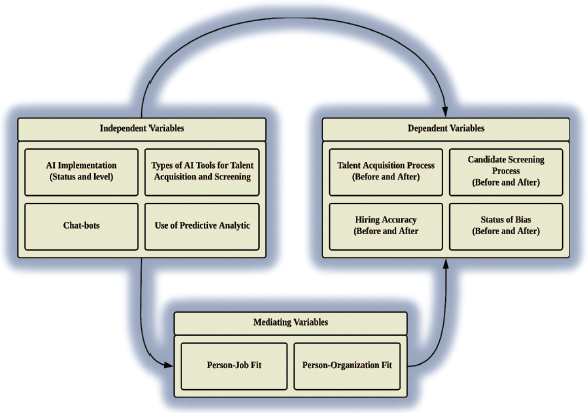
The conceptual model positions AI at the core of the recruitment process, examining the interplay between PJF and POF in shaping recruitment outcomes. The model identifies the following variables: independent variables encompass the extent and timing of AI deployment, types of AI tools used (e. g., resume screening systems, chatbots), and the application of predictive versus productivity analytics. Mediating variables are defined as PJF and POF, which serve as critical mechanisms translating AI practices into hiring outcomes. Dependent variables include recruitment effectiveness (speed, efficiency, and throughput), accuracy of candidate screening (shortlisting), quality of hiring decisions, and the influence on bias and fairness.
The model posits that while AI-enabled processes enhance efficiency and accuracy at the PJF level, human interpretive input is essential to ensure valid assessments of POF. Organizational effectiveness in AI-based recruitment thus depends on human–AI synergy, where algorithmic insights are reviewed and contextualized by HR professionals to ensure cultural and ethical appropriateness.
A pre- and post-adoption assessment structure captures organizational learning and adaptation in AI integration. Methodologically, this study employs a qualitative, manager-centric design complemented by computational support (e. g., neural network-based pattern detection) to strengthen evidence triangulation and reliability in thematic interpretation.
Figure 1 illustrates the conceptual model linking AI adoption in recruitment to organizational outcomes. AI adoption variables (e. g., type and stage of implementation) influence recruitment performance through two mediating fit mechanisms: person–job fit (PJF), representing technical match quality, and person–organization fit (POF), representing cultural and value alignment. PJF is primarily algorithm-driven, while POF relies more heavily on human interpretive assessment. The model emphasizes a hybrid human–AI evaluation approach to balance efficiency and contextual judgment, minimizing bias while improving hiring accuracy and organizational alignment.
FIGURE 1. HYBRID CONCEPTUAL MODEL OF AI-ENABLED RECRUITMENT INTEGRATING PJF AND POF
Source: Own elaboration.
2. LITERATURE REVIEW
This review synthesizes current work on how artificial intelligence (AI) is reshaping talent acquisition and recruitment, emphasizing workflow transformation, candidate experience, fairness (including gender bias), and fit evaluation. It highlights converging insights and tensions that justify an exploratory, manager-centric qualitative design guided by research questions.
2.1. AI in contemporary HRM
Recent scholarship portrays AI as a general-purpose capability enabling data-driven decision making, evaluation accuracy, and efficiency gains across hiring workflows. Privacy, transparency, and algorithmic bias concerns underscore the need for governance to maintain stakeholder trust. Overall, the literature positions AI as both efficiency engine and risk amplifier, differing mainly in confidence about current governance adequacy (Srivastava, 2024).
2.2. Transformation of recruitment workflows
Empirical work documents replacement of manual steps with résumé parsing, automated screening, and large-scale algorithmic ranking. Chatbots and predictive analytics now guide early-stage interactions and candidate-role matching. While cycle times compress and criteria standardize, representational harm arises when models learn from historically unequal data. Studies converge on AI's streamlining capacity but diverge on whether this improves substantive fairness (Bagadi & Lakshmi, 2025).
2.3. Candidate experience, ethics, and gender bias
Applicants value faster communication but find over-automation erodes perceived respect and warmth without human touchpoints. Ethical concerns center on privacy, explainability, and error accountability. Critically, automated systems trained on male-dominated data use proxies like career breaks to disadvantage women, though monitored algorithms can detect disparate impact. Research agrees automation alters candidate experience and gender risk but differs on mitigation reliability (Regev & Shtudiner, 2025).
Recent research demonstrates that the language utilized in job advertisements significantly influences applicant demographics. Specifically, terms such as “aggressive” “competitive,” or “leader” are more likely to attract male candidates, while descriptors like “nurturing” or “collaborative” tend to resonate with women. Drage and Mackereth (2022) argue that when artificial intelligence (AI) recruitment tools emphasize word patterns over actual skills, these gender-based disparities are further amplified Additionally, the deployment of video interview software exacerbates these issues, as facial recognition algorithms often disadvantage women who wear hijabs, glasses, non-Western hairstyles, or are subject to poor lighting conditions—a factor frequently encountered by candidates from diverse backgrounds Fister & Thiruvathukal, 2024; Buolamwini et al., 2020). Name-based biases are also prevalent; some AI models infer “cultural fit” from name phonetics, disproportionately impacting women of color (Lambrecht & Tucker, 2019).
Despite the adoption of name-blind hiring processes, these interventions are not wholly effective. AI systems can still infer gender from resume gaps, penalizing women for career breaks typically associated with family responsibilities, while interpreting men’s non-linear career trajectories as indicators of versatility. Moreover, turnover prediction models, often trained on historical data, are prone to overestimating the likelihood of women leaving an organization by 18-25% compared to men with equivalent qualifications (Raji et al., 2024). AI-powered chatbots similarly perpetuate bias: women who use tentative language—such as “perhaps” or “maybe” a communication style common in collaborative work environments—receive 14% fewer interview invitations (Shankar et al., 2025).
However, evidence suggests that organizational awareness and active mitigation strategies can reduce these biases. For example, following Amazon’s widely publicized issue in 2018, where its AI system downgraded resumes containing the term “women’s” (e. g., “women’s chess club”), the company retrained its model with neutral data, resulting in a 23% increase in women being shortlisted (Fister & Thiruvathukal, 2024; Buolamwini et al., 2020). Scholars have argued that platforms such as LinkedIn can reduce disparate impact in algorithmic candidate screening by conducting regular bias audits and applying de-biasing techniques (Raghavan et al., 2020). Optimal outcomes are achieved by integrating AI systems with human oversight; gender-bias training for recruiters combined with initial AI screening enhances both fairness and efficiency (Bogen & Rieke, 2018).
2.4. Operational, organizational, and fit-related dimensions
Studies distinguish transactional efficiencies (screening, scheduling) from relational dynamics (judgment, employer branding). Hybrid models are proposed: AI for scale/consistency, humans for nuanced quality. Person-job fit (PJF) assessment favors AI's technical pattern matching, while person-organization fit (POF) requires human cultural interpretation. Literature supports complementary human-AI models but varies in PJF/POF system integration (Ghedabna et al., 2024).
2.5. Synthesis and research questions
AI enhances recruitment velocity and standardization in transactional stages but raises fairness, gender bias, explainability, and cultural judgment tensions. These motivate qualitative inquiry into contextualized experiences. This study asks: RQ1 How do HR managers perceive AI's workflow transformation? RQ2 How do AI tools influence PJF/POF assessments? RQ3 How do organizations address gender bias in AI recruitment? RQ4 What human-AI collaboration ensures fairness, accuracy, and alignment?
3. RESEARCH METHODOLOGY
This study adopts a qualitative design to examine how artificial intelligence (AI) affects talent acquisition and recruitment, with specific attention to candidate screening, bias mitigation, competency alignment, and cumulative process impacts over time. The research framework specifies the steps and strategies, and research questions were defined to achieve the objective.
Research approach and design
A qualitative approach is used to capture rich, contextualized accounts of how AI is integrated into recruitment and how stakeholders experience those changes. The primary analytic strategy is thematic analysis organized across three hierarchical layers: first‑order themes (participants’ expressed views), second‑order themes (underlying patterns across accounts), and third‑order themes (higher‑level, integrative insights). These themes are iteratively compared with concepts identified in the literature to ensure conceptual alignment and theoretical contribution. To complement interpretation, artificial neural networks (ANNs) are applied as an auxiliary analytic aid to surface relationships among codes and themes and to visualize clusters, thereby deepening the mapping of AI’s effects on participants and processes. The design includes two interview modalities—exploratory interviews to surface constructs and relationships, and confirmatory interviews to test and refine emerging conclusions. Data collection and analysis proceed iteratively until thematic saturation is achieved.
Population and sampling
The present study targets human resources managers and recruiters overseeing or directly utilizing AI-enabled hiring tools within their organizations. Data were collected through interviews conducted in Riyadh and Jeddah, Saudi Arabia, encompassing both public and private sector organizations. All participants held management positions specifically related to HR and recruitment, with direct exposure to or responsibility for the application of AI technologies in these processes. Purposive sampling is employed to identify participants with demonstrable familiarity with AI‑enabled recruitment, decision authority, and comparative experience in traditional processes. This ensures information‑rich cases capable of speaking to adoption, use, benefits, and constraints.
Software Specifications
Qualitative data analysis was facilitated using NVivo 14, which supported systematic coding, comparative analysis, and thematic development. For neural network mapping, Python 3.11 was employed in conjunction with Keras (2.15.0) and TensorFlow (2.14.0), enabling cluster analysis and the visualization of relationships such as person-job fit and person-organization fit. These tools complemented manual qualitative analysis by revealing latent patterns and supporting the validity of thematic findings. Table 1 below shows the Software Specifications which includes the software tool, version and the primary function.
TABLE 1. SOFTWARE SPECIFICATIONS
Component |
Software/Tool |
Version |
Primary Function |
Qualitative Coding |
NVivo |
14 (2023) |
Theme identification (First-/second-order theme development, constant comparison) |
ANN Mapping |
Python (Keras/Tensor Flow) |
3.11 / 2.15.0 / 2.14.0 |
Cluster analysis, visualization |
Interviews Conducted (Period) |
N/A |
Mar to Aug 2025 |
In depth interviews (Semi-structured interviews (n=30 managers/recruiters)) |
Source: Own elaboration.
3.1. Interviews conducted
Interviews were conducted from March to August 2025, encompassing 12 organizations in Riyadh and Jeddah across both public and private sectors. This period coincided with a significant phase of digital transformation in Saudi Arabia, allowing for the capture of AI adoption at its zenith. The interviews were in-depth, open-ended, and semi-structured, affording participants the opportunity to provide detailed accounts of their experiences and viewpoints. This methodological approach facilitated deeper exploration through follow-up questions, yielding insights that may have otherwise remained unarticulated.
Nevertheless, interviews will be recorded and later transcribed. Transcripts for interviewees will be made available after they have given consent, and reported data will be kept confidential and anonymous. It is an ethical one as it will help the participants to feel comfortable while sharing accurate, first-person insights into their encounters with AI in recruitment (Mertens, 2018).
The protocol elicits evidence on independent variables (e. g., AI implementation status and maturity, types of AI tools for sourcing/screening, chatbot usage, predictive analytics) and on mediating mechanisms (person–job fit and person–organization fit). Reflective memos are maintained throughout fieldwork to capture nuances such as tone, emphasis, and contextual cues that might be missed in transcripts. A total of 30 semi-structured interviews were conducted, all of which comprised the final data set for analysis. The first 6 interviews served an exploratory purpose to refine the interview guide and identify preliminary themes. Following initial analysis, 4 additional interviews were used for confirmatory purposes to validate emerging patterns. The remaining 20 interviews were integrated with the exploratory and confirmatory interviews to form a unified final data set of 30 interviews. Thus, all 30 interviews contributed to the final findings, with the exploratory and confirmatory phases embedded within the total sample rather than excluded from analysis. All interviews are audio‑recorded with consent, transcribed verbatim, and handled under strict confidentiality and anonymity protocols. Participants can review their transcripts when requested, consistent with ethical best practice.
3.2. Technical paragraph
Before using artificial neural networks (ANN), we pre-processed the interview data in four steps. We started by cleaning up and segmenting transcripts into units suitable for coding. Next, we applied thematic codes in NVivo 14, using a codebook refined through multiple rounds as the analysis progressed. These codes were then turned into binary vectors for each interview (a 1 or 0 for each theme present), resulting in a 30 by N binary matrix based on the number of themes and interviews. We normalized the matrix to a range between 0 and 1 using min-max scaling. For ANN models that benefit from weighted features, we also used a TF-IDF transformation to highlight the importance of specific codes. This process ensured that complex qualitative findings were systematically converted into structured numerical data ready for in-depth ANN analysis.
4. RESULTS ANALYSIS
This study synthesizes insights from interviews with 30 human resource managers and recruiters to examine the evolving role of artificial intelligence (AI) in talent acquisition. The sample size was determined using the principle of data saturation, whereby interviews were conducted until responses began to converge, a standard qualitative research practice. The interviews were in-depth and open-ended, designed to elicit nuanced perspectives rather than simple categorical responses.
Participants were asked about their organizations’ adoption of AI, the specific tools in use—such as chatbots for candidate queries and AI-driven matching algorithms—and the overall impact of these technologies on hiring outcomes. An iterative process was used: initial exploratory interviews surfaced key issues, which were subsequently probed with more focused questions in follow-up sessions. The primary analysis was based on six exploratory and four follow-up interviews, with all data systematically organized into three thematic layers, progressing from granular details to broader organizational patterns. This layered thematic structure facilitated the identification of overarching trends and interconnections.
Evidence indicates that AI has introduced efficiencies in recruitment, accelerating processes and enhancing the accuracy of candidate-job matching. For instance, participants reported that AI screening tools substantially improved the alignment of applicant qualifications with job requirements and expedited the shortlisting process, reducing turnaround from weeks to hours. However, the integration of AI also surfaced new challenges, such as algorithmic bias, data privacy concerns, and a perceived erosion of the human element in recruitment. To deepen the analysis, artificial neural networks (ANNs) were employed as supplementary tools, utilizing platforms such as NVivo with neural network modules and Python libraries like Keras. Rather than merely quantifying code frequency, these models were trained to detect co-occurrences among thematic codes, enabling the identification of latent clusters and complex relationships that may evade manual analysis.
Thematic analysis proceeds in stages: coding of first‑order statements with illustrative quotations, aggregation into second‑order thematic patterns across cases, and synthesis into third‑order insights that explain AI’s role in reshaping recruitment. Throughout, constant comparison is used to test the robustness of codes and relationships. ANNs are employed as a complementary technique to examine co‑occurrence structures among codes, highlight latent clusters, and interrogate potential mediator pathways (e. g., how person–job and person–organization fit transmit AI’s influence to outcomes). Iteration continues until saturation, defined as the point at which additional data no longer yield new concepts or alter existing thematic boundaries. This combined approach is intended to balance depth of interpretation with analytic rigor.
Results reporting plan
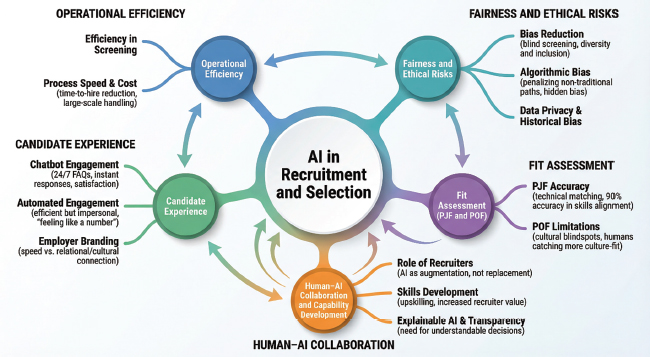
Qualitative findings will be presented as a structured narrative supported by the three‑tier thematic framework. The planned sequence includes: a brief overview of the sample (final size determined by saturation), a description of the coding architecture, and evidence‑based themes illustrating process gains (e. g., speed, consistency), constraints (e. g., transparency, privacy, bias), and transformations in recruiter roles and candidate experience. The report distinguishes between exploratory (e. g., six interviews) and confirmatory (e. g., four interviews) waves, with interviews continuing until saturation is reached. The remaining 20 interviews were combined with these waves to create a unified final dataset of 30 interviews. The presentation will integrate exemplar quotations, cross‑case contrasts, and ANN‑assisted visual summaries to clarify relationships among variables and to ground implications for practice and future research. Table 2 organizes interview excerpts into hierarchical themes, demonstrating how raw data was synthesized into broader insights. Table 2 presents the thematic analysis of interview data, highlighting key themes and patterns related to the use of AI in recruitment and selection processes and Figure 2 illustrates the thematic map, showing the relationships and interconnections among the identified categories.
TABLE 2. INTEGRATED THEMATIC ANALYSIS OF INTERVIEWS ON AI IN RECRUITMENT AND SELECTION
Interview Excerpt (First Order) |
Initial Code |
Second- Order Theme (Patterns) |
Third-Order Theme (Abstract Insights) |
Relationship/ Explanation |
“AI filters out 80% of unqualified resumes in minutes, saving us weeks of manual work”. |
Efficiency in Screening |
Operational Efficiency |
AI enhances recruitment speed and scalability |
AI reduces time-to-hire by automating repetitive tasks. |
“The algorithm ignores demographics, so we are hiring more diversely than before”. |
Bias Reduction |
Fairness in Hiring |
AI promotes diversity and inclusion |
Automated systems minimize human bias in candidate evaluation. |
“Candidates love our chatbot—it answers FAQs instantly, even at midnight”. |
Chatbot Engagement |
Candidate Experience |
AI improves employer branding |
Real-time interactions enhanc applicant satisfaction. |
“AI struggles to assess soft skills like teamwork or adaptability”. |
Technical Limitations |
Human-AI Collaboration |
AI cannot fully replace human judgment |
Hybrid approaches (AI + human input) yield the best results. |
“We had to revise our AI tool because it unfairly penalized non-traditional career paths”. |
Algorithmic Bias |
Ethical Risks |
Responsible AI adoption is critical |
Unchecked AI can perpetuate hidden biases; audits are necessary. |
“Predictive analytics helped us identify high-potential candidates we would have overlooked”. |
Data-Driven Hiring |
Strategic Decision- Making |
AI enables proactive workforce planning |
Analytics uncovers hidden talent patterns for better hires. |
“Some candidates distrust AI and feel like a ‘number’ in the system”. |
Candidate Distrust |
Resistance to Change |
Change management is essential |
Transparency about AI’s role can mitigate candidate concerns. |
“AI matches technical skills to job requirements with 90% accuracy”. |
Technical Matching |
PJF as AI's Core Strength |
AI excels at objective competency alignment |
AI outperforms humans in skills-based screening |
“Our algorithm keeps rejecting non-traditional candidates who could thrive here”. |
Cultural Blindspots |
POF as AI's Limitation |
AI struggles with organizational culture assessment |
Requires human judgment for organizational culture fit |
“Human interviews catch 2x more organizational culture- fit candidates than our AI”. |
Human Judgment |
POF Superiority |
Humans outperform AI in assessing value alignment (POF) |
Critical for roles requiring teamwork/innovation |
“Our chatbot answers salary queries instantly but fails to convey our team's collaborative spirit”. |
Automated Engagement |
Efficiency vs. Employer Branding |
AI improves response time but weakens cultural connection (POF) |
Speed gains may come at the cost of candidate experience |
Source: Own elaboration.
FIGURE 2. THEMATIC MAP DIAGRAM SHOWING RELATIONSHIPS BETWEEN IDENTIFIED CATEGORIES
Source: Own elaboration.
4.1. First-order themes: direct participant responses
AI’s purported screening efficiency primarily facilitates Person-Job Fit (PJF)—the alignment of workers with vacancies. Participants consistently reported high levels of accuracy and substantial time savings in the screening process. This aligns with broader industry observations that resume review time has decreased from weeks to just a few hours using automated keyword parsing. Similarly, in terms of bias reduction, participants noted a perceived increase in diverse candidate selection when demographic anonymization techniques were applied. However, both the literature and participant accounts caution that these benefits are not automatic. AI can perpetuate or amplify existing biases if improperly calibrated. Furthermore, participants indicated that AI-driven Person-Job Fit algorithms often struggle to evaluate non-traditional candidates, revealing inherent limitations in their ability to assess unconventional qualifications or career paths.
An interesting duality is presented in the candidate experience findings. AI tools like chatbots do indeed increase how responsive your company can be (a PJF efficiency); however, they excel at nothing more than responding (rather than conveying the organizational culture—and vice versa), which is a core element of the POF. This, too, explains why candidates often describe these interactions as personally unfavourable, or worse, as artificial intelligence bolsters transactional interaction but reduces the relationships that fuel the POF appraisals.
Of equal importance, both analyses agree that AI does not do well at assessing soft skills and cultural fit, which are the very things that make up POF. AI systems struggle in assessing teamwork, adaptability, and values alignment, but can find twice as many organizational culture-aligned candidates for human recruiters to find. AI’s PJF strengths do not close this POF gap, however, and even though organizations become more efficient, they run the risk of cultural mismatch.
This PJF/POF tension is further raised by the ethical concerns raised by both passages. Fits are subject to different issues of data privacy and algorithmic transparency: PJF is subject to skill- based bias threats, and POF is affected by cultural blind spots. This dual challenge poses a need for balanced solutions — PJF integrity audits are in the hands of regular algorithms, and POF validity evaluations are done through structured humans.
4.2. Second-order themes: emerging patterns
The paper then describes four insights about AI’s current role in contemporary recruitment, from the transformative and the deceptively simple to the harmful. Firstly, while AI excels at fast, efficient resume screening and technical assessments, human supervision is essential for everything from non-traditional to outlier cases, indicating AI’s current inability to understand the context. Second, there is a complex picture of AI’s bias mitigation capabilities. Technology does effectively decrease overt discrimination when demographics are anonymized. Regular algorithm audits are needed in both technical and cultural evaluations to achieve fairness on both ends of the duality.
The paradoxical dimension of the candidate experience is where AI tools make the experience 24/7 accessible to a broader set of candidates but reduce cultural relationships to the extent that they are disingenuous. The tension between transactional efficiency and relational depth is at the heart of the need to design the points of contact during the recruitment process. In addition to improving the operational aspect, AI’s predictive capabilities provide strategic value by predicting not only future skill requirements but also cultural trends that will evolve, which helps in more proactive talent pipeline development.
These patterns indicate that AI's impact is mediated through person-job fit (PJF) and person-organization fit (POF). In relation to PJF-based technical skills, participants perceived AI as highly efficient and accurate in conducting initial screening tasks. Conversely, human evaluators were consistently viewed as considerably better than AI at assessing cultural fit (POF), particularly regarding nuanced organizational values and interpersonal dynamics. According to participant accounts, the most effective recruitment implementations adopt a hybrid approach: AI handles preliminary technical screenings, while human judgment remains responsible for final cultural fit assessments, with predictive analytics informing both stages. This balanced framework enables organizations to leverage AI's operational strengths while preserving the human components essential for successful, culture-inclusive recruiting.
4.3. Third-order themes: abstract insights
Participants reported that organizations strategically adopting AI experience considerably faster hiring processes, notable cost reductions, and perceived improvements in diversity metrics. Assuming the resolution of ethical issues related to algorithmic transparency and GDPR-compliant data practices, numerous benefits become achievable. The findings suggest that AI is most effective when integrated into a hybrid recruitment model—where AI governs high-volume screening and technical assessments (Person-Job Fit, PJF)—while human recruiters focus on relationship building and evaluating organizational culture fit (Person-Organization Fit, POF). Furthermore, this hybrid approach contributes to operational efficiency while ensuring that hiring decisions remain both competent and aligned with the organization's cultural values.
A closer examination of participant accounts reveals that AI in PJF-related tasks—such as resume screening and skill matching—substantially increases hires for technical roles. Meanwhile, human recruiters remain indispensable for POF evaluation, contributing to notably higher retention rates by accurately assessing organizational cultural fit and soft skills. To maximize outcomes, organizations may implement dual ethical safeguards: regular audits of AI-driven PJF processes to prevent skill-based biases and structured human-led POF reviews to preserve cultural integrity. According to participants, the synergy between AI and human judgment creates a talent acquisition "flywheel" where efficient hiring (PJF) and strong culture fit (POF) combine to deliver a meaningful increase in the overall quality of hire.,
The most successful recruitment systems will evolve to assess PJF and POF synergistically rather than in isolation. Organizations that treat AI as merely a cost-cutting tool risk undermining long-term success. Over-optimizing one dimension (e. g., speed or technical fit) at the expense of the other (e. g., organizational cultural alignment) can lead to suboptimal hiring outcomes.
5. DISCUSSION
5.1. AI’s transformative impact on recruitment efficiency
Artificial intelligence has brought significant advancements to recruitment processes, especially in automating tasks such as resume screening, candidate-job matching, and interview scheduling. These AI-driven solutions have demonstrably reduced time-to-fill and hiring costs by automating initial repetitive and rule-based steps (Ouakili, 2025). Current evidence suggests that AI’s optimal role in HR is as an augmentative tool rather than a replacement for human decision-making. When organizations employ AI for preliminary selection but reserve final hiring decisions for human evaluators, they achieve both efficiency and nuanced judgment—AI provides speed and consistency, while human involvement ensures that complex, context-dependent judgments are made (Milhem et al., 2024; Pan & Froese, 2023).
However, research also indicates potential risks when human oversight is minimized. Excessive reliance on AI leads to what is termed “algorithmic myopia” wherein systems tend to overlook candidates with unconventional profiles or potential that deviates from historical patterns. This limitation arises from the algorithm’s tendency to replicate past trends and may result in missed opportunities for identifying diverse talent. Such findings underscore concerns regarding AI’s inability to fully eliminate bias or ensure fairness when operating without human input, especially in recruitment contexts (Drage & Mackereth, 2022; Raghavan et al., 2020; Tambe et al., 2019) Therefore, the most effective strategy is not total automation but a deliberate balance—leveraging AI for efficiency while retaining critical human judgment at key stages.
5.2. Diversity and inclusion: measurable progress with persistent challenges
Quantitative studies demonstrate that blind or skills-first screening, often supported by AI, can enhance diversity by reducing bias and broadening the pool of candidates from underrepresented groups (Parasurama & Ipeirotis, 2025). Cheng and Hackett (2019) and França et al. (2023) note that well-designed HR algorithms and AI-based potential assessments can shift attention toward job-relevant capabilities rather than demographic traits. Nevertheless, evidence also reveals that candidates from non-traditional backgrounds or certain institutions, such as women’s colleges, may be systematically disadvantaged if algorithms are trained on historical, biased data. Such outcomes illustrate AI’s propensity to perpetuate existing inequities unless corrective measures, such as retraining or bias mitigation, are implemented (Mehrabi et al., 2022; Raghavan et al., 2020).
This underscores a critical challenge: the impact of AI on equity is contingent on both model design and training data. In some documented cases, algorithms have reinforced traditional, male-dominated career trajectories by undervaluing non-linear paths or career breaks (Kleinberg et al., 2019; Wilkens et al., 2025). Therefore, initial anonymization alone is insufficient. Achieving genuine gender equity necessitates regular audits for bias, ongoing model retraining, and oversight from individuals equipped to detect and address systemic disparities (Mökander et al., 2022; van Esch et al., 2019).
5.3. Optimizing the candidate experience through balanced automation
AI-powered systems have improved recruitment by expediting processes and enhancing clarity for candidates. However, research indicates that excessive automation can diminish the perceived personal touch of the hiring process. While candidates value prompt communication and transparency, a fully automated experience may leave them feeling depersonalized, as if reduced to mere data points (Langer et al., 2020; Berkelaar et al., 2023; Sabermahani, 2023). Although chatbots and automated messaging systems offer efficiency, they lack the empathetic engagement characteristic of human interactions (Köchling et al., 2023). Thus, organizations must navigate the trade-off between operational efficiency and the maintenance of authenticity and warmth in candidate engagement, striving for a balance that preserves the human element in recruitment.
Organizations aiming to be perceived as competent benefit from the rapid dissemination of information; prompt communication enhances their image. However, authentic organizational relationships are not fostered solely through automated responses. Human interaction remains essential, especially in critical moments, as highlighted by Venkatesh and Smitha (2024). Leading organizations effectively balance the use of artificial intelligence (AI) and human intervention: AI is deployed to manage routine tasks such as scheduling interviews or addressing standard inquiries, while significant interactions—such as conducting final interviews or delivering feedback—are reserved for human professionals (Cariaga, 2025; Biradar et al., 2024).
5.4. Strategic workforce planning through predictive analytics
The application of AI in recruitment has evolved beyond basic resume screening. Contemporary organizations leverage predictive analytics to anticipate future workforce needs, identify potential skill gaps, forecast hiring demands, and monitor internal talent movement. This proactive approach enables organizations to transition from reactive hiring to strategic talent planning, aligning recruitment efforts with broader organizational objectives. Empirical studies corroborate that AI-driven analytics enable companies to anticipate talent trends and synchronize workforce planning with long-term goals (Rahaman, 2024; El Saeed et al., 2025). In this capacity, AI serves as a strategic asset, empowering HR departments to identify, cultivate, and deploy talent in ways that are difficult for competitors to replicate (Joshi et al., 2024).
If previous hiring practices exhibited gender disparities, there is a significant possibility that AI systems will replicate those biases, continually recommending candidates who fit historical patterns. Without vigilant oversight, these systems can inadvertently entrench segregation and underrepresentation, particularly concerning gender (França et al., 2023; Bansal et al., 2022). Consequently, it is imperative to integrate fairness assessments and diversity objectives into AI-driven processes to prevent the reinforcement of systemic inequities.
5.5. Ethical, trust, and adoption challenges
Widespread concerns persist regarding privacy, job security, and the opacity of AI decision-making processes (Drage & Mackereth, 2022); Venkatesh & Smitha, 2024). Trust in AI is undermined when systems function as "black boxes" whose decisions are unexplained and unchallengeable, particularly when those decisions impact employment outcomes. This aligns with prevailing research on procedural fairness, which emphasizes not only equitable outcomes but also transparency in decision-making, inclusive participation, and mechanisms for recourse.
Fostering trust requires transparent communication regarding AI capabilities, obtaining informed consent, and utilizing explainable AI systems (Pan & Froese, 2023). Equally important is equipping HR professionals with the necessary skills to leverage AI effectively. When HR stakeholders perceive AI as a tool to alleviate administrative burdens rather than a threat to their roles, acceptance and adoption rates improve significantly (Milhem et al., 2024). Studies consistently find that technology adoption is facilitated when employees recognize enhancements to their work rather than a diminution of human value. Thus, the integration of AI into recruitment processes demands a holistic approach encompassing ethical considerations, trust-building, and comprehensive change management. Successful implementation depends on transparent communication, trustworthiness, and appropriate skill development (van Esch et al., 2019).
5.6. Mediating role of Person-Job Fit (PJF) and Person-Organization Fit (POF)
A clear distinction exists between Person–Job Fit (PJF) and Person–Organization Fit (POF), which has implications for the optimal application of AI in recruitment. Empirical findings indicate that AI excels in PJF-related tasks, such as aligning candidates’ skills and experiences with specific job requirements, as these can be quantified and systematically analyzed. Algorithms are particularly effective at processing large volumes of structured data, ensuring consistency and accuracy beyond human capability (Hofeditz et al., 2022; OECD, 2023). Therefore, AI is a robust tool for matching candidates to positions based on objective criteria.
AI demonstrates clear strengths in certain aspects of recruitment, particularly in areas such as technical skills matching and resume screening. However, its performance is less robust when evaluating dimensions like cultural alignment, organizational values, teamwork, and adaptability— key components of Person-Organization Fit (POF). Empirical evidence indicates that human recruiters retain a distinct advantage in interpreting nuanced interpersonal cues, synthesizing complex social information, and assessing the less tangible factors that contribute to an individual’s alignment with organizational culture. These findings are consistent with arguments in the existing literature that POF decisions often rely on factors that resist algorithmic codification, including intuition and social dynamics (Köchling et al., 2023). From a gender perspective, the implications are multifaceted. AI-driven assessments for Person-Job Fit (PJF) can mitigate biases by focusing on demonstrable competencies, potentially neutralizing preconceived notions about women’s capabilities. Conversely, when POF evaluations are subjective or loosely defined, traditional biases regarding leadership, likability, or “fit” may remerge, disproportionately disadvantaging women and other marginalized groups (Wilkens et al., 2025; Bansal et al., 2022).
Collectively, the evidence supports a hybrid recruitment model in which AI manages initial technical screening and skill matching, while human evaluators oversee POF assessments. For this approach to be effective, organizations must articulate explicit criteria for “cultural fit” utilize diverse evaluation panels, and systematically monitor gender-related patterns in assessment outcomes. Such practices ensure that the objectivity and fairness gains achieved through AI are not undermined by unstructured or biased human judgments. When implemented with rigor, this hybrid strategy not only expedites the hiring process but also, enhances fairness and supports the development of diverse, cohesive teams aligned with organizational objectives.
6. CONCLUSION
This study addresses a significant gap in the literature by providing empirical evidence on the distinct roles AI plays in shaping Person-Job Fit (PJF) and Person-Organization Fit (POF) within real-world recruitment processes. Through practitioner interviews and field data, the research demonstrates that while AI excels at screening for technical qualifications and matching core competencies, it remains limited in evaluating softer dimensions related to cultural and interpersonal fit. The dual mediation framework introduced herein clarifies the circumstances under which hybrid AI-human recruitment systems outperform models that rely exclusively on either technology or human judgment.
6.1. Theoretical implications
This research advances the field by proposing a dual mediation framework that assesses AI’s influence through both PJF and POF lenses. While previous studies have largely emphasized AI’s speed and potential to reduce bias in initial screening, the present findings underscore the nuanced interplay between technological efficiency and the uniquely human capacity for cultural and interpersonal assessment. The evidence suggests that optimal recruitment outcomes are achieved by combining AI’s strengths in technical evaluation with human expertise in cultural fit assessment. This integrative approach offers a more sophisticated and comprehensive strategy for workforce planning and talent acquisition, addressing gaps identified in prior research on AI’s role in recruitment.
6.2. Practical implications
For human resource professionals, the findings suggest a clear division of labor: deploy AI to efficiently process large applicant pools and conduct preliminary skills assessments, but reserve the evaluation of cultural and values alignment for human panels. These panels should be diverse and trained to recognize and mitigate implicit biases. Key recommendations include conducting regular audits of algorithmic tools, maintaining transparency with candidates regarding the use of AI, and investing in recruiter training to ensure their involvement extends beyond administrative tasks to active participation in talent strategy.
6.3. Policy implications
The ethical adoption of AI in recruitment demands robust policy frameworks to support workforce transitions amid widespread algorithmic integration. Regulatory bodies must establish mandatory disclosure requirements for how AI systems evaluate and rank candidates, ensuring organizational accountability while maintaining public trust in automated hiring processes. Governments and educational institutions should collaborate on reskilling initiatives, equipping HR professionals to shift from administrative duties to strategic roles in culture assessment and talent development. Targeted programs—such as certifications in AI-augmented recruitment, bias detection, and ethical AI governance—can facilitate this evolution. For AI developers, the findings offer clear guidance on enhancing POF capabilities through advanced natural language processing for interviews and sentiment analysis in video assessments. Finally, policymakers should mandate industry standards for diversity metrics and comprehensive audit trails in AI hiring platforms, aligned with existing labor and equal opportunity laws.
6.4. Generalizability to organizational cultures outside Saudi Arabia
It’s important to address how our findings apply beyond Saudi Arabia. This study is rooted in the Saudi context, which has its own cultural norms—things like high power distance, strong group ties, and the ongoing changes driven by Vision 2030. Because of these distinct features, we urge caution in directly applying our empirical results to very different settings, such as Western individualistic cultures, East Asian settings with different types of hierarchies, or Latin American organizations.
Nevertheless, certain aspects of our findings may hold broader relevance.
The hybrid recruitment model we propose—using AI for Person-Job Fit (PJF) tasks and leaving Person-Organization Fit (POF) decisions to human evaluators—is supported by robust theoretical reasoning and seems adaptable in many organizational contexts. The results show that AI handles structured, quantitative tasks well but can struggle with the intangible, nuanced judgments central to cultural fit and interpersonal relationships. This isn’t specific to Saudi Arabia; it’s a limitation we’ve seen echoed in AI literature globally. Similarly, the risks we identify—like algorithmic tunnel vision and reproduction of past biases—are not just local observations, but documented concerns in recruitment systems across different countries.
We recommend that readers exercise caution when extrapolating our specific empirical findings to other contexts and encourage cross-cultural replication studies to establish the boundary conditions of our results.
6.5. Study limitations
As with any research grounded in a specific country, our study’s findings are shaped by Saudi Arabia’s unique institutional and cultural environment. This includes strong hierarchical structures, close-knit group dynamics, and direct policy influences from Vision 2030. Because of this, the study’s empirical findings shouldn’t be assumed to hold unchanged in places like Western Europe, North America, East Asia, or Latin America. While the underlying logic of using AI for technical fit and people for organizational fit is probably useful elsewhere, the specifics always depend on context. We encourage others to replicate and extend this work in different cultural settings to clarify where the boundaries of our conclusions really lie.
6.6. Future research directions
Longitudinal research is needed to assess the sustained impacts of AI integration on hiring quality, employee retention, and workforce diversity. Comparative studies across industries evaluating all-AI, all-human, and hybrid recruitment approaches would further validate the proposed framework’s generalizability. Additional inquiry should examine AI’s effects on the career trajectories of women with non-linear or caregiving-interrupted work histories. Future research might also explore the efficacy of specific AI technologies and develop theoretical models capturing AI’s evolving role in talent acquisition.
7. ETHICAL APPROVAL
Ethical approval for this study was granted by the relevant Research Ethics Committee of the institution where the interviews were conducted, prior to the commencement of data collection. All procedures involving human participants were carried out in accordance with established institutional ethical guidelines and the principles of the Declaration of Helsinki. The study strictly upheld voluntary participation, informed consent, confidentiality, anonymity, and robust data protection measures throughout the research process.
8. INFORMED CONSENT
Informed consent was obtained from all participants prior to data collection. Participants were provided with detailed information regarding the study’s purpose, procedures, voluntary nature of participation, and their right to withdraw at any stage without consequence. They were assured that all responses would be treated confidentially and used solely for academic research purposes. No personally identifiable information was recorded, and findings are reported in aggregate form to ensure anonymity.
9. FUNDING
This research has not received external funding.
10. AUTHOR’S CONTRIBUTION
Conceptualisation, M. P. and A. R.; Methodology, M. P. and A. R.; Data collection, A. R.; Data analysis, M. P.; Writing - Preparation of original draft, M. P.; Writing - Review and editing, M. P. and A. R.; Supervision, M. P. and A. R.
REFERENCES
Albaroudi, E., Mansouri, T., & Alameer, A. (2024). A comprehensive review of AI techniques for addressing algorithmic bias in job hiring. AI, 5(1), 383–404. https://doi.org/10.3390/ai5010019
Bagadi, S., & Lakshmi, Y. (2025). The role of artificial intelligence in transforming talent acquisition processes. Nanotechnology Perceptions, 21(S1), 403–411. file:///C:/Users/TOSHIBA/Downloads/36%20(2).pdf
Bansal, R., Sodhi, K. K., Mittal, P., & Saxena, P. (2022). Role of artificial intelligence (AI) in meeting diversity, equality and inclusion (DEI) goals. In Proceedings of the 8th International Conference on Advanced Computing and Communication Systems (ICACCS). https://doi.org/10.1109/ICACCS54159.2022.97852
Berkelaar, B. L., Halbesleben, J. R. B., & Harris, A. L. (2023). Applicant reactions to artificial intelligence selection systems. Computers in Human Behavior, 141, 107621. https://doi.org/10.1016/j.chb.2022.107621
Biradar, A., Ainapur, J., Kalyanrao, K., Aishwarya, Sudharani, & Shivaleela. (2024). The impact of artificial intelligence on modern recruitment practices: A multi-company case study analysis. International Journal of Business and Management Invention, 13(9), 143–150. https://doi.org/10.35629/8028-1309143150
Bogen, M., & Rieke, A. (2018). Help wanted: An examination of hiring algorithms, equity, and bias. Upturn. Available at: https://www.upturn.org/static/reports/2018/hiring-algorithms/files/Upturn%20--%20Help%20Wanted%20-%20An%20Exploration%20of%20Hiring%20Algorithms,%20Equity%20and%20Bias.pdf
Budhwar, P., Chowdhury, S., Wood, G., Aguinis, H., Bamber, G. J., Beltran, J. R., Boselie, P., Cooke, F. L., Decker, S., DeNisi, A., Dey, P. K., Guest, D., Knoblich, A. J., Malik, A., Paauwe, J., Papagiannidis, S., Patel, C., Pereira, V., Ren, S., Rogelberg, S., Saunders, M. N. K., Tung, R. L., & Varma, A. (2023). Human resource management in the age of generative artificial intelligence: Perspectives and research directions on ChatGPT. Human Resource Management Journal, 33(3), 606–659. https://doi.org/10.1111/1748-8583.12524
Buolamwini, J., Ordóñez, V., Morgenstern, J., & Learned-Miller, E. (2020). Facial recognition technologies: A primer. Algorithmic Justice League. https://people.cs.umass.edu/~elm/papers/FRTprimer.pdf
Cariaga, R. (2025). Human-AI collaboration in decision-making, creativity, and productivity: Systematic review. SSRN. https://ssrn.com/abstract=5378095
Cheng, M. M., & Hackett, R. D. (2019). A critical review of algorithms in HRM: Definition, theory, and practice. Human Resource Management Review, 31(1), 100698. https://doi.org/10.1016/j.hrmr.2019.100698
Drage, E., & Mackereth, K. (2022). Does AI debias recruitment? Race, gender, and AI’s “eradication of difference”. Philosophy & Technology, 35(4), 89. https://doi.org/10.1007/s13347-022-00543-1
Edwards, J. (1991). Person-job fit: A conceptual integration, literature review, and methodological critique. In C. L. Cooper, & I. T. Robertson (Eds.), International review of industrial and organizational psychology. (1991 ed., Vol. 6, pp. 283-357) https://research.manchester.ac.uk/en/publications/person-job-fit-a-conceptual-integration-literature-review-and-met/
El Saeed, M., Maarouf, H. M., & Younis, R. A. A. (2025). The role of HRM-service quality in the relationship between electronic human resource management and perceived performance. Future Business Journal, 11(1). https://doi.org/10.1186/s43093-024-00415-4
Fu, J. (2025, January 23). Top 12 AI recruiting software and screening tools for hiring top talent. Arc. Available at: https://arc.dev/employer-blog/ai-screening-tools-and-recruiting-software/
Fister, T., & Thiruvathukal, G. K. (2024). Artificial intelligence employment interviews: Examining limitations, biases, and perceptions. Computer, 57(10), 76–81. https://doi.org/10.1109/MC.2024.3404669
França, T. J. F., Mamede, H. S., Barroso, J. M. P., & Santos, V. M. P. D. (2023). Artificial intelligence applied to potential assessment and talent identification in an organisational context. Heliyon, 9(4), e14694. https://doi.org/10.1016/j.heliyon.2023.e14694
Ghedabna, L., Ghedabna, R., Imtiaz, Q., Faheem, M. A., Alkhayyat, A., & Hosen, M. S. (2024). Artificial intelligence in human resource management: Revolutionizing recruitment, performance, and employee development. Nanotechnology Perceptions, 20(S10), 52–68. file:///C:/Users/TOSHIBA/Downloads/ArtificialIntelligenceinHumanResourceManagement-RevolutionizingRecruitmentPerformanceandEmployeeDevelopment%20(1).pdf
Hofeditz, L., Clausen, S., Rieß, A., Mirbabaie, M., & Stieglitz, S. (2022). Applying XAI to an AI-based system for candidate management to mitigate bias and discrimination in hiring. Electronic Markets, 32(4), 2207–2233. https://doi.org/10.1007/s12525-022-00600-9
Irwin, P., Jones, D., & Fealy, S. (2023). What is ChatGPT, and what do we do with it? Implications of the age of AI for nursing and midwifery practice and education: An editorial. Nurse Education Today, 127, 105835. https://doi.org/10.1016/j.nedt.2023.105835
Joshi, A., Singh, R., & Rani, S. (2024). Strategic adoption of artificial intelligence for human resource management practices transforming healthcare sector. The International Journal of Education Management and Sociology, 3(3), 151–163. https://doi.org/10.58818/ijems.v3i3.133
Kambur, E., & Akar, C. (2022). Human resource developments with the touch of artificial intelligence: A scale development study. International Journal of Manpower, 43(1), 168–205. https://doi.org/10.1108/IJM-04-2021-0216
Khogali, H. O., & Mekid, S. (2023). The blended future of automation and AI: Examining some long-term societal and ethical impact features. Technology in Society, 73, 102232. https://doi.org/10.1016/j.techsoc.2023.102232
Kleinberg, J., Ludwig, J., Mullainathan, S., & Rambachan, A. (2019). Algorithmic fairness. AEA Papers and Proceedings, 109, 22–27. https://www.aeaweb.org/articles/pdf/doi/10.1257/pandp.20181018
Köchling, A., Wehner, M. C., & Warkocz, J. (2023). Can I show my skills? Affective responses to artificial intelligence in the recruitment process. Review of Managerial Science, 17(5), 2109–2138. https://doi.org/10.1007/s11846-021-00514-4
Kristof-Brown, A. L., Schneider, B., & Su, R. (2023). Person-organization fit theory and research: Conundrums, conclusions, and calls to action. Personnel Psychology, 76(2), 375–412. https://doi.org/10.1111/peps.1258
Lambrecht, A., & Tucker, C. E. (2019). Algorithmic bias? An empirical study of apparent gender-based discrimination in the display of STEM career ads. Management Science, 65(7), 2966–2981. https://doi.org/10.1287/mnsc.2018.3093
Langer, M., König, C. J., & Papathanasiou, M. (2020). Highly automated interviews: Applicant reactions and the organizational context. Journal of Managerial Psychology, 35(4), 301–314. https://doi.org/10.1108/JMP-12-2018-0551
Mehrabi, N., Morstatter, F., Saxena, N., Lerman, K., & Galstyan, A. (2022). A survey on bias and fairness in machine learning. ACM Computing Surveys, 55(6), 1–35. https://dl.acm.org/doi/pdf/10.1145/3457607
Milhem, M., Ateeq, A. A., Alastal, A. Y. M., & Almeer, S. (2024). Digital transformation in HRM: Navigating the future of human resource management. In Business sustainability with artificial intelligence (AI): Challenges and opportunities. Springer. https://doi.org/10.1007/978-3-031-71318-7_3
Mertens, D. M. (2018). Mixed Methods Design in Evaluation. Sage Publications, Inc. https://doi.org/10.4135/9781506330631
Mökander, J., Sheth, M., Gersbro-Sundler, M., Blomgren, L., & Floridi, L. (2022). Challenges and best practices in corporate AI governance. Frontiers in Computer Science, 4, 1068361. https://doi.org/10.3389/fcomp.2022.106836
Organisation for Economic Co-operation and Development. (2023). Artificial intelligence and labour market matching. OECD. https://doi.org/10.1787/1e1c9ab3-en
Ouakili, O. (2025). The impact of artificial intelligence (AI) on recruitment process. Open Journal of Business and Management, 13, 749–762. https://doi.org/10.4236/ojbm.2025.132039
Pan, Y., & Froese, F. J. (2023). An interdisciplinary review of AI and HRM: Challenges and future directions. Human Resource Management Review, 33(1), 100924. https://doi.org/10.1016/j.hrmr.2022.100924
Paramita, D., Okwir, S., & Nuur, C. (2024). Artificial intelligence in talent acquisition: Exploring organizational and operational dimensions. International Journal of Organizational Analysis, 32(11), 108–131. https://doi.org/10.1108/IJOA-09-2023-3992
Parasurama, P., & Ipeirotis, P. (2025). Algorithmic hiring and diversity: Reducing human-algorithm similarity for better outcomes [Preprint]. arXiv. https://doi.org/10.48550/arXiv.2505.14388
Raghavan, M., Barocas, S., Kleinberg, J., & Levy, K. (2020). Mitigating bias in algorithmic hiring: Evaluating claims and practices. In Proceedings of the 2020 Conference on Fairness, Accountability, and Transparency (pp. 469–481). https://dl.acm.org/doi/pdf/10.1145/3351095.3372828
Rahaman, M. A., & Bari, M. H. (2024). Predictive analytics for strategic workforce planning: A cross-industry perspective from energy and telecommunications. International Journal of Business Diplomacy and Economy, 3(2), 14–25. https://doi.org/10.2139/ssrn.4983349
Raji, N., George, V., Iyer, R. S., Sharma, S., & Mahabub Basha, S. (2024). Revolutionizing recruitment: The role of artificial intelligence in talent acquisition. ShodhKosh Journal of Visual and Performing Arts, 5(1). https://doi.org/10.29121/shodhkosh.v5.i1.2024.2141
Regev, A., & Shtudiner, Z. (2025, July 23). Gender and appearance bias in AI recruitment: Experimental evidence. SSRN. https://doi.org/10.2139/ssrn.5363227
Sabermahani, Z. (2023). The implications of AI and ChatGPT in students’ job search and recruitment experiences (Master’s thesis). LAB University of Applied Sciences, Finland. https://www.theseus.fi/bitstream/handle/10024/891551/Sabermahani_Zahra.pdf
Sekiguchi, T. (2004). Person–organization fit and person–job fit in employee selection: A review of the literature. Osaka Keidai Ronshu, 54(6), 179–196. https://www.i-repository.net/il/user_contents/02/G0000031Repository/repository/keidaironshu_054_006_179-196.pdf
Shankar, M., Sava, D. M., Diaz, K., & Kethar, J. (2025). Biases in AI-based hiring algorithms: Effects on minorities and how it can be eradicated. Journal of Student Research, 14(1). https://doi.org/10.47611/jsrhs.v14i1.8840
Soori, M., Arezoo, B., & Dastres, R. (2023). Artificial intelligence, machine learning and deep learning in advanced robotics: A review. Cognitive Robotics. Advance online publication. https://doi.org/10.1016/j.cogr.2023.04.0
Srivastava, S. (2024). Transforming talent acquisition: How AI is shaping modern HRM. International Journal of Science and Research Archive, 13(2), 1236–1244. https://doi.org/10.30574/ijsra.2024.13.2.2252
Tambe, P., Cappelli, P., & Yakubovich, V. (2019). Artificial intelligence in human resources management: Challenges and a path forward. California Management Review, 61(4), 15–42. https://doi.org/10.1177/0008125619867910
van Esch, P., Black, J. S., & Ferolie, J. (2019). Marketing AI recruitment: The next phase in job application and selection. Computers in Human Behavior, 90, 215–222. https://doi.org/10.1016/j.chb.2018.09.009
Vedapradha, R., Hariharan, R., David Winster Praveenraj, D., Sudha, E., & Ashok, J. (2023). Talent acquisition: Artificial intelligence to manage recruitment. E3S Web of Conferences, 376, 05001. https://doi.org/10.1051/e3sconf/202337605001
Venkatesh, A. N., & Smitha, V. (2024). Integrating AI into HR practices: Current trends and future directions. Journal of Informatics Education and Research, 4(3). https://ssrn.com/abstract=5044825
Wilkens, U., Lutzeyer, I., Zheng, C., Beser, A., & Prilla, M. (2025). Augmenting diversity in hiring decisions with artificial intelligence tools. The International Journal of Human Resource Management, 36(14), 2585–2622. https://doi.org/10.1080/09585192.2025.2492867
ANNEX
TABLE 1. INTERVIEW QUESTIONS AND PARTICIPANT QUOTES
Interview Question |
Participant Quote |
1. Do you believe that AI contributes to improving the accuracy of candidate selection? |
“AI screening is spot-on for matching resumes to job requirements—our matches are much more accurate than before”. |
2. Do you think AI reduces human bias in the hiring process? |
“Blind screening helped me feel like my background didn’t matter—just my skills”. |
3. Do you see AI tools helping to speed up the hiring process compared to traditional methods? |
“AI can review and rank candidates 10 times faster than humans, so we get shortlists in hours instead of weeks”. |
4. Do you believe AI may lead to the exclusion of qualified candidates due to technical limitations? |
“I was told I was a suboptimal fit because my degree wasn’t from a traditional school, even though I have real experience”. |
5. Do you think reliance on AI could negatively impact human interaction in the hiring process? |
“The process was efficient, but I never felt like a person was really interested in me”. |
6. Do you see AI potentially replacing the role of traditional recruiters in the future? |
“At first, I worried AI would replace my job, but now I see it as a tool to help me focus on more strategic work”. |
7. Do you believe organizations need to develop the skills of recruitment professionals to use AI effectively? |
“Learning how to work with AI has made me more valuable to my organization”. |
8. To what extent do you think AI has contributed to improving the efficiency and speed of recruitment and talent acquisition? |
“AI has helped us cut time-to-hire by up to 80% and reduced costs by 30%”. |
9. How effective is AI in identifying and matching candidates to specific roles? |
“AI is great for matching technical skills, but sometimes misses the nuances of fit for culture”. |
10. What are the main challenges you have encountered while integrating AI into the recruitment and talent acquisition process? |
“The main challenge is data privacy and the risk of inheriting bias from historical data”. |
11. What AI-powered tools or platforms do you use in recruitment and talent acquisition? |
“We use platforms like Aisera for screening and scheduling, and ChatGPT for generating job descriptions”. |
12. What benefits have you observed since incorporating AI into the recruitment and talent acquisition process? |
“AI has helped us handle large-scale recruitment with high candidate satisfaction”. |
13. Do you believe AI can enhance diversity and inclusion in recruitment? Why or why not? |
“AI can help reduce unconscious bias and increase diversity, but only if the algorithms are regularly audited”. |
14. How satisfied are you with the AI-powered tools currently used in your recruitment process? |
“Our satisfaction score is 8.6/10, but we still need more transparency in AI decisions”. |
15. What improvements would you like to see in AI-driven recruitment technologies? |
“I’d like to see more explainable AI and better integration of human judgment for cultural fit”. |
Source: Own elaboration.
_______________________________
* Corresponding author: mpmohammed@kau.edu.sa