Fernández Soriano, B. (2026). Lexico-semantic construction of fear in Maya Angelou’s autobiography of girlhood. RILEX. Revista sobre investigaciones léxicas, 9/II. pp. 71-101
LEXICO-SEMANTIC CONSTRUCTION OF FEAR IN MAYA ANGELOU’S AUTOBIOGRAPHY OF GIRLHOOD
LA CONSTRUCCIÓN LÉXICO-SEMÁNTICA DEL MIEDO EN LA OBRA AUTOBIOGRÁFICA DE NIÑEZ DE MAYA ANGELOU
Blanca Fernández Soriano
Universidad Complutense de Madrid
ABSTRACT
This article focuses on the lexico-semantic construction of fear in Maya Angelou’s first autobiographical piece, I Know Why the Caged Bird Sings (1969). Through a lexicographic analysis and the application of the FrameNet framework, this study explores the emotion talk and semantic framing of fear. The analysis reveals that fear emerges as the most frequent emotion in the text, with a high degree of lexical variation and semantic nuance. Even though some general profile verbs, nouns, and adjectives are used–namely, afraid, fear, scared and to fear–, in Angelou’s text, a medium and high degree of fear intensity comes up frequently through elements such as dread, panic or terror. It is suggested that fear is rarely framed as a momentary, instinctive reaction; rather, it is constructed as a pervasive emotional condition shaped by gender, race, and social contexts. Results show that the core elements composing the semantic frame of fear in Angelou’s narrative must be present to verbalize the expression of fear and at least three of these are present in all instances of this text: [EXPERIENCER], [STATE] and [STIMULUS]/[TOPIC]. By integrating linguistic, cognitive, and socio-cultural perspectives, this study contributes to the expansion of the area of lexicology and cognitive lexicography of emotion, and foregrounds the complexity and cultural specificity of fear in Black autobiographical discourse of girlhood.
Keywords: emotion, fear, lexicology, semantic frame, Maya Angelou, black girlhood.
RESUMEN
Este artículo se centra en la construcción léxico-semántica del miedo en la primera obra autobiográfica de Maya Angelou, I Know Why the Caged Bird Sings (1969). A través de un análisis lexicográfico y de la aplicación del marco FrameNet, este estudio examina el discurso de emoción y el encuadre semántico del miedo. El análisis revela que el miedo es la emoción más frecuente en el texto, con un alto grado de variación léxica y matices semánticos. Aunque se emplean algunos sustantivos, verbos y adjetivos de perfil general (como afraid, fear, scared y to fear), en el texto de Angelou aparece con frecuencia un grado medio o alto de intensidad del miedo mediante elementos como dread, panic o terror. Se sugiere que el miedo rara vez se enmarca como una reacción momentánea o instintiva, sino que se construye como una condición emocional persistente, moldeada por el género, la raza y los contextos sociales. Los resultados muestran que los elementos nucleares que componen el marco semántico del miedo en la narrativa de Angelou deben estar presentes para verbalizar su expresión y que al menos tres de ellos aparecen en todos los ejemplos analizados: [EXPERIENCER], [STATE] y [STIMULUS]/[TOPIC]. Al integrar perspectivas lingüísticas, cognitivas y socioculturales, este estudio contribuye a la ampliación del campo de la lexicología y la lexicografía cognitiva de la emoción, y pone de relieve la complejidad y especificidad cultural del miedo en el discurso autobiográfico de la niñez negra femenina.
Palabras clave: emoción, miedo, lexicología, marco semántico, Maya Angelou, niñez Negra femenina.
Recibido: 13-08-2025
Aceptado: 05-03-2026
DOI: https://doi.org/10.17561/rilex.9.2.9849
1. Introduction
Autobiographical memory is the core of identity.
To a large extent, we are the stories we tell about ourselves.
ROBYN FIVUSH (2013)
Emotions are deeply embedded in language, shaping how individuals experience, express, and conceptualize their inner thoughts. Particularly in autobiographical texts, language of emotion becomes a key site through which personal and cultural identities are negotiated. Even though there has been an increasing interest in the description of emotion from linguistics (Ortony, Clore & Collins, 1988; Kövecses, 1990, 2000, 2015; Wierzbicka, 1999, 2009; Peräkylä & Sorjonen, 2012; Tash, Kolesnikova, Ahani & Sidorov, 2024), autobiographical discourse has been ultimately neglected as a valid source for emotion analysis, especially in relation to life-writing of Black girlhood (hooks, 1989; Douglas, 2022). Existing literature on emotion and language highlights the continuing challenge that the analysis of emotional expression poses to scholarship due to its complex and subjective nature, as well as its core presence in human experience.
Among the most salient linguistic methodologies that have contributed to this area are Kövecses’s work on conceptual metaphors of emotion (1986, 1990, 2000, 2002, 2015), Wierzbicka’s emotion primitives through Natural Semantic Metalanguage (1990, 1992, 1999, 2009), or the evaluation systems proposed by Systemic Functional Linguistics (Martin & White, 2005; Alba-Juez & Thompson, 2014; Alba-Juez & Mackenzie, 2016, 2019). Some approaches have developed definition structures for emotion terms, such as Ostermann’s cognitive lexicography (2012, 2015), which draws mainly on metonymical and metaphorical language from a cognitive linguistic approach to explain the way we express and structure our thinking and feeling. Yet, one of the most relevant issues regarding the relationship between language and emotion is the following: emotional experiences cannot be reduced to their linguistic labels. Social, cultural, and individual variables affect the meaning of emotion terms, misleadingly taken at times as synonyms or equivalents in different languages.
Most previous work on emotion has been based on corpora, such as the BNC Consortium (2007), COCA (Davies, 2008) or GloWbE (Davies, 2013), among others, which have been of vital importance for the development of cognitive and lexico-semantic studies (Bednarek, 2009; Güldenring, 2017, 2020; Maternová, 2024). Nonetheless, this paper advocates for the value of autobiographical texts as a relevant corpus for the linguistic study of the construction of emotion. This sort of discourse allows for the observation of the cultural, economic, political, and individual elements that influence the perception and expression of emotion. At the same time, autobiographical memories are influenced by emotions, as they impact the encoding and retrieval processes. In this sense, for instance, Wardell, Madan, Jameson, Cocquyt, Checknita, Liu and Palombo researched on how the process of verbalizing emotions affects the actual experience of emotion (2021). As D’Argembeau, Comblain, and Van der Linden (2003) observed, emotional memories seem to receive more attention, be better remembered, and more frequently reactivated. Some authors have worked on emotional expression through memoir, like Holland and Kensinger’s research on memory and autobiographical writing (2010) or Besemeres’s work on bilingualism (2010).
In view of this, the present study attempts to bridge some of these gaps which concern the study of autobiographical discourse as a valid source for linguistic analysis of early emotional experience with a focus on Black girlhood. Considering the expressions and concepts which people use to talk and understand their emotions as “language- and culture-specific” (Wierzbicka, 2009, p. 4), this work proposes a lexicographic and contextual semantic analysis of the emotion talk of fear in I Know Why the Caged Bird Sings (1969), the first memoir by African American author Maya Angelou, in order to observe the intertwining of personal experience, appraisal, and context in the expression of emotion for a Black girl in the 1960s United States of America.
2. Fear in Language
Parting from the complexity and multidimension of emotion, fear is generally considered one of the basic human emotions (Ekman, 1992a, 1992b, 2004), as well as primitive and evolutively necessary (Van der Kolk, 2014). Several disciplines have paid great attention to its study, particularly from the perspectives of biology (Daniel-Watanabe & Fletcher, 2021; Fanselow & Hoffman, 2024; Landová, Polák, Janovcová, Štolhoferová, Peterková, Chomik & Frynta, 2025) and psychology (Öhman & Mineka, 2001; LeDoux, 2012, 2014; Chen, Hussein, Nasri, Yao, Qin, Zhao & Zuo, 2024). Research has shown that it is a fundamental emotion which has been shaped by evolution to protect the individual and respond effectively to potential risks, such as natural disasters (Prokop, 2016), dangerous animals (LoBue & DeLoache, 2008), or some environmental factors, like darkness or heights (Peléšková, Polák, Janovcová, Chomik, Sedláčková, Frynta & Landová, 2024). Overall, it seems to be cognitively fixed with a negative connotation, a human response to the uncertain, the dangerous, or the unpredictable (Miroshnychenko, 2020).
As introduced, one linguistic framework stands out in the frame of cognitive semantics, which considers the role of culture and thought to comprehend the expression(s) of emotion. Wierzbicka has been recognized as one of the major contributors to emotion theory: her work emphasizes the significance of language and cross-cultural comparison in order to provide insights in the underlying universals of human cognition (Wierzbicka, 1999). One of her most influential theories is Natural Semantic Metalanguage (NSM), a linguistic framework that seeks to identify the core, culture-independent meanings that are thought to inhabit the vocabulary of all languages. NSM is rooted in the idea that language reflects and shapes the way we think about the world. Furthermore, NSM considers the notion of “prototypical” emotional events, which refers to the basic components of an emotional experience shared cross-culturally. Using these prototype scenarios, Wierzbicka (1992, p. 539) suggests that emotion can be detected in terms of thought, want, and feeling. By identifying these prototypical components, the underlying universals of emotional experiences might be better understood and empirically observed, as well as the ways in which they are expressed and conceptualized in different cultures.
Following Wierzbicka’s semantic theory, fear is about something bad happening (either to us or in general) (1999, p. 363). It is differentiated from anger or sadness, for the bad thing is predicted to happen or will probably happen in the future. Fear is also accompanied by a feeling of weakness or helplessness. Accordingly, the basic concept of fear covers three criteria: 1) something bad will/can happen (to me); 2) I don’t want this; and 3) I can’t prevent it (or: I don’t know what I can do about it). She describes the prototype scenario of fear (noun and verb) as follows:
X feels something (when X thinks of Y)
sometimes a person thinks something like this:
I don’t know what will happen
something very bad can happen
I don’t want this
because of this, I would want to do something
I don’t know if I can do anything
because of this, this person feels something bad
X feels like this
On the other hand, with the aim of proposing a methodology for emotion analysis, which disentangles its linguistic complexity, Bednarek distinguishes between “emotion talk” and “emotional talk” (2008, 2009). Emotion talk constitutes the expressions that “directly and explicitly name a particular emotional response” (2009, p. 396), whereas emotional talk concerns verbal or non-verbal expressions that are typically used to indirectly signal some kind of emotional state. As emotional talk involves conceptual language, expressed mainly by metaphors and metonymies, which will be dealt with in further analyses, the focus of this paper will be emotion talk, which includes the lexical realisations of fear.
When it comes to the domain of fear, emotion talk in English covers a number of lexical items such as afraid, dread, fear, terrified or terror. Lazarus (1991) claims that fear is the name of a family of related emotions, which includes, for instance, anxiety fright, or horror. Thus, a diverse range of lexical units are expected to be found that form the complex picture of fear in this memoir. Figure 1 schematizes the main lexical items belonging to the semantic field of fear emotion talk according to the dictionary Merriam Webster (retrieved from Zhgun, 2019). With the notion fear as centre, the first periphery contains its closest analogues, whereas the outer periphery includes words usually observed in association with this domain.
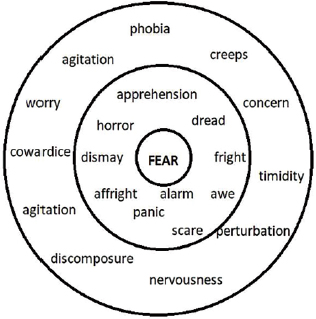
Figure 1: Semantic field of the domain of fear (Zhgun, 2019, p. 248)
In this sense, cognitive lexicography, while rather a young branch in linguistics, has proven useful and fruitful in the study of emotion terms. Within this framework, the FrameNet project (Ruppenhofer, Ellsworth, Petruck, Johnson, Baker & Scheffczyk, 2016) proposes a ‘feeling’-frame in order to describe the components of emotions. It theorizes an emotion or emotional state, an experiencer, and an evaluation of the emotional state for a certain emotion. Following this foundation, Ostermann defines fear cognitively as “the bad and threatening feeling slowly coming up inside you when you think something bad is going to happen and you are in danger” (2012, p. 496). For instance, when you are by yourself in the dark, fear may make your heart beat faster, make you shiver or tremble, or want to run away from the situation.
As it will be further developed in Section 3, fear is composed by certain core elements: an experiencer (i.e., the person or sentient entity that experiences or feels the emotions), an expressor (i.e., the body part, gesture, or other expression of the experiencer that reflects their emotional state, denoted by an adjective or noun), a state (i.e., the abstract noun that describes a more lasting experience by the experiencer), a stimulus (i.e., the person, event, or state of affairs that evokes the emotional response in the experiencer), and the topic (i.e., the general area in which the emotion occurs, which indicates a range of possible stimulus). Non-core elements of fear include circumstances, degree, empathy target, explanation, manner, parameter, and time.
As it is suggested, the classification and codification of fear is not as simple as it might seem since it may take different psychological, physiological, social, and linguistic realizations depending on the context and the individual, as well as their background, culture, and language. Hence, it is relevant to carry out analyses that take these variables into consideration to attain a comprehensive understanding of the phenomenon of fear.
3. Methodology
Bearing in mind the aforementioned, this paper focused on Maya Angelou’s first memoir I know why the caged bird sings (1969), a text of approximately 78,000 words tracing Maya’s1 childhood from age three through seventeen, from her shy beginnings in the racially segregated South of the United States of America to the birth of her first son in San Francisco. Through a bottom-up analysis of emotion of the text, all the instances of fear were extracted. An instance refers to a clause, sentence or segment where fear is, either explicitly expressed or inferable from context, the main emotion of a character. This means that, within the same segment, fear can be attributed to different characters. As suggested by previous research, fear is one of the most frequent emotions in childhood (Tremewan & Strongman, 1991; Mash & Barkley, 2014) and it was also the case in this text, where fear instantiated on 75 occasions.
As discussed in Section 2, this paper distinguished between emotion talk and emotional talk for its analysis, even though the focus was solely on emotion talk. Thus, this study comprised mainly a manual qualitative analysis of all the samples that express fear in the text, collecting the lexical realisations of the domain of fear. Due to the written nature of the object of study of this project, only verbal expressions of fear were included, though they may describe non-verbal reactions of the individuals (e.g., “The certainty made my knees weak”, p. 235). As a general definition of the notion of fear is not enough to contain its complete meaning, which involves personal experience, appraisal, and context in which it is expressed, a lexicographic and contextual semantic analysis was needed, which allowed to describe the lexico-semantic clusters of fear in this text (Kolshansky, 2007). All the lexicalisations of emotion talk of fear were collected, defined according to the Oxford English Dictionary (from now on, OED) (2025) and the Merriam Webster (from now on, MW) (2025), and semantically analysed in interrelation and based on the influence of words in context.
Besides, the FrameNet cognitive lexicographic framework was used to determine the core and non-core elements of fear in this context. FrameNet suggests that fear is composed by the following core elements and non-core elements, collected in Table 1 (definitions retrieved from https://framenet.icsi.berkeley.edu/frameIndex):
Coreore elements |
Experiencer |
The person or sentient entity that experiences or feels the emotions |
Expressor |
The body part, gesture, or other expression of the Experiencer that reflects their emotional state, denoted by an adjective or noun |
|
State |
The abstract noun that describes the experience by the Experiencer |
|
Stimulus |
The person, event, or state of affairs that evokes the emotional response in the Experiencer |
|
Topic |
The general area in which the emotion occurs, which indicates a range of possible Stimulus |
|
Non-core elements |
Circumstances |
The condition(s) under which the Stimulus evokes its response. In some cases it may appear without an explicit Stimulus. |
Degree |
The extent to which the Experiencer’s emotion deviates from the norm for the emotion. |
|
Empathy target |
The individual or individuals with which the Experiencer identifies emotionally and thus shares their emotional response. |
|
Explanation |
The explanation for why the Stimulus evokes a certain emotional response. |
|
Manner |
Any description of the way in which the Experiencer experiences the Stimulus which is not covered by more specific Frame Elements, including secondary effects and general descriptions comparing events. Manner may also describe a state of the Experiencer that affects the details of the emotional experience. |
|
Parameter |
A domain in which the Experiencer experiences the Stimulus. |
|
Time |
The Time when the Experiencer, Expressor, or State can be described as having said emotion. |
Table 1: Core and non-core elements of fear
Out of these components, this paper did not include the notions of [PARAMETER] and [CIRCUMSTANCES], since they were considered unclear in their definitions and examples, and were deemed to overlap with the [TOPIC] element, which already includes the context and environment in which the emotion takes place and provides a range of possible stimuli for fear. All the remaining elements were annotated and quantified to analyse general trends and differentiated in two different categories: Maya’s own fear and someone else’s fear.
A model of analysis was needed for this kind of study which covered all the mentioned elements that compose the domain of fear. On the basis of all previous academic research regarding fear, Table 2 shows the model of analysis that this paper originally proposes to analyse in depth an emotion, particularly in this case, fear.
Linguistic expression of fear |
Fear as a SEMANTIC FRAME |
Core elements |
||
Non-core elements |
||||
The language of fear |
EMOTION TALK |
Fear Vocabulary |
Adjectives |
|
Adverbs |
||||
Nouns |
||||
Verbs |
||||
EMOTIONAL TALK |
||||
Table 2: Model of linguistic analysis of fear
4. Results and Discussion
4.1. Emotion talk
Two different experiences of fear can be distinguished in this text: one’s own fear (Maya’s fear) and someone else’s fear (e.g., Bailey, the Black kids, etc.). The following figures (Figures 2 and 3) schematize the main lexical items that form the emotion talk of FEAR in this text divided in the described perspectives and organized in terms of frequency.
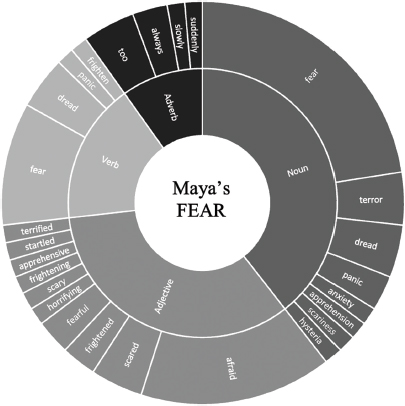
Figure 2: Semantic field of the domain of Maya's FEAR
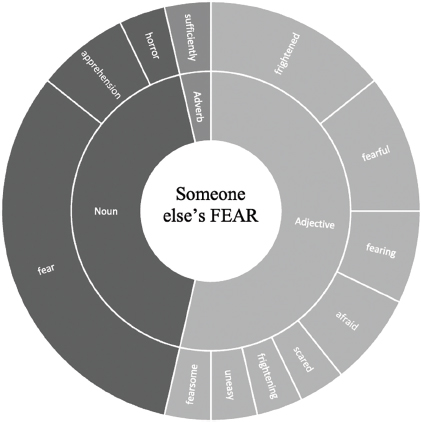
Figure 3: Semantic field of the domain of someone else’s FEAR
Expectedly, the instances of the emotion talk of Maya’s fear (N=71) are higher than those of someone else’s fear (N=28), and the lexical units referring to her own emotions are also more varied in all grammatical categories, probably due to the focus of the memoir on her inner world and her emotional journey.
4.1.1. Nouns
In both cases, the noun fear leads the emotion talk of fear (16 occurrences for Maya’s fear and 9 for someone else’s). As anticipated, this noun takes varied meanings and uses. According to the OED, fear can be used as “the emotion of pain or uneasiness caused by the sense of impending danger, or by the prospect of some possible evil” (2025, n., sense 2.a), i.e., a (negative) emotional experience, as illustrated by (1). This emotion can be personified as in extract (2), or display a cumulative instance of it, like in (3). Besides, it can also be viewed “with regard to an object” (OED, 2025, n., sense 3), such as Maya and the other kids’ fear of death that is implanted “under their skins” by the priest (4).
(1) Momma put her hand on my arm and said, “You shaking, Sister. What’s the matter?” My skin still rippled from the experience of fear. (p. 166)
(2) An awkward fear crept up slowly as I contemplated sitting in the car all night alone. (p. 237)
(3) My fears were so powerful I couldn’t move to look at the center of the bed. (p. 289)
(4) After he had put the fear of the cold grave under our skins, he began to speak of Mrs. Taylor. (p. 161)
Other nouns are used in this domain to refer to different intensities of the emotion, such as dread, panic or terror. These items are usually referred to as synonyms of fear in English; nonetheless, semantic nuances may be observed between them, in their definitions as well as in the contexts of the memoir. According to the OED, panic is a “sudden feeling of alarm or fear of sufficient intensity or uncontrollableness as to lead to extravagant or wildly unthinking behaviour” (2025, n., sense 1.a), as exemplified by (5) where Maya’s control is almost lost, and a higher degree of intensity is involved.
(5) A fog of panic nearly suffocated me. (p. 235)
Next, dread adds the idea of “extreme fear; deep awe or reverence; apprehension or anxiety as to future events” (OED, 2025, n., sense 1). Instance (6) also displays a higher degree of intensity, as well as a specific fear of facing a certain situation, in this case, the futility of life.
(6) The dread of futility has been my lifelong plague. (p. 248)
Then, terror is defined to be “the state of being terrified or extremely frightened; intense fear or dread” (OED, 2025, n., sense 1) and “the most extreme degree of fear” (MW, 2026, n.). This degree of fear is encountered several times in this work. Example (7) displays the gradience of fear increasing until it reaches a natural force-like terror that swallows and paralyses Maya.
(7) It was a fear distantly related to the earlier panic. Terror did not engulf me wholly, but crawled along my mind like a tedious paralysis. (p. 235)
Another semantic nuance is added when nouns such as anxiety, apprehension or hysteria are used. First, anxiety is defined by the OED to convey a “worry over the future or about something with an uncertain outcome” (2025, n., sense 1.a) or a “pathological state characterized by inappropriate or excessive apprehension or fear, which may be generalized or attached to particular situations” (OED, 2025, n., sense 4). Example (8) displays an anxious Maya, scared for the possibility of a bombing and being relaxed by her grandmother.
(8) I ran all the way home. Not too sure I wouldn’t be bombed before I reached Bailey and Mother. Grandmother Baxter calmed my anxiety by explaining that America would not be bombed. (p. 208)
These items are related to nervousness, especially of future events. Likewise, apprehension is defined as “fear as to what may happen” (OED, 2025, n., sense II.12) or “suspicion or fear especially of future evil” (MW, 2026, n., sense 1), and considered here a fear of mild intensity. In instances (9) and (10), young Maya is able to grasp the apprehension of others (Momma and the other Black kids, respectively) from their non-verbal language, which later turns in both cases into an explicit fear.
(9) Her apprehension was evident in the hurried movements around the kitchen and in her lonely fearing eyes. (p. 114)
(10) Their faces, which showed apprehension before reaching the coffin, revealed, on the way down the opposite aisle, a final confirmation of their fears. (p. 161)
Hysteria is one of the most culturally-loaded items, for it was believed originally to be a disease unique to women and caused by disfunction of the uterus (see Paulon, 2022). It is currently understood as an “overwhelming, uncontrollable emotion or agitation” (OED, 2025, n., sense 1) or “behaviour exhibiting overwhelming or unmanageable fear or emotional excess” (MW, 2026, n., sense 2). In example (11), hysteria is a high-intensity emotion of fear that takes over Maya’s body and results in uncontrolled tears.
(11) Not a damn, I decided, and opened the flood gates for hysteria. Once the tears began, there was no stopping them. (p. 237)
Next, the case of scariness is a remarkable one, since it does not convey the temporary state of feeling scared, like the previous examples, but it describes the “quality of being scary” (MW, 2026, n.). This meaning is closer to a personality trait, as example (12) implies, in which it mixes with a vivid imagination characteristic of children that tends to provide scary but imaginary scenes.
(12) It is hard to understand why my vivid imagination and tendency toward scariness didn’t provide me with gory scenes of bloody crashes on a risco de [sic] Mexico. (p. 238)
Finally, horror is one of the highest-intensity degrees of fear and it only appears once in the memoir describing another’s fear, Bailey’s fear (13). It is defined as a “painful emotion compounded of loathing and fear; a shuddering with terror and repugnance; strong aversion mingled with dread” (OED, 2025, n., sense 3.a). Indeed, this item is used in a quite extreme situation, after Bailey carried the corpse of a Black man and the horror sticks with him, like a burden.
(13) Bailey couldn’t let go of the horror. “I picked up a side of the sheet and walked right in the calaboose with the men. I walked in the calaboose carrying a rotten dead Negro”. His voice was ancient with shock. He was literally bug-eyed. (p. 198)
4.1.2. Adjectives
Adjectives seem to be the richest grammatical form to compose the emotion talk of FEAR in this memoir, expressing different degrees of intensities as well as agency. The most frequent adjective to express one’s fear is afraid (11 instances for Maya’s fear and 2 for someone else’s fear), which is defined as being “alarmed, frightened; in a state of fear or apprehension, moved or actuated by fear” (OED, 2025, adj., sense 1.a) and considered of medium intensity. Like “fear”, this adjective can be used to refer to a situation, be it real or hypothetical (14), object or person (15), or afraid to perform a certain action (or not to perform it) (16).
(14) I never had the nerve to go up to him. I was quite afraid that if I tried to say, “Hello, Reverend Thomas,” I would choke on the sin of mocking him. (pp. 35-36)
(15) I tried to staunch the flood of fear. Why was I afraid of the Mexicans? (p. 237)
(16) Under the most common of circumstances I knew it did no good to argue with Momma. So I walked down the steep stairs, afraid to look back and afraid not to do so. (p. 189)
Other adjectives considered of medium intensity present in this work, like afraid, are fearful, fearing, fearsome, scared, scary and startled. Deriving from fear, fearful, fearing and fearsome present several semantic differences and uses. First, fearful is dual in its agency as it can describe the element that is “frightened, timorous, timid, apprehensive” (OED, 2025, adj., sense II.3.a), like Bailey and Maya in (17) or Maya’s secret in (18), or the agent that causes the fear, as the sounds of the chimney in (19).
(17) We were both fearful of Mother’s coming and impatient at her delay. (p. 59)
(18) That evening, in the bosom of the now-dear family home I uncoiled my fearful secret and in a brave gesture left a note on Daddy Clidell’s bed. (p. 288)
(19) The chimney made fearful sounds of protest as it was invaded by the urgent gusts. (p. 153)
Next, fearing defines the element that fears, whether it is a person or an object. In example (20), fearing describes Momma’s eyes and, through her eyes, it describes her own fearful state. According to the OED, it is often used “in combination with prefixed object” (2025, adj.), as in (21). Nonetheless, when it comes to God or religion, fearing can also describe a fear in relation to a “reverential awe” (MW, 2026, n., sense 2).
(20) Her apprehension was evident in the hurried movements around the kitchen and in her lonely fearing eyes. (p. 114)
(21) “Well, now, understand me, Sister Henderson, I don’t hold this against you, I knows you a God-fearing woman”. (p. 151)
On the other hand, fearsome can describe both the subject that fears and the one which inspires the fear (OED, 2025, adj., sense 1 and 2). This adjective only appears once in the memoir and describes a more permanent awe-inspiring personality trait in some of Maya’s family members that had been raised in fear and violence (22).
(22) With that kind of encouragement, backed by explosive tempers, it was no wonder they became fearsome characters. (p. 66)
Next, scared can suppose a more lasting trait (23) or a momentary state of fear (24), while scary describes the element (person, event, object) that causes the fear (25).
(23) Uncle Willie muttered, “They don’t really hate us. They don’t know us. How can they hate us? They mostly scared.” (p. 197)
(24) Uncle Willie laughed and said, Maybe she was scared to go in the kitchen. (p. 166)
(25) Surely she didn’t mean the long fork that hung on the wall behind the kitchen stove —a scary million miles away. (p. 165)
The item startled adds the idea of surprise, alarm, or shock to the fear (MW, 2026, v.). In instance (26), the moment of shock when she is sexually abused by Mr. Freeman incapacitates Maya to react and run away from the situation.
(26) Whatever it was, I hadn’t encountered the sensation in all the years of sleeping with Momma. It didn’t move, and I was too startled to. (p. 72)
Moving on to high-intensity fear adjectives, the memoir comprises the items frightened, frightening, horrifying and terrified. To start with, frightened describes someone that is put into or affect with fright (OED, 2025, adj., sense a). Curiously enough, even though it is used in its adjectival and verbal derivatives, fright does not appear in the memoir as a noun. It is defined by the OED as a “sudden fear, violent terror or alarm” (2025, n., sense 1.b), presenting a high intensity with an idea of suddenness or violence. In many cases where this adjective is used in the text, it is related to childlike confusion and lack of understanding extreme situations, as illustrated by (27), (28) and (29).
(27) Years later I discovered that the United States had been crossed thousands of times by frightened Black children traveling alone to their newly affluent parents in Northern cities. (p. 5)
(28) Even Bailey was frightened. He sat all to himself, looking at a man’s death —a kitten looking at a wolf. Not quite understanding it but frightened all the same. (p. 87)
(29) I was confused and frightened. He was going to get a whipping and maybe he had done something terrible. (p. 116)
Contrastingly, frightening describes the element that frightens. In the analysed examples, the idea of childlike confusion or ignorance of the world (e.g., knowledge of death) seems to be maintained, as illustrated by (30) and (31). Similarly, horrifying characterizes something that causes to feel horror, another quite intense fear. In example (32), Maya suffers from nightmares created by her own childish imagination that mentally afflict her.
(30) At eleven years old, death is more unreal than frightening. (p. 160)
(31) It meant that he had seen or heard of something so ugly or frightening that he was paralyzed as a result. (pp. 195-96)
(32) Because of the lurid tales we read and our vivid imaginations and, probably, memories of our brief but hectic lives, Bailey and I were afflicted—he physically and I mentally. He stuttered, and I sweated through horrifying nightmares. (p. 72)
Then, terrified defines an individual “seized with terror; affected or actuated by terror” (OED, 2025, adj., sense 1). Like terror, it expresses a rather high-level intensity of fear, which would explain why there is only one example of this adjective. In instance (33), Maya feels this sudden terror after realizing they were going to meet their mother.
(33) Were we going to see Her? I thought we were going to California. I was suddenly terrified. (p. 58)
Finally, there are only two instances of mild-intensity fear adjectives. Apprehensive expresses the idea of fear or anxiety for an unknown future: “anticipative of something adverse; fearful of what may be about to happen” (OED, 2025, adj., sense 6.a). In example (34), apprehensive is used in relation to the stronger intensity of afraid.
(34) He said, “Just stay right here, Ritie, I ain’t gonna hurt you”. I wasn’t afraid, a little apprehensive, maybe, but not afraid. (p. 72)
On the basis of this fearful anxiety, uneasy describes the state of being “uncomfortable or disturbed in mind; anxious, apprehensive” (OED, 2025, adj., sense 4.a), whether it is “physical or mental” discomfort (MW, 2026, adj., sense 1). Example (35) displays a Maya that detects in her uncle’s nervous laugh everyone’s discomfort to enter the unknown of the dark kitchen.
(35) His high little laugh didn’t fool me. Everyone was uneasy at being beckoned into the unknown. (p. 166)
4.1.3. Verbs
Curiously enough, not many verbs seem to form the emotion talk of FEAR in this text. There are only 12 verbal utterances and they all refer to Maya’s fear. It comes as no surprise that “fear” is the most frequent verb to express fear (N=7). Considering all previous definitions of the item, this verb is deemed as a medium intensity expression of fear. Among others, instance (36) is interesting in that it narrates from the perspective of time that young Maya was afraid of the potential consequences of a man she disliked marrying her grandmother, arguing that children are built for survival. Next, occurrence (37) displays the element of the potential unconsciousness of fear and example (38) refers to fear of the future and losing home.
(36) Maybe due to the fact that I was in my romanticist period, or because children have a built-in survival apparatus, I feared he was interested in marrying Momma and moving in with us. (pp. 154-155)
(37) Their eyes, language and customs belied the white skin and proved to their dark successors that since they didn’t have to be feared, neither did they have to be considered. All this was decided unconsciously. (p. 211)
(38) In those miles, along the twisted roads beside the steep mountain, I feared that I would never get back to America, civilization, English and wide streets again. (pp. 232-233)
In increasing order of intensity, other verbs that appear are frighten (39), dread (40), and panic (41). While frighten is performed by the group that causes the fear on Maya (in this case, some white children), panic is used in a causative structure where the darkness provokes in Maya the panic. Finally, carries Maya as the subject that suffers the fear.
(39) I wanted to beg her, “Momma, don’t wait for them. Come on inside with me. If they come in the Store, you go to the bedroom and let me wait on them. They only frighten me if you’re around”. (p. 30)
(40) I dreaded laughing in church. If I lost control, two things were certain to happen. I would surely pee, and just as surely get a whipping. (p. 43)
(41) One foot into the darkness and the sense of detachment from reality nearly made me panic. The idea came to me that I might never get out into the light again. (p. 166)
4.1.4. Adverbs
Although no adverbs refer directly to the expression of fear (e.g., alarmedly, fearfully, hysterically, scaringly, etc.), a few items are used in this text to modify the intensity or nuance of the expression of fear. Notably, most of these adverbs add a meaning of duration, either short or long, or intensity. The most frequent adverbial item is too, which expresses such a high intensity that stops Maya from reacting or performing the desired action, as examples (42), (43) and (44) exemplify.
(42) It didn’t move, and I was too startled to. (p. 72)
(43) I was too afraid to splash water or even to cry and take a chance of drowning out Bailey’s pleas for help, but the pleas never came and the whipping was finally over. (p. 117)
(44) If Dad stayed a very long time in the house, I was too afraid to go to the door and ask for him, and besides, my feminine training would not allow me to walk two steps with blood on my dress. (p. 248)
Next, sufficiently is used to decrease the intensity of the fear to a level enough to not perform an action and be deemed polite by other people, as in (45).
(45) Anyone, I reckoned, sufficiently afraid or sufficiently dull could be polite. (p. 173)
In terms of duration of the emotion, always increases the time of a generally temporary state into a more lasting trait, as examples (46) and (47) show, which may potentially become a personality attribute.
(46) As I had always feared, no, known, the trials had been for nothing. (p. 248)
(47) I was always afraid when I found him [her father] watching me, and wished I could grow small like Tiny Tim. (p. 55)
Suddenly adds the idea of unexpectedness, abruptness, or short time, in the building up of the emotion and as well as its duration (48).
(48) I was suddenly terrified. (p. 58)
Contrastingly, slowly describes a fear that is built up gradually at a slow pace and lasts longer in time (49).
(49) An awkward fear crept up slowly as I contemplated sitting in the car all night alone. (p. 237)
Briefly summarizing the emotion talk of fear in Angelou’s narrative, the text is rich in lexical elements of fear, as synthesized in Table 3. General profile verbs, nouns and adjectives are used, illustrated by afraid, fear, scared and to fear. These words seem to neutrally refer to the emotion of fear, with no extra nuances. However, in Angelou a medium and high degree of fear intensity comes up frequently through elements such as dread, panic or terror. Fear is projected as something that may become a lasting trait or an emotion that may overcome the experiencer abruptly.
FEAR EMOTION TALK |
INTENSITY |
||
HIGH |
MILD |
LOW |
|
VERBS |
Dread Panic Frighten |
Fear |
|
NOUNS |
Dread Terror Panic Hysteria Anxiety Horror |
Fear Scariness |
Apprehension |
ADJECTIVES |
Terrified Frightened Frightening Horrifying Dreaded |
Afraid Startled Scared Scary Fearful Fearing Fearsome |
Apprehensive Uneasy |
ADVERBS |
Suddenly, always, too, slowly |
||
Table 3: Intensity of Emotion talk of FEAR
4.2. Core and non-core elements
As anticipated in Section 2, the framework of cognitive lexicography can be very useful to carry out an in-depth linguistic analysis of emotion, as this paper intends. On the basis of the FrameNet project, which collects the different core and non-core elements of a variety of concepts, this section analyses the linguistic components of all the instances of fear in this memoir.
First, [STATE] is the most present element in the linguistic realization of fear. In 97.33% of the instances (73 out of 75), there was at least one explicit verbalization of the state of the emotion, i.e., a noun, verb, or adjective which identified the emotion as fear. Only in two cases there is no explicit mention of the emotion, but it can be glimpsed in the text in metaphorical terms, which makes its interpretation more subjective. In example (50), Maya and Bailey enter the white part of town and fear is understood as opposite to pleasure and a dangerous expedition for which they are defenceless.
(50) But the pleasure fled [Exr] when we reached the white part of town [Top]. After we left Mr. Willie Williams’ Do Drop Inn, the last stop before whitefolksville, we had to cross the pond and adventure the railroad tracks. We [Exp] were explorers walking without weapons into man-eating animals’ territory [Exr]. (p. 25)
Then, in instance (51), there is no explicit element of [STATE], but there is an [EXPRESSOR] which reflects the altered emotional state and a metaphorical explanation through which this state can be inferred. Fear is here expressed in terms of paralysis and lack of breath, though Maya does not relate it to herself, but the world which cannot move out of fear.
(51) The tears [Exr] that had slipped down my [Expl] dress left unsurprising dark spots, and made the front yard blurry and even more unreal. The world had taken a deep breath and was having doubts about continuing to revolve [Exp]. (p. 31)
The [EXPERIENCER] is present too in 97.33% of the occurrences (73 of 75), since in most of the cases Angelou specifies whether it is herself or others who feel the fear. The cases in which no explicit [EXPERIENCER] is encountered correspond to the descriptions of the situations that cause fear in general, stepping into the dark in example (52) and a potential bombing in instance (53). It could be argued that Maya is included in the people that experience fear in these situations, since she is describing them as such. Nonetheless, it is not made explicit in these expressions, which favour an impersonal structure.
(52) “Ma’am?” Surely she didn’t mean the long fork that hung on the wall behind the kitchen stove —a scary [Sta] million miles away [Stim]. (p. 165)
(53) The undertone of fear [Sta] that San Francisco would be bombed [Stim] which was abetted by weekly air raid warnings, and civil defense drills in school [Expl], heightened my sense of belonging. (p. 212)
Next, the [EXPRESSOR] element relates to the physiological reactions and behaviours of fear, that is, the observable components that express the emotion. Even though it is a core element through which the [STATE] can be inferred and may provide different descriptions of the intensity and other features of the emotion, it is not mandatory for it to appear. In general, the [EXPRESSOR] is only made explicit in 37.33% of the examples (28 out of 75). It appears more often in the cases of Maya’s fear (41.18% of her instances). This might be due to the fact that she is the main [EXPERIENCER] in this text and narrates and feels in first-person all the physiological effects of fear in her own body, whereas other people’s fear can generally be identified through external physiological effects or reactions, such as crying or physical paralysis.
Then, the [STIMULUS] or [TOPIC] are verbalized in every case in the expression of fear and only in one instance they appear, but are not specified. In general, in 65.33% of the cases a [STIMULUS] for the emotion is made explicit and in 66.67% of the occurrences a [TOPIC] is displayed, which gives an idea of potential Stimuli for the fear. No significant differences can be observed between Maya’s fear and someone else’s fear, for Angelou knows and provides context for most of the instances. The only occurrence where neither of them is specified belongs to a case of Bailey’s fear: the reason for his fear is not known by Maya and not verbalized by him either. In return, [EXPERIENCER], [EXPRESSOR], and [STATE] are specified for it to be identified as fear (54).
(54) “What’s the matter, Bailey Junior?” He [Exp] said nothing [Exr]. I knew when I saw him that it would be useless to ask anything while he was in that state [Sta]. It meant that he had seen or heard of something so ugly or frightening [Stim] that he was paralyzed as a result [Exr]. (pp. 195-196)
(While there are at least three core elements in all occurrences of fear (most frequently [EXPERIENCER], [STATE], and [STIMULUS]/[TOPIC]), non-core elements are not required to be specified and only provide the expression of emotion with extra information and nuances of time, manner, or intensity, among others. There are not many significant differences in the trends of non-core elements between Maya’s fear and someone else’s fear, except in terms of [EXPLANATION] and [MANNER].
As regards [EXPLANATION], this component provides an explicit reason for the [STIMULUS] to cause the fear and is verbalized more frequently in the case of Maya’s fear (there are 13 instances of [EXPLANATION] for Maya’s fear and 4 for someone else’s fear). As in the case of the [EXPRESSOR] component, this might be due to her being the main Emoter of the memoir and being more aware of certain elements and contextual evidence. For instance, passage (55) displays Maya’s stream of thought explaining why she was scared while she was being sexually abused by Mr. Freeman.
(55) Then he dragged me on top of his chest with his left arm, and his right hand was moving so fast and his heart was beating so hard that I [Exp] was afraid [Sta] that he would die [Stim]. Ghost stories revealed how people who died wouldn’t let go of whatever they were holding. I wondered if Mr. Freeman died holding me how I would ever get free. [Expl] (p. 73)
Then, [MANNER] adds the description of the way the emotion is experienced. It is specified in 5 instances of Maya’s fear and only 1 of someone else’s fear, similarly to the previous differences between these categories. This component is mainly performed by the adverbs covered in 4.1.4, such as slowly or suddenly, which modify the way that fear takes place or is felt. Another adverb comprises too the notion of [TIME] (which could be deemed as involving the [DURATION] of the fear), which appears only in three occasions (all for Maya’s fear) and all refer to a longer period of time or even permanent trait: always. Suddenly could be considered as well to refer to a matter of time, since the emotion comes abruptly and may also be shorter in time.
As regards [DEGREE], this component is mainly defined too by adverbs which modify the intensity of fear. It is specified only on occasion, as there are only 4 occurrences for someone else’s fear and 5 instances for Maya’s own fear. Most of the cases of the element of [DEGREE] intend to enhance the intensity of the emotion, using adverbial phrases such as so, that much or too. Nonetheless, there are two instances which refer to different degrees of fear, such as “How can they hate us? They mostly scared” (p. 197), which refers to the mix of fear with another feeling (namely, hate), and “Anyone, I reckoned, sufficiently afraid or sufficiently dull could be polite” (p. 173), which lower the degree of fear to a level enough for people to consider it polite.
Finally, [EMPATHY TARGET] is an interesting category, since it makes reference to the emotional identification of the [EXPERIENCER] with another (feeling) individual with whom an emotional response can be shared. Although it could be argued whether this is a cross-cultural and universal component of fear, especially when it comes to children, five occurrences of this aspect were found in this text. Significantly enough, all the instances of this component in the memoir correspond to Maya being empathetic towards people close to her. This makes sense in that it is those people, namely Bailey and her family, whom she feels closer to, knows best, and can, thus, relate emotionally. Out of the five instances, four of them display Bailey as the [EMPATHY TARGET]. This may be due to the fact that they are siblings –thus, raised together and similarly–, and close in age, so they share similar emotional responses, which Maya can identify as the corresponding emotion. This can be inferred from instances such as “He said nothing. I knew when I saw him that it would be useless to ask anything while he was in that state” (pp. 195-196).
5. Conclusion
The purpose of this study was to provide a comprehensive account of the linguistic construction of Black girlhood FEAR in Maya Angelou’s first memoir, I know why the caged bird sings, understood as a socio-cultural, individual, and subjective phenomenon. Through a bottom-up approach analysis of the lexico-semantic components of the language of fear in the text, this paper has observed that fear constitutes a negative personal emotion and a disruptive force in the life of a Black girl living in 1960s USA. Fear is most frequently presented as a temporally restricted process, although there are occasions where fear is experienced as persistent, something closer to an emotional disposition. In Angelou’s text, fear is commonly presented as triggered by a dangerous or unpleasant situation, such as violence, racial discrimination, social rejection, or sexual assault, accompanied by a set of physiological and behavioural reactions.
Lexically, fear is presented as a family of different realizations of one emotion: anxiety, fright, horror, panic, worry. The emotion talk of fear in this memoir is composed mainly by the noun fear, the verb to fear (only regarding one’s own fear), and the adjective afraid. Nonetheless, fear takes many different lexicalizations which add different nuances of intensity (terror), agency (frightening) or urgency (anxiety). In all these samples, analysed lexicographically, fear is deemed a negative emotion for the Emoter. Besides, adjectives seem to be the most productive grammatical form to directly express fear. Even though the adverbs in the corpus do not convey fear by themselves, they also add semantic nuances to the expression of fear in terms of its duration (always), intensity (too), or manner (suddenly).
Using the cognitive lexicography FrameNet project, the core and non-core elements of fear in this memoir were retrieved to observe which were the most frequent and necessary elements in the expression of fear. It is noteworthy that, on the one hand, core elements, as defined by the FrameNet project, must be present to verbalize the expression of fear and at least three of these are present in all examples of this text ([EXPERIENCER], [STATE], and [STIMULUS]/[TOPIC]). On the other, non-core elements, although not mandatory, help to define and provide with different nuances the expression of the emotion, like its intensity, its manner, or duration. Through these components, a different approach is attained which manages to break down all the elements that compose this emotion and uncover certain socio-cultural elements, such as the stereotypical duration of fear, the perception of someone else’s fear, or the identification with the emotional responses of other individuals.
This study was limited by the lack of information on the linguistic expression of emotion as an interrelated system of lexical, semantic, cognitive, and socio-cultural elements, but it attempted to originally propose a model that agglutinates all previous knowledge of these areas.
Notwithstanding these limitations, this can be a fruitful area for further work from the perspective of linguistics. A natural progression of this work would be to analyse other emotions, perhaps primary emotions which are less culturally variable (like joy or anger) or secondary emotions, which could offer larger socio-cultural variations (such as shame). It would also be interesting to conduct this study in other languages, as most emotion research in linguistics has focused so far on English, and to use other memoirs and autobiographies to expand our knowledge of life narration. Another question raised by this research could be the comparison between young Black and white girls, other sociocultural groups (like Latino women), and the potential different perception of fear between Black children and adults.
References
Alba-Juez, L. & Mackenzie, J. (2016). Pragmatics: Cognition, Context and Culture. McGraw Hill.
Alba-Juez, L. & Mackenzie, J. (eds.) (2019). Emotion in Discourse. Benjamins Publishing Company.
Alba-Juez, L. & Thompson, G. (2014). Evaluation in Context. John Benjamins.
Angelou, M. (1969). I Know Why the Caged Bird Sings. Random House.
Bednarek, M. (2008). Emotion Talk across Corpora. Palgrave Macmillan.
Bednarek, M. (2009). Emotion talk and emotional talk: Cognitive and discursive perspectives. In H. Pishwa (ed.), Language and Social Cognition: Expression of the Social Mind (pp. 395-431). Mouton De Gruyter.
Besemeres, M. (2010). Emotions in bilingual life narratives. In V. Cook & B. Bassetti (eds.), Language and Bilingual Cognition (pp. 479–506). Psychology Press.
BNC Consortium. (2007). The British National Corpus. XML Edition, Oxford Text Archive, http://hdl.handle.net/20.500.14106/2554
Chen, C., Hussein, S. Z. B., Nasri, N. W. M., Yao, J., Qin, Y., Zhao, Z. & Zuo, K. (2024). Fear of childbirth among pregnant women: A concept analysis. Journal of Advanced Nursing, 80(11), 4476–4487. https://doi.org/10.1111/jan.16218
D’Argembeau, A., Comblain, C. & Van der Linden, M. (2003). Phenomenal characteristics of autobiographical memories for positive, negative, and neutral events. Applied Cognitive Psychology, 17(3), 281–294. https://doi.org/10.1002/acp.856
Daniel-Watanabe, L. & Fletcher, P. C. (2021). Are Fear and Anxiety Truly Distinct? Biological Psychiatry Global Open Science, 2(4), 341–349. https://doi.org/10.1016/j.bpsgos.2021.09.006
Davies, M. (2008). The Corpus of Contemporary American English (COCA). https://www.english-corpora.org/coca/
Davies, M. (2013). Corpus of Global Web-Based English: 1.9 billion words. from speakers in 20 countries. Available at: http://corpus.byu.edu/glowbe/.
Douglas, K. (2022). Autobiography and Childhood. Oxford Bibliographies. Retrieved 26 June 2025. https://n9.cl/riaiz
Ekman, P. (1992a). Facial expressions of emotion: New findings, new questions. Psychological Science, 3, 34–38.
Ekman, P. (1992b). An argument for basic emotions. Cognition and Emotion, 6, 169–200.
Ekman, P. (2004). Emotions Revealed. Henry Holt.
Fanselow, M. S. & Hoffman, A. N. (2024). Fear, defense, and emotion: A neuroethological understanding of the negative valence research domain criteria. American Psychologist, 79(5), 725–734. https://doi.org/10.1037/amp0001354
Fivush, R. (2013). Autobiographical Memory. In E. Keightley & M. Pickering (eds.), Research Methods for Memory Studies (pp. 13-28). Edinburgh University Press.
Güldenring, B. A. (2017). Emotion metaphors in new Englishes. Cognitive Linguistic Studies, 4(1), 82–109. https://doi.org/10.1075/cogls.4.1.05gul
Güldenring, B. A. (2020). Emotion Metaphors in New Englishes: A Corpus-Based Study of Emotion Concepts in Institutionalized Second-Language Varieties of English. Philipps-Universität Marburg. https://doi.org/10.17192/z2020.0480
Holland, A. C. & Kensinger, E. A. (2010). Emotion and autobiographical memory. Physics of Life Reviews, 7(1), 88–131. https://doi.org/10.1016/j.plrev.2010.01.006
hooks, b. (1989). Talking Back: Thinking Feminist, Thinking Black. South End Press.
Kolshansky, G. (2007). Contextual Semantics. LKI.
Kövecses, Z. (1986). Metaphors of anger, pride and love: a lexical approach to the structure of concepts. Pragmatics and Beyond, VII (8). John Benjamins.
Kövecses, Z. (1990). Emotion Concepts. Springer-Verlag.
Kövecses, Z. (2000). Metaphor and Emotion: Language, Culture, and Body in Human Feeling. Cambridge University Press.
Kövecses, Z. (2002). Metaphor: A Practical Introduction. Oxford University Press.
Kövecses, Z. (2015). Where Metaphors Come from. Reconsidering Context in Metaphor. Oxford University Press.
Landová, E., Polák, J., Janovcová, M., Štolhoferová, I., Peterková, Š., Chomik, A. & Frynta, D. (2025). Imprint of ancestral and modern threats in human mind - experience of fear, disgust, and anger. Frontiers in Psychology, 15, 1-16. https://doi.org/10.3389/fpsyg.2024.1520224
Lazarus, R. S. (1991). Emotion and Adaptation. Oxford University Press.
LeDoux, J. E. (2012). Evolution of human emotion: a view through fear. Progress in Brain Research, 195, 431–442. https://doi.org/10.1016/B978-0-444-53860-4.00021-0
LeDoux, J. E. (2014). Coming to terms with fear. Proceedings of the National Academy of Sciencies. 111, 2871–2878. https://doi.org/10.1073/pnas.1400335111
LoBue, V. & DeLoache, J. S. (2008). Detecting the snake in the grass: attention to fear-relevant stimuli by adults and young children. Psycholical Science, 19, 284–289. https://doi.org/10.1111/j.1467-9280.2008.02081.x
Martin, J. & White, P. R. (2005). The Language of Evaluation: Appraisal in English. Palgrave Macmillan.
Mash, E. J. & Barkley, R. A. (2014). Child Psychopathology. The Guildford Press.
Maternová, T. (2024). HAPPINESS in American and British English: A Corpus-Based Metaphorical-Pattern Analysis. Masaryk University. Available from: https://theses.cz/id/naqsgc/
Merriam-Webster.com. (2026). Merriam-Webster Dictionary. Retrieved 12 August 2025. https://www.merriam-webster.com/
Miroshnychenko, P. (2020). Conceptualization of fear in the news about the coronavirus. Scientific Notes of Institute of Journalism, 2(77).
Öhman, A. & Mineka, S. (2001). Fears, phobias, and preparedness: toward an evolved module of fear and fear learning. Psychological Review, 108, 483–522. https://doi.org/10.1037/0033-295X.108.3.483
Ortony, A., Clore, G. & Collins, A. (1988). The Cognitive Structure of Emotions. Cambridge University Press.
Ostermann, C. (2012). Cognitive lexicography of emotion terms. In R. V. Fjeld & J. M. Torjusen (eds.), Proceedings of the 15th EURALEX International Congress (pp. 493-501). Department of Linguistics and Scandinavian Studies, University of Oslo.
Ostermann, C. (2015). Cognitive Lexicography: A New Approach to Lexicography Making Use of Cognitive Semantics. De Gruyter.
Oxford University Press. (2025). Oxford English Dictionary. Retrieved 12 August 2025. https://www.oed.com/
Paulon, M. (2022). Hysteria: rise and fall of a baffling disease. A review on history of ideas in medicine. Journal of Psychopathology, 28(3), 152-161. https://doi.org/10.36148/2284-0249-461
Peléšková, Š., Polák, J., Janovcová, M., Chomik, A., Sedláčková, K., Frynta, D. & Landová, E. (2024). Human emotional evaluation of ancestral and modern threats: fear, disgust, and anger. Frontiers in Psychology, 14, 1-14. https://doi.org/10.3389/fpsyg.2023.1321053
Peräkylä, A. & Sorjonen, M. L. (2012). Emotion in Interaction. Oxford University Press.
Prokop, P. (2016). Universal human fears. In T. K. Shackelford & V. A. Weekes-Shackelford (eds.), Encyclopedia of Evolutionary Psychological Science (pp. 1–5). Springer International Publishing.
Ruppenhofer, J., Ellsworth, M., Petruck, M., Johnson, C., Baker, C. & Scheffczyk, J. (2016). FrameNet II: Extended Theory and Practice. Available at: https://n9.cl/xq916
Tash, M. S., Kolesnikova, O., Ahani, Z. & Sidorov, G. (2024). Psycholinguistic and emotion analysis of cryptocurrency discourse on X platform. Scientific Reports, 14, 8585. https://doi.org/10.1038/s41598-024-58929-4
Tremewan, T. & Strongman, K. T. (1991). Coping with fear in early childhood: Comparing fiction with reality. Early Child Development and Care, 71(1), 13–34. https://doi.org/10.1080/0300443910710102
Van der Kolk, B. (2014). The Body Keeps the Score: Brain, Mind, and Body in the Healing of Trauma. Allen Lane, Penguin Books.
Wardell, V., Madan, C. R., Jameson, T. J., Cocquyt, C. M., Checknita, K., Liu, H. & Palombo, D. J. (2021). How emotion influences the details recalled in autobiographical memory. Applied Cognitive Psychology, 35(6), 1454–1465. https://doi.org/10.1002/acp.3877
Wierzbicka, A. (1990) The semantics of emotions: Fear and its relatives in English. Australian Journal of Linguistics, 10(2), 359-375.
Wierzbicka, A. (1992). Semantics, Culture, and Cognition: Universal Human Concepts in Culture-Specific Configurations. Oxford University Press.
Wierzbicka, A. (1999). Emotions across Languages and Cultures. Cambridge University Press.
Wierzbicka, A. (2009). Language and metalanguage: Key issues in emotion research. Emotion Review, 1, 3-14.
Zhgun, D. (2019). The semantic content of the notions fear and anger and the conditional changes of these emotions. Lengua y Habla, 24, 243-257.
_______________________________
1 This paper distinguishes two recognizable voices, because of the memoiristic nature of the text: Maya, which will be used to refer to the young girl in the narration, and Angelou, the retrospective voice of the author.