A BIBLIOMETRIC ANALYSIS OF RESEARCH ON HUMAN TRAFFICKING: A FOCUS ON THE UNITED NATIONS FRAMEWORK AND THE SUSTAINABLE DEVELOPMENT GOALS
DANIEL ROMERA MEJÍAS1
WALDIMEIRY CORREA DA SILVA2
Abstract: This study analyzes how the academic literature reflects and engages with the fight against human trafficking (HT) in the context of the Sustainable Development Goals (SDGs). It adopts a two-pronged approach: examining how specialized literature addresses the UN’s role in HT, and exploring the contribution of the SDGs. A bibliometric analysis using Bibliometrix and Biblioshiny was conducted on Web of Science articles. Results show research is concentrated in Western countries, revealing a need to boost capacity in affected regions. The thematic analysis highlights the relevance of governance, institutional frameworks and international cooperation.
Keywords: Human trafficking, Bibliometric analysis, Sustainable Development Goals, United Nations, Human rights.
1. INTRODUCTION
Human trafficking (HT) is a complex and multidimensional phenomenon that has captured global attention due to its severe implications for human rights and international security (Obokata, 2005; Gębska, 2020; Correa da Silva, 2022). This issue has been addressed by numerous international organizations, notably the United Nations (UN) and its Sustainable Development Goals (SDGs). Through various instruments and policies, the UN has sought to eradicate human trafficking, recognizing its connection to governance and justice issues (Mordeson and Mathew, 2020; Donmez, 2023).
HT is internationally defined by the Palermo Protocol3, which typifies it as a complex and dynamic crime derived from the conjunction of three interrelated constituent elements: an action; the means; and the purpose of direct or indirect exploitation of the person. This definition externalizes trafficking as a process that includes a movement of people4 in contexts of vulnerability for the purpose of exploitation. Human mobility generally occurs in contexts of migration (regular or irregular), thus leading to the confusion with other legal categories, such as irregular migration, human trafficking or international refugee (Correa da Silva, 2022).
The international definition of HT provided by the Palermo Protocol is not exempt from criticism, both for its complexity, derived from the understanding of trafficking as a process composed of three constituent and related elements and its wide scope (Einarsdóttir and Boiro, 2014). The Palermo Protocol does not include the behaviors that constitute the modality of trafficking, leaving to the discretion of the States the delimitation and classification of internal behaviors that define trafficking5. Even with its lights and shadows, the international legal benchmark has consolidated the structuring of a global regime to confront HT that is related to different legal categories (it is not approached in isolation, but is interrelated with other phenomena and legal frameworks like irregular migration, refugee, asylum and trafficking), public and private actors and different approaches (public order / criminal policy, gender and human rights).
The diversity of actors, types of regulations, institutions and different legal categories related to trafficking constitute a complex international regime (Gómez-Mera, 2016; Alter and Raustiala, 2018). For these purposes, the United Nations recognize HT as a serious violation of human rights and highlights its harmful interaction with other abuses such as slavery, servitude, forced labor, violence against women, torture, inhuman and degrading treatment, as well as international illicit activities (Correa da Silva, 2021).
The only bibliometric research found in an indexed journal about this topic examines in 2018 the research trends on HT using Scopus database (Sweileh, 2018). The study revealed a significant under-representation of health-related literature in the field of trafficking. Additionally, Sweileh found that the existing body of literature was predominantly focused on sex trafficking, rather than other forms of HT. The author emphasized also the importance of fostering research collaboration between networks in source and destination countries to enhance the understanding and effectiveness of efforts to combat HT. More than five years later it seems apt to review the existing literature about that issue, using a different database as it is Web of Science that provides a high-quality database with high-impact journals, as well as robust analysis tools (Chadegani et al., 2013). This article offers a targeted bibliometric mapping of how academic research has addressed human trafficking within the United Nations and SDG frameworks.
The international community has responded to HT through various legal and policy frameworks, such as the aforementioned convention. Since the entry into force of the Palermo Protocol, The United Nations Office on Drugs and Crime (UNODC) has been responsible for coordinating actions and fight against HT in this area6. In addition, an extra-conventional follow-up mechanism has been established through the UN Repporteurship on Trafficking in Persons. This mechanism allows for continuous monitoring and independent evaluation of global anti-trafficking efforts, issuing reports, providing recommendations and facilizing international cooperation7. These instruments provide a foundation for international cooperation and the implementation of national strategies to combat trafficking (Gallagher, 2010). With the adoption of the SDGs in 2015, the fight against HT was integrated into a broader framework of global development (Gauci, 2020).
The 2030 Agenda underlines the importance of promoting the well-being of all, especially the most vulnerable groups such as women and children. The SDGs seek to achieve gender equality and protect women and children from violence, goals that are essential in the fight against HT (Richie-Zavaleta et al., 2021). Both women and children are particularly vulnerable to trafficking, both in terms of sexual and labor exploitation (International Labor Organization, 2024). By focusing on these groups, the 2030 Agenda aims to address the roots of inequality and exploitation, promoting fairer and more equitable development at the global level (Richie-Zavaleta et al., 2021). Also, governance issues related with HT is also present at the 2030 Agenda.
By conducting an exploratory study of the SDGs, we can see that the issue of HT has been incorporated on four different occasions: 1) in paragraph 27 of the preamble, which states that “we will eradicate forced labor and HT and end child labor in all its forms” (United Nations, 2015, p. 3); 2) in Goal 5, target 5.2 (trafficking of women and children) (United Nations, 2015, p. 20); 3) in Goal 8, target 8.7 (decent work and economic growth) (United Nations, 2015, p. 21); 4) in Goal 16, target 16.2 (trafficking of children) (United Nations, 2015, p. 28). Nevertheless, there is no explicit mention of the tools for combating HT or forced labor, nor is there any indication of the means of policy implementation, leaving the matter of execution to the discretion of the states. These targets emphasize the need to strengthen institutions and improve governance to address the root causes of trafficking and ensure justice for victims (Gómez Gil, 2018).
Governance plays a crucial role in addressing collective problems such as HT, as it pertains to the way institutions, norms and processes are organized and operate to direct collective action (Raymond et al., 2023). The effectiveness of policies and strategies against HT depends greatly on the quality of governance at the local, national and international levels. Robust governance involves the presence of strong and transparent institutions, adequate legal frameworks, accountability mechanisms and effective coordination among various actors involved in prevention, protection, prosecution and redress (Trapnell, 2011).
In the context of global governance and HT, the concept of “complex regime” is central to understanding how the proliferation and overlap of international and national institutions and non-institutional actors influence global cooperation. Gómez-Mera (2016) defines it as a set of international institutions that overlap in their functional spheres, members and norms, without a clear hierarchical organization. This overlap can generate both challenges and opportunities, allowing for cooperative and forum-linking strategies, but also opportunistic strategies that can weaken cooperation. Alter and Raustiala (2018) expand on this concept, stressing that the contemporary international system is crowded space, with hundreds or thousands of international regimes that inevitably overlap and conflict. The interaction between states and other actors in this densely institutionalized environment offers a new conceptual lens for understanding international cooperation policy, in which the dynamics of competition and coordination are becoming increasingly complex and crucial to addressing challenges such as HT.
Studies have also shown that weaknesses in governance, such as corruption, lack of institutional capacity and insufficient resources, can significantly hinder efforts to combat trafficking (Friesendorf, 2007). The inclusion of HT in the SDGs underscores the importance of good governance in achieving these objectives by emphasizing the need for rule of law, transparency, stakeholder engagement, human rights protection and data-driven decision-making to effectively combat trafficking and achieve broader development objectives (Gauci, 2020). However, improving governance not only involves strengthening institutions and legal frameworks but also ensuring that there are adequate resources and political will to implement and enforce policies and programs aimed at eradicating HT (Chuang, 2013). As we have mentioned above, the highly complex international environment makes it crucial to address these challenges through better policy harmonization, optimization of resources and strengthening international cooperation.
Chuang (2013) examines how the definition and policies against HT have expanded to include various forms of exploitation, a phenomenon the author terms “exploitation creep”. Chuang highlights the role of the United States in shaping global norms, initially equating prostitution with trafficking during the Bush administration and later broadening the definition to include labor exploitation under the Obama administration. She critiques the criminal justice and victim rescue-focused approach as ineffective and advocates for a labor-based perspective that addresses the structural causes of trafficking through reforms in labor and migration policies.
Friesendorf (2007) utilizes the concept of security governance to analyze the effectiveness and shortcomings of strategies employed in Europe to combat HT. The author outlines five key approaches within the anti-trafficking governance system: legal measures, prosecution, protection, prevention in countries of origin and prevention in countries of destination. Despite some progress, the article highlights several pathologies within this system, such as the lack of comprehensive prevention programs, insufficient protection for victims and inadequate coordination among different actors involved. The study emphasizes the need for a more balanced and interconnected governance system to address HT more effectively, efficiently and justly.
The previous paragraphs contribute to observe how academic research on the subject emphasizes the importance of both the formation of a complex regime on trafficking and the governance established within the framework of the United Nations to address this transnational crime that causes massive human rights violations. In this sense, in order to contribute to combating the causes of HT, the issue is also included in the 2030 agenda.
HT is an increasingly relevant issue for the international community and policy makers but also a truly complex issue. It combines human rights, migration, gender, race, labor, legal, social, economic and trasnational dimensions. For that reason, research on HT is multidisciplinary. To visualize how HT’s research examines the role of the UN and the SDGs, we perform a bibliometric analysis of the academic literature on HT from 2000 to June 2024. The division into two levels of analysis has been made in order to achieve a deeper and more specific understanding of the connection between trafficking and the various international governance structures.
First, it attempts to understand how the UN and its different agencies have addressed HT in a broader and more diverse context. On a second level, it seeks to examine the impact of the fight against trafficking within the framework of the 2030 Agenda, trying to observe how the inclusion of HT in the SDGs has influenced the promotion of multilevel governance since 2015, moving beyond the focus of other UN bodies8. This analysis allows us to discover temporal, geographical and thematic trends and to identify the gaps research should address to better inform policy makers.
Although Sweileh (2018) is often cited as the first bibliometric study on human trafficking, recent analyses have expanded the scope and thematic focus of this field. Antolínez-Merchán et al. (2024) offered a country-specific analysis of Spanish academic production; Gurpur et al. (2021) examined human trafficking in the context of natural disasters; and Gonzalez et al. (2020) explored organ trafficking and migration. While these studies focus on specific geographic or thematic angles, the present article provides a broader overview of global academic production on HT, with a particular emphasis on its articulation within the United Nations system and the SDGs framework (dimensions that remain underexplored in bibliometric terms). This work thus complements and contextualizes these prior contributions by offering a macro-level mapping of governance and policy-related research.
This research aims to fill the gap in bibliometric studies on HT by examining the literature published in the Web of Science database in relation to the UN and, specifically, the SDGs from 2000 to June 2024. The research focuses on definitional issues, typologies of HT, as well as trends in research themes and geographical distribution. Therefore, this study presents several research questions that contribute to the maturation of the HT body of knowledge:
1.What are the main areas and topics of current research in HT?
2.What are the main constructs that have been investigated in current research on HT and SDGs and how has that literature grown over the years?
3.Which research themes in HT have gained the most attention from scholars globally within the framework of the UN and which is the current pattern of articles distribution and citation?
4.What are the gaps in existing research and possible areas for future research?
2. MATERIALS AND METHODS
2.1. Study design
A bibliometric analysis has been employed to achieve the objectives of this study. This research technique applies quantitative methods to evaluate and analyze the scientific production and publications in a field of study (Donthu et al., 2021). It has been used to measure and assess the influence, impact and trends in academic literature on the connection between HT and the UN, through the analysis of bibliographic data such as authors, articles, journals, keywords, citations and co-citations. This type of analysis allows for the identification of collaboration patterns, emerging research areas and the main contributors in a specific field of knowledge (Aria and Cuccurullo, 2017).
Subsequently and in order to obtain more enlightening results, the search criteria have been refined to address the linkage of HT with the SDGs. Given that both areas have traditionally been presented as separate, this bibliometric analysis aims to examine the impact on academic literature of combating trafficking within the framework of the 2030 Agenda. The scientific production and the metrics derived from it would illuminate the current state of the literature on HT, highlighting its relationship with the SDGs while recognizing that an inclusive approach involving most UN bodies is essential for comprehensive understanding and effective implementation. Consequently, it aims to observe whether there has been an increased promotion of multilevel governance since the inception of these goals in 2015, as this approach facilitates collaboration among various stakeholders (such as local, national and international actors) which is essential for effectively addressing complex global challenges like HT in the context of the SDGs.
Ultimately, the objective of the bibliometric analysis of scientific production on HT is to reveal how academic studies have addressed the intersection between trafficking and governance in an international environment based on complex regimes. Researches from 2007 to the present highlights the importance of strengthening institutional capacities and international cooperation to tackle this problem (Friesendorf, 2007; Chuang, 2013; Orsini et al., 2020; Mendel and Sharapov, 2024). Additionally, the analysis of collaboration networks could show how academia, governmental institutions and international organizations work together to develop more effective knowledge and strategies.
In this research, the tools Bibliometrix and Biblioshiny were utilized to conduct a detailed bibliometric analysis. Bibliometrix is an R package that facilitates quantitative and qualitative analysis of bibliographic data. It offers advanced techniques for data management and visualization, allowing for the exploration of trends, patterns and networks in scientific literature. Biblioshiny, on the other hand, is a graphical user interface that complements Bibliometrix, making its functionality accessible to users without advanced programming knowledge in R. By employing these tools, a thorough and precise analysis of the literature on HT has been achieved, providing an comprehensive overview based on thematic, geographical and disciplinary patterns in the literature (Aria and Cuccurullo, 2017).
Over and above the aforementioned, selection of Bibliometrix and its graphical interface Biblioshiny for this study also responds to their comprehensive and customizable analytical capabilities. Unlike tools such as VOSviewer, which focus primarily on network visualization and clustering, Bibliometrix provides a broader range of statistical and graphical outputs, including co-word analysis, thematic mapping, and source impact analysis. Moreover, Bibliometrix’s deeper integration with the R programming environment, offers greater flexibility in processing and refining bibliographic data. This made it especially suitable for a study that required both exploratory visualization and detailed metric-based assessment of research trends.
The dataset retrieved from Web of Science was exported in BibTeX format and uploaded into Biblioshiny. The analysis included descriptive metrics (publication volume and citation patterns), source impact, authorship and institutional collaboration networks, keyword co-occurrence, and thematic evolution. Network maps were generated using co-occurrence thresholds, and thematic maps were constructed based on centrality and density parameters. This approach allowed for both quantitative mapping and qualitative interpretation of academic production on human trafficking, the UN, and the SDGs.
2.2. Search strategy
We conducted a Boolean search across the entire Web of Science (WoS) collection, spanning the period from 2000 to 2024. WoS is a leading global platform for searching, analyzing and evaluating scientific research, encompassing bibliographic references from publications dating back to 1900 across multiple disciplines, with access to over 171 million bibliographic records (Web of Science platform, no date). Considering the potentially multidisciplinary nature of the query, it was deemed appropriate to include all available databases within WoS to reliably capture the current state of research on HT and the United Nations.
The decision to rely solely on WoS was based on its rigorous indexing criteria, the high quality of its records, and its compatibility with Bibliometrix’s advanced analytical tools. However, we acknowledge that this choice excludes key publications indexed exclusively in other databases, such as the Journal of Human Trafficking, which is not fully covered in WoS. This limitation reflects a trade-off between data quality and completeness. Future research could integrate complementary databases such as Scopus or ProQuest to capture a more exhaustive range of sources in this domain.
Table 1 presents our Boolean search strategy, detailing the keywords used and exclusions applied. The selection of keywords is pivotal in conducting a bibliometric analysis as they help define the scope of the study, focusing the search on relevant literature pertinent to our research objectives (Becerra, 2014). To ensure the retrieval of unbiased and representative results, the keywords used for the first search criterion, related to HT, were chosen to be neutral. These keywords were extracted from the United Nations Convention against Transnational Organized Crime of 2000 and more specifically from its Protocol to Prevent, Suppress and Punish Trafficking in Persons, Especially Women and Children.
Table 1. Initial boolean search strategy (HT-UN)
Keywords |
Exclusions |
TS = (“human trafficking” OR “trafficking in persons” OR “modern slavery” OR “sex trafficking” OR “labor trafficking” OR “forced labor” OR “human smuggling” OR “child trafficking” OR “sexual exploitation” OR “labor exploitation”). AND TS=(“United Nations” OR “UN” OR “UNODC” OR “UNHCR” OR “UNICEF” OR “UN Women” OR “UNDP” OR “UNODC Global Report on Trafficking in Persons” OR “UN conventions” OR “UN protocols” OR “UN initiatives” OR “UN policies” OR “United Nations Office on Drugs and Crime” OR “UN High Commissioner for Refugees” OR “United Nations Children’s Fund” OR “UN Entity for Gender Equality and the Empowerment of Women” OR “UN Development Programme”). |
NOT TS = (“drug trafficking” OR “arms trafficking” OR “animal trafficking” OR “wildlife trafficking” OR “cybersecurity” OR “climate change” OR “renewable energy”). |
Source: Own elaboration.
For the keywords related to the second search criterion, concerning the United Nations organization, we selected terms that reflect the wide array of efforts and initiatives of the organization related to HT. This includes acronyms or abbreviations to capture any general reference to the institution, as well as all specialized entities and agencies that participate in combating trafficking, such as the United Nations Office on Drugs and Crime (UNODC) or the United Nations High Commissioner for Refugees (UNHCR).
The inclusion of human smuggling in the search strategy is based on the frequent conflation of this concept with human trafficking in the academic literature. Although they are legally distinct (trafficking involves exploitation, while smuggling refers to consensual border crossing) their overlap in migration contexts makes them difficult to disentangle in bibliometric data. Gallagher and David (2014) observe that smuggling is often treated as a gateway or parallel process to trafficking, especially in contexts of irregular migration. Therefore, including human smuggling allowed for a more comprehensive capture of publications discussing these intertwined phenomena.
The selected keywords are shown in the first column of Table 1 and were searched within the topic field tags in WoS, which encompass titles, abstracts and publication descriptions9. The second column of Table 1 lists the excluded keywords. To minimize false positives in the results, concepts related to other types of transnational trafficking, such as animal or arms trafficking, were excluded. The exclusion of terms such as drug trafficking, arms trafficking or cybersecurity was necessary to ensure thematic precision, as these topics refer to distinct criminal economies that fall outside the human rights and governance scope of this study.
Similarly, although topics like climate change or renewable energy are increasingly recognized as structural drivers of vulnerability and displacement (and thus indirectly linked to HT) their inclusion produced a high volume of false positives in preliminary tests. Given the risk of diluting the focus, these terms were excluded to maintain analytical clarity. However, the intersection between environmental change and trafficking deserves specific attention in future research.
However, after an initial analysis of the search for HT and the United Nations, it became evident that refining the search was necessary to more specifically capture the interactions between trafficking and the Sustainable Development Goals. To enhance the precision of the search, we selected keywords that reflect both the official names and various forms in which the SDGs are referenced in the literature. This includes acronyms, abbreviations, alternative denominations like “Agenda 2030,” and terms that encompass specific goals and targets, aiming to ensure comprehensive coverage of relevant terms. These keywords were chosen based on official documents and pertinent literature on the SDGs and their global implementation, as outlined in Table 2.
Table 2. Second boolean search strategy (HT-SDGs)
Keywords |
Exclusions |
TS = (“human trafficking” OR “trafficking in persons” OR “modern slavery” OR “sex trafficking” OR “labor trafficking” OR “forced labor” OR “human smuggling” OR “child trafficking” OR “sexual exploitation” OR “labor exploitation”). AND TS=(“sustainable development goals” OR “SDGs” OR “global goals” OR “2030 Agenda” OR “UN SDGs” OR “sustainable development targets” OR “sustainable development objectives” OR “development goals” OR “sustainable goals” OR “united nations goals” OR “post-2015 development agenda” OR “sustainability goals” OR “environmental and social goals” OR “social development goals” OR “economic development goals” OR “global development goals” OR “UN 2030 goals” OR “sustainable development framework” OR “sustainable development initiatives” OR “UN sustainability agenda” OR “sustainability objectives”). |
NOT TS = (“drug trafficking” OR “arms trafficking” OR “animal trafficking” OR “wildlife trafficking” OR “cybersecurity” OR “climate change” OR “renewable energy”). |
Source: Own elaboration.
Finally, while this study focused on the most prevalent and internationally recognized forms of trafficking (e.g., sexual and labor exploitation), other critical but less represented forms (such as forced marriage and organ trafficking) were not included as primary search terms. Their exclusion does not reflect a lesser relevance, but rather the limited bibliometric density they provide when analyzed globally. For example, studies like Gonzalez et al. (2020) demonstrate that organ trafficking remains significantly under-researched, making its inclusion statistically marginal in a global trend analysis. Future research could build on this work by developing more targeted bibliometric analyses of these specific modalities.
2.3. Bibliometric indicators
Bibliometric indicators are utilized to analyze the quantity and quality of scientific publications on a specific topic (Durieux and Gevenois, 2010). The most frequently used metrics include the number of publications (quantity) and the number of citations (impact). These indicators are employed to examine temporal trends and the geographical distribution of research on the search criteria. Additionally, the analysis includes identifying journals with the highest production and impact. WoS categories also reveal the research fields to which the publications belong, as well as which SDG each article addresses. Following previous bibliometric analysis methodologies, we use a threshold of ten to present the results obtained (Sweileh, 2018).
2.4. Network and word analysis
Bibliometric analysis not only provides a quantitative view of scientific production but also facilitates a deep understanding of connections among authors, institutions and predominant themes through network and keyword analysis. Collaboration networks among authors, institutions and countries serve as crucial indicators of cohesion and knowledge dissemination within a specific field. Meanwhile, keyword analysis offers insights into prevalent and emerging themes in HT research, as well as their temporal evolution and thematic relationships within the field.
These bibliometric tools not only help map the current state of research but also identify emerging areas and knowledge gaps, laying a solid foundation for future investigations. All maps presented are based on co-occurrence, meaning the appearance of both search terms in the same publication (initially HT and UN, followed by refining to HT and SDGs), utilizing Bibliometrix10 software for analysis. Understanding these dynamics is essential for developing more effective, evidence-based strategies to combat HT and for promoting governance and policies aligned with UN goals and SDGs.
3. RESULTS
3.1. Temporal trend
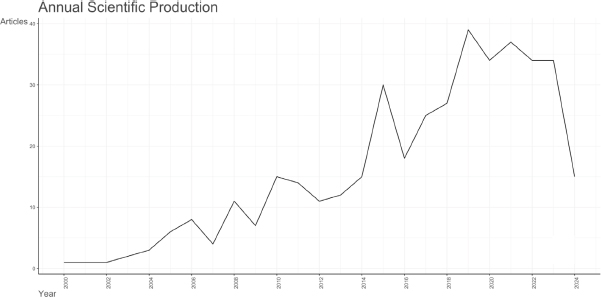
As a result of our search, we retrieved 404 documents published from 2000 to June 2024. The analysis of annual scientific production on trafficking in the context of the UN reveals an upward trend from the year 2000 to 2024, with notable fluctuations in certain periods. From the early 2000s until around 2012, there is a gradual and sustained increase in the number of published articles on HT and the UN. This rise reflects a growing interest and recognition of the importance of trafficking as a crucial issue on the international agenda (Figure 1).
Figure 1. Publications about HT-UN per year, 2000-2024
Source: Own elaboration using Bibliometrix software.
One of the most significant findings from the graph is the notable peak in scientific production in the year 2015. This increase coincides with the preparation during that year and the subsequent adoption of the SDGs by the UN General Assembly in September. As previously mentioned, SDG 5, 8 and 16 include specific goals related to the eradication of HT. The publication of the 2030 Agenda spurred an increase in academic research and publications, indicating a renewed focus and greater funding and support for studies in this area. This underscores how international frameworks and global policies can significantly influence research and academic publication trends.
Since then, with some fluctuations, there has been a clear upward trend in publications, suggesting sustained and growing attention towards this global issue. The observed decrease for the year 2024 is because, at the time of writing this analysis, only half of the year had passed. Therefore, in relative terms and pending a similar evolution to previous years, 2024 is expected to conclude with a number of publications similar to previous years.
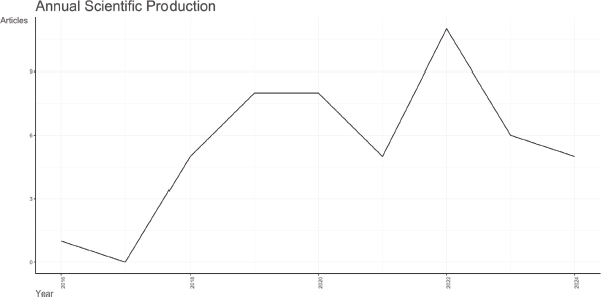
On the other hand, the graph depicting the analysis of HT and SDGs reveals greater variability and fluctuations in annual production compared to the previous analysis, which showed a more consistent trend. As a result of this search, we retrieved only 49 documents published from 2016 to June 2024. The peaks in production in Figure 2 are notably more pronounced, suggesting significant variation in interest or the publication of specific research in certain years. There were no publications recorded before the year 2016, this is logical considering 2015 marking the inception of the 2030 Agenda.
Figure 2. Publications about HT-SDG per year, 2016-2024
Source: Own elaboration using Bibliometrix software.
This variability underscores the dynamic nature of research attention towards addressing HT within the framework of sustainable development goals. The spike in publications following the adoption of the SDGs reflects heightened academic and institutional focus on integrating efforts to combat trafficking into broader global development agendas. This shift highlights how international policy frameworks can catalyze research efforts and mobilize resources towards addressing complex global challenges.
Moreover, the fluctuations observed in Figure 2 indicate shifts in scholarly emphasis and thematic priorities over time, possibly influenced by evolving global events, funding priorities, or emerging research paradigms. Understanding these patterns is crucial for adapting strategies and interventions effectively to address HT within the context of evolving international development goals and priorities.
3.2. Geographical distribution
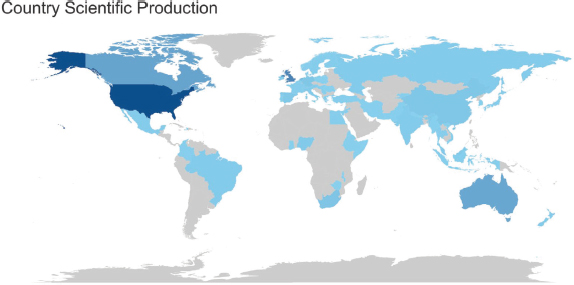
We find in Figure 3 that the geographical analysis of scientific production on HT within the UN context shows that most research originates from Western countries, particularly the United States, the United Kingdom and Western Europe, likely due to greater research capacity and resources. In contrast, regions like Africa, Asia and South America, which face severe trafficking issues, have low scientific output. This imbalance could limit the effectiveness of global anti-trafficking policies by underrepresenting the specific needs of these regions, highlighting the need for stronger research capacity and international collaboration in the most affected areas.
Figure 3. Total publications on HT-UN by author’s country affiliation, 2000-2024
Source: Own elaboration using Bibliometrix software.
Regarding Figure 4, the diversity of countries contributing to research on trafficking and the SDGs highlights a global interest and international collaboration in addressing this issue. The participation of countries across North America, Europe, Asia and Oceania underscores a broad geographic spread of research efforts. However, there is notable Imbalanced representation from regions such as Africa, parts of South America and Central Asia in terms of scientific production on this critical topic.
Figure 4. Total publications on HT-SDG by author’s country affiliation, 2000-2024

Source: Own elaboration using Bibliometrix software.
A striking difference from previous figures is the significant presence of the United Kingdom. This suggests a focused approach or dedicated resources within the UK towards research on trafficking and the SDGs. The significant presence of the United Kingdom in trafficking research can likely be linked to the adoption of the Modern Slavery Act11 in 2015, which laid the groundwork for a comprehensive approach to tackling human trafficking and modern slavery. Furthermore, the creation of the Modern Slavery Research Centre, funded through the Modern Slavery Policy and Evidence Centre, highlights the UK’s commitment to generating evidence-based research that aligns with the SDGs. This academic and institutional support has likely contributed to the UK’s robust involvement in trafficking-related research.
Another noteworthy observation is the substantial participation of China in this research domain. China’s active engagement indicates growing attention and potentially increasing resources allocated to understanding and combating HT in alignment with the SDGs. This trend underscores China’s commitment to addressing global challenges through research and policy initiatives.
The varied representation of countries from different continents in Figure 4 indicates a shared commitment to tackling HT as a global issue. However, the disparities in representation also highlight the need for greater inclusivity and collaboration across regions to ensure comprehensive and effective strategies. Strengthening research capacities in underrepresented regions and fostering international cooperation are essential to develop informed policies and interventions that address the diverse dimensions of HT worldwide.
3.3. Research areas
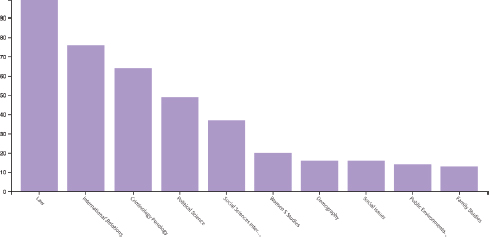
Figure 5 depicting research areas related to HT in the context of the UN provides a clear overview of the most active disciplines and predominant approaches in research. The field of law stands out significantly as the most published, with a clear predominance over other disciplines with more than a hundred of publications. This underscores the critical role of legal frameworks and international regulations in studying and addressing HT. Similarly, the field of International Relations and Political Science also shows a high number of publications (75), indicating strong interest in international cooperation and global policies.
Figure 5. Top ten research areas in HT-UN literature
Source: Own elaboration using Bibliometrix software.
The substantial presence of gender studies (20 publications) underscores a distinct gender perspective in research on HT. This reflects recognition that trafficking disproportionately affects women and girls, emphasizing the need for specific approaches that consider gender dynamics in prevention and protection efforts. Areas such as demography (15), social problem studies (15) and public environmental studies (13) also contribute to the research body, albeit to a lesser extent. These fields provide additional insights into the impact of HT on different contexts and populations.
Overall, the diversity of research areas reflects a multidisciplinary approach to understanding and addressing HT within the framework of SDGs and international cooperation. By integrating legal, international relations, gender and other perspectives, researchers can develop more comprehensive strategies to combat trafficking and support its victims worldwide.
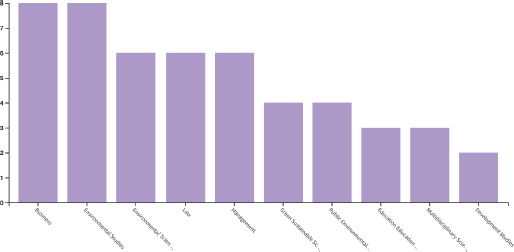
Regarding Figure 6, it is evident that studies on HT and the SDGs are approached from various scientific disciplines, highlighting its interdisciplinary nature. However, in this case, there is a noticeable emphasis on areas related to Business (8 publications) and Environmental Studies (8). This difference may be influenced by the integration of the Sustainable Development Goals, which often emphasize the importance of environmental sustainability and responsible business practices.
Figure 6. Top ten research areas in HT-SDG literature
Source: Own elaboration using Bibliometrix software.
The prominence of Business studies in HT research highlights the growing recognition of economic factors and the private sector’s role in combating trafficking through ethical supply chains, corporate social responsibility and economic empowerment. Similarly, the focus on Environmental Studies acknowledges how environmental issues like illegal mining and deforestation contribute to trafficking vulnerabilities. This interdisciplinary approach, integrating insights from Business, Environmental Studies and other fields, allows for the development of more effective strategies that address the complex dynamics of HT while advancing sustainable development goals globally.
3.4. Sources
When examining the most active and influential journals in the analysis of combating trafficking under the United Nations framework, it becomes clear that specialized journals focusing on HT, peace and migration are not only the most active but also have a significant impact. This suggests that these are the predominant approaches in research on the topic. Additionally, the high presence of journals dedicated to human rights underscores the importance of this perspective in trafficking research, emphasizing the critical need to protect and promote the rights of victims.
Analysis from Table 3 reveals that the most active and influential journals in HT and UN-related research include a mix of specialized publications on the topic as well as those focused on peace, human rights and international relations. The Anti-Trafficking Review stands out as the most prolific, while International Peacekeeping leads in impact. The diversity of disciplines represented in these influential journals underscores the complexity of the issue and the necessity for interdisciplinary approaches.
Table 3. Top ten most active and most influential journals on HT-UN
Rank |
Most active journals |
N. Publications |
Most influential journals |
Cites |
1 |
ANTI-TRAFFICKING REVIEW |
14 |
INTERNATIONAL PEACEKEEPING |
193 |
2 |
INTERNATIONAL PEACEKEEPING |
12 |
JOURNAL OF PEACE RESEARCH |
147 |
3 |
INTERNATIONAL MIGRATION |
7 |
INT ORGANIZATION |
128 |
4 |
INTERNATIONAL STUDIES QUARTERLY |
7 |
INTERNATIONAL STUDIES QUARTERLY |
119 |
5 |
CHILD ABUSE & NEGLECT |
6 |
INTERNATIONAL MIGRATION |
88 |
6 |
HUMAN RIGHTS REVIEW |
5 |
HUMAN RIGHTS QUARTERLY |
82 |
7 |
INTERNATIONAL JOURNAL OF HUMAN RIGHTS |
5 |
INTERNATIONAL INTERACTIONS |
74 |
8 |
SOCIAL & LEGAL STUDIES |
5 |
JOURNAL OF BUSINESS ETHICS |
71 |
9 |
INTERNATIONAL INTERACTIONS |
4 |
JOURNAL OF CONFLICT RESOLUTION |
66 |
10 |
INTERNATIONAL JOURNAL OF COMPARATIVE AND APPLIED CRIMINAL JUSTICE |
4 |
AMERICAN POLITICAL SCIENCE REVIEW |
62 |
Source: Own elaboration using Bibliometrix software.
These findings highlight the interconnectedness of HT with broader issues of peace, human rights and migration within academic discourse. Journals specializing in these areas play a crucial role in shaping research agendas, disseminating knowledge and driving policy discussions aimed at addressing HT effectively. By focusing on these influential journals, researchers can gain insights into the latest developments, trends and debates surrounding trafficking and its implications within the context of UN initiatives and sustainable development goals.Research on HT in the context of the SDGs is well-distributed across a variety of academic journals, reflecting the interdisciplinary nature of the topic. Table 4 illustrates that the most active journals tend to focus on public health, business strategy, supply chain management and sustainability. On the other hand, the most influential journals in terms of citations include high-reputation publications in supply chain management, business ethics and cleaner production. This diversity in sources and citation underscores the breadth of impact and academic interest in the intersection of trafficking with the SDGs, aligning with Figure 6 which highlighted business interest in these studies.
Table 4. Top ten most active and most influential journals on HT-SDG
Rank |
Most active journals |
N. Publications |
Most influential journals |
Cites |
1 |
BMC PUBLIC HEALTH |
2 |
SUPPLY CHAIN MANAGEMENT INTERNATIONAL JOURNAL |
63 |
2 |
BUSINESS STRATEGY AND THE ENVIRONMENT |
2 |
JOURNAL OF BUSINESS ETHICS |
60 |
3 |
SUPPLY CHAIN MANAGEMENT-AN INTERNATIONAL JOURNAL |
2 |
JOURNAL OF CLEANER PRODUCTION |
37 |
4 |
SUSTAINABILITY |
2 |
JOURNAL OF SUPPLY CHAIN MANAGEMENT |
30 |
5 |
2022 IEEE INTERNATIONAL POWER AND RENEWABLE ENERGY CONFERENCE |
1 |
JOURNAL OF OPERATIONS MANAGEMENT |
28 |
6 |
3RD INTERNATIONAL CONFERENCE ON ENERGY, ENVIRONMENTAL AND INFORMATION SYSTEM |
1 |
ACADEMY OF MANAGEMENT REVIEW |
27 |
7 |
AUSTRALIAN JOURNAL OF MANAGEMENT |
1 |
BUSINESS STRATEGY AND ENVIRONMENT |
23 |
8 |
BUSINESS STRATEGY AND DEVELOPMENT |
1 |
ACCOUNTING, AUDITING AND ACCOUNTABILITY JOURNAL |
21 |
9 |
CHILD ABUSE & NEGLECT |
1 |
INTERNATIONAL JOURNAL OF OPERATIONS AND PRODUCTION MANAGEMENT |
21 |
10 |
CIENCIA & SAUDE COLETIVA |
1 |
CHILD ABUSE AND NEGLECT |
20 |
Source: Own elaboration using Bibliometrix software.
Businesses are increasingly interested in the SDGs as a framework for sustainability and corporate social responsibility. As previously discussed, trafficking is directly related to several goals and targets of the Agenda 2030, especially those concerning decent work, gender equality and economic growth (UN, no date b, no date a). Companies are seeking to align with these goals to enhance their reputation, meet consumer and investor expectations and manage risks associated with exploitative labor practices in their supply chains.
The alignment of academic research on HT with business strategy and sustainability goals indicates a growing recognition of the interconnectedness between social issues, economic sustainability and corporate practices. By engaging with these themes, both academia and businesses contribute to advancing knowledge, fostering ethical practices and achieving broader societal goals outlined in the SDGs. This collaborative effort is essential for addressing complex global challenges like HT in a comprehensive and sustainable manner.
3.5. Word analysis
Figure 7 highlights central themes in HT research, such as violence, abuse and sexual exploitation, with a strong focus on gender and women. The research’s gender perspective contributes to target 5.2 by raising awareness and providing data to design effective policies. The research also emphasizes the significance of HT in conflict zones and peacekeeping efforts. Additionally, terms like labor, supply chains and modern slavery indicate a focus on the economic dimensions of HT, exploring how business practices and management impact trafficking. The integration of legal frameworks, human rights and social aspects across multiple disciplines underscores the complex nature of HT studies.
Figure 7. Co-occurrence network of most relevant terms in titles and abstracts of HT-UN

Note: Nodes depict terms and their linkages convey co-occurrence relationships. Larger nodes indicate terms with more occurrences. Color shows average publication year for each term.
Source: Own elaboration using Bibliometrix software.
The network visualization depicted in Figure 7 illustrates the distinct, yet interconnected clusters of research themes related to HT. The red nodes potentially represent a focus on institutional perspectives, emphasizing governance, law, politics and human rights. This suggests that a significant portion of the literature addresses the need for well-coordinated governance structures and complex regimes to effectively tackle trafficking. The prominence of terms like “governance” and “law” indicates that scholars are particularly concerned with the institutional frameworks and legal mechanisms necessary to combat this issue.
In contrast, the blue nodes highlight socio-political and economic aspects, where terms such as “abuse,” “violence,” “women,” “gender” and “sexual exploitation” are predominant. This cluster indicates that another major stream of research focuses on the direct impact of HT on individuals and communities, emphasizing the need for addressing socio-economic factors and the exploitation that occurs within these contexts. The institutional frameworks (represented by the red nodes) must be effectively aligned to ensure a meaningful impact on combating HT and addressing its socio-political and economic dimensions (represented by the blue nodes).
The central positioning of “human-rights” underscores the widespread recognition of HT as a critical human rights issue. The term’s prominence suggests that many studies advocate for a human rights-based approach in terms of governance, calling for the protection and guarantee of human rights as fundamental to combating HT. This holistic perspective bridges the institutional and socio-economic domains, highlighting the necessity of integrating robust governance with efforts to protect and promote human rights to ensure effective and equitable solutions to HT.
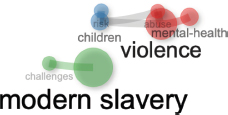
On the other hand, the analysis of Figure 8 shows that modern slavery is a central and critically important theme in the reviewed literature in the sphere of trafficking and 2030 Agenda. Violence emerges as a critical component, often associated with the challenges of addressing modern slavery. Additionally, there is notable concern for vulnerable groups, especially children and for the psychological and abuse-related consequences of modern slavery. This indicates a multifaceted and complex understanding of the problem, addressing both its causes and various consequences.
Figure 8. Co-occurrence network of most relevant terms in titles and abstracts of HT-SDG
Note: Nodes depict terms and their linkages convey co-occurrence relationships. Larger nodes indicate terms with more occurrences. Color shows average publication year for each term.
Source: Own elaboration using Bibliometrix software.
The term modern slavery has gained increasing relevance in both academic and policy discussions, expanding the conceptual framework of human trafficking to include a wider array of exploitative practices. Bales (2016) emphasizes that modern slavery encompasses not only trafficking but also forced labor, servitude and other slavery-like conditions that persist in today’s globalized economy and links these practices to environmental degradation and systemic exploitation, highlighting how interconnected these issues are in a global context. Similarly, Davidson (2015) explores how the term allows for a more nuanced understanding of exploitation by addressing both traditional and contemporary forms of coercion and control. The adoption of modern slavery in policy frameworks, such as the Modern Slavery Act, reflects this broader approach, which aims to cover the multiple dimensions of exploitation that go beyond the boundaries of earlier legal definitions.
Relating the data from this graph to the findings previously obtained from the HT-SDGs study, in the business sphere, “modern slavery” is often discussed in the context of supply chains, corporate responsibility and ethical labor practices. The strong presence of “violence” in the network suggests that within these publications, it is recognized that violence is both an intrinsic feature of modern slavery and a direct consequence of exploitative labor practices.
It’s essential to consider the growing emphasis on Business and Human Rights (B+HR) frameworks over the past decade. B+HR initiatives advocate for corporate accountability in preventing human rights violations, including child labor, within supply chains. This trend reflects an increasing recognition of the interconnectedness between corporate practices and social issues, emphasizing the role that businesses play in addressing child exploitation. Research indicates that companies are increasingly required to assess and mitigate risks related to child labor, not only to comply with international regulations but also to enhance their brand reputation and operational sustainability (OHCHR, 2000; Koseleci and Rosati, 2009).
In conclusion, several significant groupings are observed in the figure. For example, the terms “children” and “risk” form a cluster, highlighting a specific concern for the risks faced by minors in contexts of labor exploitation. Also, it is important to point that the disconnect between the UN’s focus on gender, governance and the broader HT discourse within the SDGs framework highlights significant gaps in the current academic literature. The predominant focus on labor exploitation (SDG 8) neglects critical intersections with gender issues (SDG 5), governance (SDG 16) and migration-related inequalities (SDG 10).
3.6. Thematic map
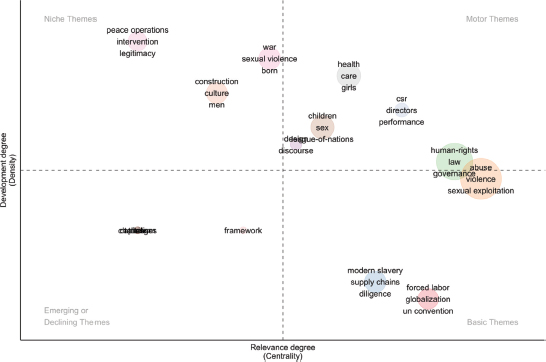
The bibliometric analysis graph categorizes terms related to the UN and HT into four quadrants based on development (density) and relevance (centrality), as we can see in Figure 9. In the Basic Themes quadrant, terms like human rights and governance are highly relevant but moderately developed, indicating a need for further research. Driving Themes, such as health and corporate social responsibility, are both relevant and well-developed, highlighting their importance in current research. Niche Themes, like peacekeeping operations, are highly developed but less relevant, while Emerging or Declining Themes, such as human capital and campaign, are neither well-developed nor widely recognized. The central intersection features transitional terms like sexual violence and war, which have moderate relevance and development, suggesting they may become more central in future research.
Figure 9. Thematic map from bibliometric analysis of HT-UN
Source: Own elaboration using Bibliometrix software.
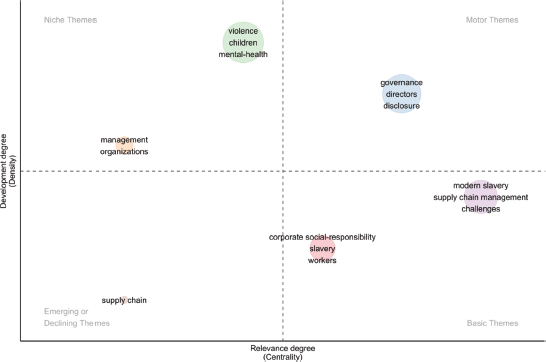
Figure 10 reveals that the literature on HT and SDGs concentrates on key, well-developed topics such as violence, children’s mental health and governance. These topics are essential for understanding and addressing the multiple facets of the problem, from its most direct consequences to the regulatory frameworks necessary to combat it. Basic themes such as modern slavery in the supply chain and corporate social responsibility reflect a growing concern and are areas that require further development and research to strengthen their impact and application. Niche topics, although well-developed, are less central and could benefit from greater integration into the broader discourse. Finally, the supply chain as an emerging or declining topic indicates a potential area of opportunity for future research, thus offering a valuable contribution to the field of study.
Figure 10. Thematic map from bibliometric analysis of HT-SDG
Source: Own elaboration using Bibliometrix software.
4. DISCUSSION
The bibliometric analysis conducted in this study provides a comprehensive view of the current state of research on HT and its relationship with the SDGs. This discussion section addresses the main findings, observed trends, geographical disparities, emerging themes and international collaborations, as well as the implications and recommendations for future research and policy.
We aim to identify the gaps in the existing literature which do not acknowledge the interconnection between trafficking and SDGs. It is also observed that there are articles and papers on subject matter that discuss different root causes, areas and policies for HT. Recognizing that governance is crucial in the context of trafficking because of the need for effective coordination among various actors and institutions at the local, national and international levels, the analysis of the SDGs shows a clear focus on the issues of trafficking for the purpose of labor exploitation (Goal 8), leaving a large gap in terms of gender dimensions (Goal 5) and governance (Goal 16).
4.1. Trends in scientific production
One of the most notable findings is the concentration of scientific production in Western countries, especially in the United States, the United Kingdom and several Western European countries. This trend can be attributed to greater research capacity, access to funding and academic resources in these regions, as well as a strong interest in human rights and international policies. However, this concentration also raises the risk of biases in the perspective and focus of the research, potentially underrepresenting the realities and specific needs of countries facing greater challenges related to HT, such as many regions in Africa, Asia and Latin America.
Additionally, the exclusion criteria that limited the research to English-language documents pose a significant constraint. This decision inherently restricts the analysis to the hegemony of English-speaking scholarly production, predominantly defined by prestigious Western publishers. Consequently, this limitation marginalizes the epistemologies and perspectives of the Global South, leaving the insights and experiences of non-English speaking regions, particularly those facing severe HT challenges, underrepresented and largely invisible in the academic discourse. This exclusion highlights a critical gap in understanding and addressing HT from a more inclusive and diverse global perspective.
The annual production of publications shows a clear increase in attention towards HT from the year 2000 to the present, reflecting a growing recognition of the severity of the problem and the importance of addressing it from multiple perspectives and approaches. Nevertheless, the variability in specific research on HT in the context of the SDGs suggests a reactive response to specific events or policy initiatives related to the 2030 Agenda. This pattern of reactive response may indicate the need for a more systematic and sustained approach in research and policy development.
4.2. Geographical disparities
The geographical disparity in scientific production is evident, with a clear predominance of studies originating from developed countries. This imbalance underscores the need to strengthen research capacity in the countries most affected by HT. To address this challenge, it is crucial to foster greater international collaboration and provide financial and technical support to research located in these countries and their contextualized issues. Only through equitable representation can truly inclusive and effective global strategies be developed.
Sweileh’s (2018) bibliometric analysisis using the Scopus database reveals that regions with a high prevalence of HT have the least research contribution, highlighting this significant gap in the literature too. To address this challenge, the author points that it is crucial to foster greater international collaboration and provide financial and technical support to research located in these countries and their contextualized issues. Moreover, the study emphasizes the limited contribution of international research collaboration and the dominance of institutions from developed countries. This situation calls for bolstering the research capacities in less developed countries to effectively address their specific HT issues.
4.3. Emerging themes and research areas
The analysis of HT-UN documents reveals a significant emphasis on gender issues (Goal 5) and governance (Goal 16). This reflects the United Nations’ priorities, stressing the importance of addressing gender inequality and ensuring robust governance structures to combat HT effectively. Gender-sensitive policies and strong legal and institutional frameworks are crucial, highlighting the necessity for transparent, accountable institutions and effective coordination among various stakeholders involved in preventing trafficking, protecting victims, prosecuting offenders and ensuring justice and redress for victims, all from a clear human rights perspective.
In stark contrast, the existing academic literature on HT within the framework of the SDGs predominantly focuses on labor exploitation (Goal 8). This narrow focus neglects the critical aspects of gender and governance that the UN emphasizes. This disconnect suggests that academic research may not fully capture the multifaceted nature of trafficking, which involves not only labor exploitation but also significant gender-based violence and governance issues. The literature’s concentration on SDG 8 reveals a gap in addressing the broader spectrum of trafficking issues, particularly those related to gender equality and strong institutions, as outlined in SDGs 5 and 16.
Governance plays a crucial role in ensuring that policies and strategies against HT are effective at the local, national and international levels. Robust governance is characterized by strong, transparent institutions, adequate legal frameworks, accountability mechanisms and effective coordination among various actors involved in prevention, protection, prosecution and redress (Trapnell, 2011; Raymond et al., 2023). This is essential because weaknesses in governance, such as corruption, lack of institutional capacity and insufficient resources can significantly hinder efforts to combat trafficking (Friesendorf, 2007).
The overlap of international regimes can generate both challenges and opportunities. It allows for cooperative strategies and forum-linking but can also lead to opportunistic strategies that weaken cooperation (Gómez-Mera, 2016; Alter and Raustiala, 2018). Addressing these challenges requires better policy harmonization, resource optimization and strengthened international cooperation to ensure the effective implementation and enforcement of anti-trafficking policies (Chuang, 2013). However, despite de fact that the UN addresses it as one of the main issues within the problem of HT, the analysis of the SDGs literature reflects a clear gap in this area.
Moreover, the academic literature on HT and SDGs also fails to adequately address SDG 10, which pertains to reducing inequalities and is closely related to issues of migration, key factors in the dynamics of HT. Migrants are often at higher risk of trafficking due to their vulnerable status, yet this critical intersection is overlooked in current academic discussions. The omission of this issue from the academic focus further highlights the gaps in understanding the full scope of HT, particularly how it intersects with migration and inequality issues. Addressing these gaps is essential for developing comprehensive and effective strategies to combat trafficking.
One final critical omission in the current literature corpus is the intersection between human trafficking and cybercrime, an area increasingly prioritized by UN agencies and international governance frameworks. Recent reports (UNODC, 2024) and survivor-focused research (Lazarus et al., 2025; Franceschini et al., 2024) reveal the proliferation of cyber-facilitated trafficking through digital recruitment, online exploitation, and financial transactions via cryptocurrencies. This trend is not yet reflected in a significant volume of academic literature indexed in WoS, but its growing importance highlights the need for future research to explore how digital platforms and surveillance technologies reshape trafficking dynamics, regulatory responses, and victim protection mechanisms.
4.4. International and multidisciplinary collaborations
The collaboration network analysis reveals growing international cooperation in research on trafficking and the SDGs. However, some regions remain underrepresented, highlighting the need to foster greater collaboration among academia, government institutions and international organizations. Multidisciplinary collaboration is also essential to address the complexity of HT and to develop integrated and holistic approaches.
The evident gap in the academic literature about SDGs regarding gender-focused and human rights-based governance approaches to trafficking could be attributed to the prevailing Anglophone epistemology. Since the analyzed articles are predominantly in English and exclude other languages, there is potential that research in non-English languages might address these critical issues more thoroughly. Non-English literature could provide valuable insights and perspectives, particularly from regions heavily affected by trafficking but underrepresented in English-language research.
Promoting international and multidisciplinary collaborations can help overcome geographical and disciplinary limitations, facilitating the exchange of knowledge and experiences. These collaborations can lead to the creation of more inclusive and diversified research networks, which in turn can enhance the quality and relevance of research on HT and the 2030 Agenda. It is crucial for future studies to incorporate multilingual sources to offer a more inclusive and comprehensive understanding of HT in relation to the SDGs. Only through such inclusive research practices can we hope to fill these significant gaps and develop more effective, globally relevant strategies to combat HT.
4.5. Implications for policies and practices
The findings of this study have significant implications for policies and practices aimed at combating trafficking. The inclusion of HT in the SDGs, particularly in targets 5.2, 8.7 and 16.2, has been a significant step in increasing the visibility and prioritization of this issue globally. However, improving governance to combat HT not only involves strengthening institutions and legal frameworks but also ensuring that there are adequate resources and political will to implement and enforce policies and programs aimed at eradicating trafficking.
In summary, although progress has been made in research and visibility of trafficking in the context of the SDGs, significant challenges remain related to geographical representation and effective policy implementation. Strengthening research capacity in the most affected regions and promoting robust and collaborative governance are essential steps to more effectively address this global problem. The focus on supply chains and corporate social responsibility is also crucial to eradicating modern slavery and ensuring that business practices align with the principles of the SDGs, but the need for gender mainstreaming and migration and governance issues remains urgent.
Future research should continue to explore these topics, integrating multidisciplinary approaches and fostering international collaborations to develop more effective and sustainable strategies. Only through a coordinated global effort and inclusive, representative research can significant progress be expected in eradicating HT and achieving the Development Goals. Richie-Zavaleta et al. (2021) mention the relationship of SDGs 5 and 8 with HT, ignoring the importance of Goal 16 in this debate and being an example of how the literature focuses more on the issues of labor exploitation than on the global framework of governance and migration (Goal 10).
4.6. Limitations of the study
The validity of these results is limited by the common weaknesses of any bibliometric analysis. Although the search strategy was designed to minimize the number of false positives, it may still include publications that are not fully focused on the topic. Additionally, while Web of Science is an internationally recognized database that provides reliable information, it also has some limitations. In the current study, the primary limitation was the exclusion of grey literature from its databases. Nonetheless, this is a common and accepted trait in bibliometric analyses. These limitations should be considered when interpreting the study’s findings.
While this study applied core bibliometric techniques using Bibliometrix and Biblioshiny, it focused primarily on descriptive and thematic analyses. More advanced science mapping methods (such as co-citation networks, factorial analysis, or longitudinal citation trajectory mapping) were not conducted due to the thematic dispersion and limited density of the HT-SDG subcorpus. These techniques, although valuable, require a minimum threshold of internal connectivity that was not met in preliminary iterations. Future studies with larger or more focused corpora may benefit from applying these advanced methodologies to deepen the structural mapping of the field.
5. CONCLUSIONS
The bibliometric analysis on HT and the United Nations reveals a significant increase in research since 2000, driven by the inclusion of HT in the SDGs. This growth reflects a greater global awareness of the severity of the problem. However, the research is concentrated in Western countries such as the United States and the United Kingdom, which limits the understanding of realities in the most affected regions like Africa, Asia and South America. It is crucial to foster research capacity and international collaborations in these areas to develop effective global strategies.
The thematic analysis identifies key areas such as violence, children’s mental health and governance, as well as emerging topics like modern slavery in supply chains and corporate social responsibility, which require more attention. Integrating these themes is vital to addressing HT in the global business context. Governance stands out as a critical issue, highlighting the need for strong legal frameworks and efficient institutions. International and multidisciplinary collaboration is essential to tackle the complexity of HT and develop integrated and effective approaches.
In terms of future research agendas, particular attention should be given to emerging topics such as online recruitment methods for trafficking, the role of artificial intelligence and digital surveillance, and the intersection of climate-induced displacement with vulnerability to trafficking. From a geographical standpoint, underrepresented regions such as the Sahel, Central Asia and the Pacific Islands warrant targeted academic attention, especially in the context of South-South cooperation. To operationalize inclusive research practices, it is essential to support the development of transregional research networks, such as those fostered by the Global Action against Trafficking in Persons and Smuggling of Migrants (Glo.ACT)12, and to advocate for increased international funding schemes focused on Global South participation. Multilingual publication platforms and regional data-sharing hubs could also foster equitable collaboration.
In summary, while there have been advances in the visibility and understanding of HT in the context of the SDGs, significant challenges remain. Addressing these requires a combination of research, public policies and business practices, with strong international collaboration and sustained commitment. Future research should explore emerging topics and foster global collaborations to develop effective and sustainable strategies, moving towards the eradication of HT and the achievement of the Sustainable Development Goals.
STATEMENTS AND DECLARATIONS
The authors have no competing interests to declare that are relevant to the content of this article.
REFERENCES
ALTER, K. J. and RAUSTIALA, K. (2018). ‘The Rise of International Regime Complexity’, Annual Review of Law and Social Science, 14 (Volume 14, 2018), pp. 329–349. Available at: https://doi.org/10.1146/annurev-lawsocsci-101317-030830
ANTOLÍNEZ-MERCHÁN, P., MARTÍNEZ-SERRANO, E. M. and CABRERA-RODRÍGUEZ, E. C. (2024). Spanish Scientific Research Activity on Human Trafficking as Seen Through Bibliometric Indicators. Journal of Human Trafficking, 1–22.
ARIA, M. and CUCCURULLO, C. (2017). ‘bibliometrix: An R-tool for comprehensive science mapping analysis’, Journal of Informetrics, 11(4), pp. 959–975. Available at: https://doi.org/10.1016/j.joi.2017.08.007
BALES, K. (2016). Blood and Earth: Modern Slavery, Ecocide, and the Secret to Saving the World. New York.
BECERRA, L. D. A. (2014). ‘Estudio bibliométrico sobre uso de métodos y técnicas cualitativas en investigación publicada en bases de datos de uso común entre el 2011-2013’, Revista Iberoamericana de Psicología, 7(2), pp. 67–76. Available at: https://doi.org/10.33881/2027-1786.rip.7207
CHADEGANI, A. A., SALEHI, H., YUNUS, M., FARHADI, H., FOOLADI, M., FARHADI, M. and EBRAHIM N. (2013). ‘A Comparison between Two Main Academic Literature Collections: Web of Science and Scopus Databases’, Asian Social Science, 9(5), p. p18. Available at: https://doi.org/10.5539/ass.v9n5p18
CHUANG, J. A. (2013). ‘Exploitation Creep and the Unmaking of Human Trafficking Law’. Rochester, NY. Available at: https://doi.org/10.2139/ssrn.2315513
CORREA DA SILVA, W. (2021). ‘The new Braziian Anti-trafficking Law: challenges and opportunities to cover the normative lack’, Revista de Direito Internacional, 18. Available at: https://doi.org/10.5102/rdi.v18i1.7129
CORREA DA SILVA, W. (2022). Regime Internacional de Enfrentamento ao Tráfico de Pessoas: Avanços e desafios para a proteção dos Direitos Humanos. 1a edição. Rio de Janeiro: Lumen Juris.
DAVIDSON, J. (2015). Modern Slavery: The Margins of Freedom. Basingstoke, Hampshire.
DONMEZ, S. (2023). ‘Child Soldiers and United Nations Sustainable Development Goals’, Border Crossing, 13(2), pp. 85–97. Available at: https://doi.org/10.33182/bc.v13i2.2846
DONTHU, N., KUMAR, S., MUKHERJEE, D., PANDEY, N. and LIM, W. M. (2021). ‘How to conduct a bibliometric analysis: An overview and guidelines’, Journal of Business Research, 133, pp. 285–296. Available at: https://doi.org/10.1016/j.jbusres.2021.04.070
DURIEUX, V. and GEVENOIS, P. A. (2010). ‘Bibliometric Indicators: Quality Measurements of Scientific Publication’, Radiology, 255(2), pp. 342–351. Available at: https://doi.org/10.1148/radiol.09090626
EINARSDÓTTIR, J. and BOIRO, H. (2014). ‘The Palermo Protocol: Trafficking Takes it All’, Icelandic Review of Politics & Administration, 10(2), pp. 387–398. Available at: https://doi.org/10.13177/irpa.a.2014.10.2.10
FRANCESCHINI, I., LI, L., HU, Y. and BO, M. (2024). Profiling Survivors of Modern Slavery in Online Scam Industries. Trends in Organized Crime. https://doi.org/10.1007/s12117-024-09552-2
FRIESENDORF, C. (2007). ‘Pathologies of Security Governance: Efforts Against Human Trafficking in Europe’, Security Dialogue, 38(3), pp. 379–402. Available at: https://doi.org/10.1177/0967010607081518
GALLAGHER, A. T. (2010). The International Law of Human Trafficking. Cambridge: Cambridge University Press. Available at: https://doi.org/10.1017/CBO9780511761065
GALLAGHER, A. T. and DAVID, F. (2014). The International Law of Migrant Smuggling. Cambridge University Press.
GAUCI, J.-P. (2020). ‘Human Trafficking and the Sustainable Development Goals: Building on Solid Ground’, in W. Leal Filho et al. (eds) Peace, Justice and Strong Institutions. Cham: Springer International Publishing, pp. 1–9. Available at: https://doi.org/10.1007/978-3-319-71066-2_3-1
GĘBSKA, M. H. (2020). ‘HUMAN TRAFFICKING AS A CHALLENGE FOR INTERNATIONAL SECURITY AND SECURITY IN EUROPE’, Torun International Studies, 1(13), pp. 41–56. Available at: https://doi.org/10.12775/TIS.2020.004.
GÓMEZ GIL, C. (2018). ‘Objetivos de Desarrollo Sostenible (ODS): una revisión crítica’, Papeles de relaciones ecosociales y cambio global, (140), pp. 107–118.
GÓMEZ-MERA, L. (2016). ‘Regime complexity and global governance: The case of trafficking in persons’, European Journal of International Relations, 22(3), pp. 566–595.
GONZALEZ, J., GARIJO, I. and SANCHEZ, A. (2020). Organ Trafficking and Migration: A Bibliometric Analysis of an Untold Story. International Journal of Environmental Research and Public Health, 17(9), 3204. https://doi.org/10.3390/ijerph17093204
GURPUR, S., KAMTHAN, M. and TIWARI, V. (2021). A Bibliometric Analysis of Human Trafficking in the Wake of Natural Disasters. Library Philosophy and Practice (e- journal), 5121. https://digitalcommons.unl.edu/libphilprac/5121
INTERNATIONAL LABOR ORGANIZATION (2024). Forced labour, modern slavery and trafficking in persons. Available at: https://www.ilo.org/topics/forced-labour-modern-slavery-and-trafficking-persons (Accessed: 23 July 2024).
KOSELECI, O. and ROSATI, F. (2009). Child labour and the global financial crisis: an issues paper. Working paper 57412. Available at: https://documents.worldbank.org/en/publication/documents-reports/documentdetail/962861468333263892/Child-labour-and-the-global-financial-crisis-an-issues-paper (Accessed: 9 October 2024).
LAZARUS, S., CHIANG, M. and BUTTON, M. (2025). Assessing Human Trafficking and Cybercrime Intersections Through Survivor Narratives. Deviant Behavior. https://doi.org/10.1080/01639625.2025.2470402
MENDEL, J. and SHARAPOV, K. (2024). ‘Re-politicising Anti-Trafficking: Migration, labour, and the war in Ukraine’, Anti-Trafficking Review, (22), pp. 52–73. Available at: https://doi.org/10.14197/atr.201224224
MORDESON, J. N. and MATHEW, S. (2020). ‘Fuzzy Logic Applied to Sustainable Development Goals and Human Trafficking’, Symmetry, 12(1), p. 87. Available at: https://doi.org/10.3390/sym12010087
OBOKATA, T. (2005). ‘Smuggling of Human Beings from a Human Rights Perspective: Obligations of Non-State and State Actors under International Human Rights Law’, International Journal of Refugee Law, 17(2), pp. 394–415. Available at: https://doi.org/10.1093/ijrl/eei013
OHCHR (2000). Business and Human Rights: A Progress Report. Geneva: OHCHR. Available at: https://www.ohchr.org/en/publications/special-issue-publications/business-and-human-rights-progress-report (Accessed: 9 October 2024).
ORSINI, A., PRESTRE, P., HAAS, P., BROSIG, M., PATTBERG, P., WIDERBERG, O., GOMEZ-MERA, L., MORIN, J.F., HARRISON, N., GEYER, R. and CHANDLER, D. (2020). ‘Forum: Complex Systems and International Governance’, International Studies Review, 22(4), pp. 1008–1038. Available at: https://doi.org/10.1093/isr/viz005
RAYMOND, L., KELLY, D. and HENNES, E. P. (2023). ‘Norm-Based Governance for Severe Collective Action Problems: Lessons from Climate Change and COVID-19’, Perspectives on Politics, 21(2), pp. 519–532. Available at: https://doi.org/10.1017/S1537592721003054
RICHIE-ZAVALETA, A. C., BARANIK, S., MERSCH, S., ATAIANTS, J. and RHODES, S. (2021). ‘From Victimization to Restoration: Multi-Disciplinary Collaborative Approaches to Care and Support Victims and Survivors of Human Trafficking’, Journal of Human Trafficking, 7(3), pp. 291–307. Available at: https://doi.org/10.1080/23322705.2020.1730132
SWEILEH, W. M. (2018). ‘Research trends on human trafficking: a bibliometric analysis using Scopus database’, Globalization and Health, 14(1), p. 106. Available at: https://doi.org/10.1186/s12992-018-0427-9
TRAPNELL, S. E. (2011). ‘Actionable Governance Indicators: Turning Measurement into Reform’, Hague Journal on the Rule of Law, 3(2), pp. 317–348. Available at: https://doi.org/10.1017/S1876404511200095
UN (no date a). ‘Objetivo 8: Promover el crecimiento económico inclusivo y sostenible, el empleo y el trabajo decente para todos’, Objetivos de Desarrollo Sostenible. Available at: https://www.un.org/sustainabledevelopment/es/economic-growth/ (Accessed: 4 July 2024).
UN (no date b). ‘Objetivo 16: Promover sociedades justas, pacíficas e inclusivas.’, Objetivos de Desarrollo Sostenible. Available at: https://www.un.org/sustainabledevelopment/es/peace-justice/ (Accessed: 4 July 2024).
UNITED NATIONS (2015). The 2030 Agenda for Sustainable Development.
WEB OF SCIENCE PLATFORM (no date). Clarivate. Available at: https://clarivate.com/products/scientific-and-academic-research/research-discovery-and-workflow-solutions/webofscience-platform/ (Accessed: 3 July 2024).
_______________________________
1 Contract researcher at the Department of International Public Law and International Relations of the University of Seville (dromera@us.es). ORCID: 0009-0008-8284-4851
2 EMERGIA distinguished researcher at the Department of International Public Law and International Relations of the University of Seville (wcorrea@us.es). ORCID: 0000-0002-1863-8454
3 Protocol to Prevent, Suppress and Punish Trafficking in Persons Especially Women and Children, supplementing the United Nations Convention against Transnational Organized Crime. Adopted and opened for signature, ratification and accession by General Assembly resolution 55/25 of 15 November 2000. Article 3. Use of terms. For the purposes of this Protocol: “(a) “Trafficking in persons” shall mean the recruitment, transportation, transfer, harboring or receipt of persons, by means of the threat or use of force or other forms of coercion, of abduction, of fraud, of deception, of the abuse of power or of a position of vulnerability or of the giving or receiving of payments or benefits to achieve the consent of a person having control over another person, for the purpose of exploitation. Exploitation shall include, at a minimum, the exploitation of the prostitution of others or other forms of sexual exploitation”.
4 HT involves the transfer of human beings from one place to another within the borders of the same country or abroad for the purpose of exploitation. See: https://www.unodc.org/documents/lpo-brazil/sobre-unodc/Fact_Sheet_Dados_Trafico_de_Pessoas_geral_ESP.pdf
5 Sources like ECPAT UK and analyses from various legal experts point out that while the protocol outlines key elements like recruitment, exploitation and transportation, it leaves room for national discretion, particularly in how coercion, fraud or abuse of power are applied within each jurisdiction’s laws. See: https://yalelawandpolicy.org/sites/default/files/YLPR/6_silver_pe.12.2_336-383.pdf
6 More about the UNODC at https://www.unodc.org/unodc/en/index.html
7 More about the United Nations Special Rapporteur in Trafficking in Persons at https://www.ohchr.org/en/special-procedures/sr-trafficking-in-persons
8 It is important to clarify that this study does not assess the real-world impact of anti-trafficking policies or programs on SDG outcomes. Rather, it provides a bibliometric and documentary analysis of how academic literature has framed, interpreted and thematized the relationship between HT and the SDGs within the global governance context.
9 The “publication description” refers to the “Keywords Plus” and “Author Keywords” fields indexed in Web of Science records. These fields enhance search coverage by including algorithmically generated and author-assigned terms that summarize core concepts of each publication.
10 Bibliometrix is a software package for the R statistical programming language, specifically designed for quantitative research in scientometrics and bibliometrics. For more information on Bibliometrix’s functionalities, please visit https://www.bibliometrix.org/home/index.php/layout/bibliometrix
11 See: https://www.legislation.gov.uk/ukpga/2015/30/contents
12 See: https://www.unodc.org/unodc/en/human-trafficking/glo-act/index.html