Typology and poetics of modern aitys
Tipología y poética del aitys moderno
Gulden TLEUBERDINA
(Kokshetau University named after Sh. Ualikhanov)
https://orcid.org/0000-0002-0574-643X
Akbota MUKASHEVA
(Kokshetau University named after Sh. Ualikhanov)
https://orcid.org/0000-0003-3122-750X
Aigul ZHAKUPOVA
(Kokshetau University named after Sh. Ualikhanov)
https://orcid.org/0000-0002-0699-7636
Olga ANICHSHENKO
(Kokshetau University named after Sh. Ualikhanov)
https://orcid.org/0000-0003-2264-3499
Lazzat BAIMANOVA
(Kokshetau University named after Sh. Ualikhanov)
https://orcid.org/0000-0002-0371-0898
ABSTRACT: Questions concerning the study of folk creativity and its adaptation to modernity have become a significant area of scholarly inquiry. The aim of the study was to explore the poetic duel of aqyns as a distinctive form of improvised poetry that developed within Kazakh culture and has parallels in other Turkic-speaking cultural contexts, including Uzbek and Turkish traditions. The study defines its main forms and features, examines its differences from other types of oral literature, and analyses the influence of modern technologies and the possible consequences of such transformations. The findings may contribute to further research on improvised poetry and its transformation in the context of digitalisation and global cultural interaction.
KEYWORDS: Oral literature, Cultural heritage, Creativity of aqyns, Traditions of the people, Turkic-speaking communities.
RESUMEN: Las cuestiones relativas al estudio de la creatividad popular y su adaptación a la modernidad se han convertido en un área significativa de investigación académica. El objetivo del estudio fue analizar el duelo poético de los aqyns como una forma distintiva de poesía improvisada que se desarrolló dentro de la cultura kazaja y que presenta paralelismos en otros contextos culturales de habla túrquica, incluidas las tradiciones uzbeka y turca. El estudio define sus principales formas y características, examina sus diferencias con otros tipos de literatura oral y analiza la influencia de las tecnologías modernas y las posibles consecuencias de tales transformaciones. Los hallazgos pueden contribuir a futuras investigaciones sobre la poesía improvisada y su transformación en el contexto de la digitalización y la interacción cultural global.
PALABRAS CLAVE: Literatura oral, Patrimonio cultural, Creatividad de los aqyns, Tradiciones populares, Comunidades de habla túrquica.
1. INTRODUCTION
Aitys represents a complex form of oral improvisational art and is not simply a competition of poets for a prize but a contest of eloquence, interpretative skill, and creative improvisation. Of particular interest in the context of the issues explored in this study was the scholarly work by Nurgalieva and Nurgaliyev (2022: 59-69). The authors noted that Kazakh folklore occupies an important role in the transmission of cultural values, linguistic awareness, and collective historical memory among younger generations in contemporary contexts. Thus, it could be concluded that aitys, like other forms of folk creativity, contained significant educational potential. Aitys represents a distinctive form of oral folk art for a number of reasons – chiefly its capacity to transmit and reflect the values and traditions of Kazakh culture, as well as the performative form in which it is presented. It was not simply a poetical contest, but rather a complex performance demonstrating skills in logic, language, and musical instruments.
As Zhalgasbayeva (2024: 99-110) noted, aitys is a form of oral literature that developed within Kazakh culture and has been present across several Turkic-speaking cultural traditions from earlier documented periods to the present day in Central and Minor Asia. Kazakhs and Kyrgyz refer to it as aitys or aitysh, whereas in Azerbaijani and Turkish traditions related forms of poetic performance are associated with the term «ashyqlyk» (minstrelsy). Both genres were included in the UNESCO list of intangible cultural heritage. In the 21st century, with the development of communication technologies, aitys began to spread actively through online platforms and social media, particularly Facebook, Instagram, Skype, and YouTube.
It was noteworthy that aitys, as a form of oral literature, differed from others in that it had not transitioned into a written category, thus demonstrating resilience and adaptability over a long period while preserving a number of stable structural and performative features across time. Another distinguishing feature was the continuous development of aitys, primarily driven by the creativity of aqyns, who had been its authors from the very beginning. It was appropriate to agree with Altayev and Imanbayeva (2021: 10-24), who emphasised in the scholarly work that a comprehensive understanding of the worldview associated with nomadic cultural traditions was one of the most pressing tasks of modern Kazakh philosophy.
Aitys required a certain level of public readiness, as its ability to respond sharply to sudden questions lay in a combination of foresight and improvisation. For this reason, there were cases where the unexpected elegance of aitys songs held value equal to literary works. According to Omarova et al. (2020: 387-406), this can be explained by the significant role of musical, poetic, and performative traditions in the cultural practices of the Kazakh community. Historical events, social issues, and personal experiences have been reflected in the works of Kazakh composers, writers, and folk performers, through which elements of cultural memory and traditional knowledge have been transmitted across generations.
Aitys was primarily transmitted through oral performance and has undergone continuous transformation across different historical periods, remaining a form of cultural expression in contemporary contexts. In the modern so-called information age, it became easy to record, print, analyse, and correlate aitys texts with the social perspectives of the time. A striking example of this, as Dubuisson (2021: 357-381) pointed out, was how, through multiple re-textualizations of the social texts of aitys between Birzhan and Sara, the discursive pragmatics and character were preserved within the expanding and changing participants offered by the aitys poetry genre.
Such texts could «speak» as poets, characters, and ancestors to an evolving audience, becoming a source of cultural authority –both as aitys poets and as the tradition itself.
Within the broader field of oral and improvised poetry, aitys can be considered alongside a range of comparable traditions that have developed across different cultural contexts. Improvised poetic contests and dialogic verse performances are documented in Mediterranean, Middle Eastern, and Hispanic traditions, including Spanish bertsolaritza, Cuban repentismo, and Arabic zajal, among others. These practices share core features such as real-time poetic composition, performative dialogue, audience interaction, and the integration of music and verbal artistry. Situating aitys within this wider pluricultural framework allows it to be examined not as an isolated phenomenon, but as part of a global continuum of improvisational poetic practices that have evolved in response to changing social and technological conditions.
The aim of the research was to study aitys as a distinctive phenomenon of Kazakh culture. The research objectives were as follows:
1. To identify the main forms and characteristics of aitys in light of modern trends.
2. To describe the features that distinguished aitys from other forms of oral literature.
3. To determine the influence of innovative technologies on aitys and the possible consequences of such influence.
2. MATERIALS AND METHODS
To achieve the aim and objectives of the research, scholarly works by Kazakh and international researchers in the fields of philosophy, linguistics, and cultural studies were analysed. These works focused on various aspects of aitys as a long-standing form of oral folklore in Kazakhstan and neighbouring Turkic-speaking cultural contexts that has been preserved and transformed over time. The study employed methods such as the descriptive, typological, and comparative-historical approaches. Using the descriptive method, the main components of aitys were identified, namely: the poetic competition itself, which could take place between aqyns or between young men and women. Essential elements of aitys also included the direct participation of the audience, which determined its theme. The application of the descriptive method allowed different types of aitys to be grouped under a single category of oral literature based on specific features: manner of performance, form and content, as well as origin, genesis, and development trends. The descriptive method also helped interpret the results obtained and identify the relationship between the development of aitys and other phenomena taking place in society, particularly the spread of innovative technologies.
The classification of the existing types of aitys into qualitatively defined types (classes) based on shared fundamental characteristics was carried out using the typological method. Its application was also justified by the complexity of the phenomenon under study –Kazakh culture’s aitys– which had its own structure and elements. The typological method was used to categorise types of aitys based on several parameters: the period in which a particular type of aitys was created (historical or modern), who performed it (aqyns or young men and women), the number of verses it contained (single-verse or multi-verse), and the form and content it presented (oral aitys, aitys in letters, riddle aitys, fable aitys).
Through the application of the comparative-historical method, the research identified and compared the main stages in the development of aitys as a significant phenomenon of Kazakh culture. Three primary historical periods were identified: the pre-Soviet period, the Soviet period –marked by attempts to transform aitys into a tool of propaganda and a mechanism for spreading ideology– and the post-independence period in Kazakhstan. The research timeframe was limited to the study of aitys’s development from 1991 to 2025. The use of the comparative-historical method made it possible to determine the changes that had occurred in aitys and the trends in its further development: active use of interactive technologies, which led to the emergence of new types of aitys and allowed the audience to participate directly in the poetic contest; expansion of the aitys audience through interest and involvement of young people; and broadening of aitys themes. The application of the comparative-historical method was also justified by the need to study aitys as a significant form of folklore not only in Kazakhstan but also in Kyrgyzstan and Turkey –countries where this cultural tradition has been widely preserved.
3. RESULTS
Within Turkic-speaking cultural contexts, aitys can be examined as part of a broader field of oral improvisational practices. The integration of cultural study with modern realities, forming a unified poetic picture and the patterns of artistic progress, is one of the key challenges of the present. The analysis of literary and cultural heritage, which reflects universal literary and cognitive values, is of profound significance. Aitys, a long-standing form of folk creativity documented in earlier oral traditions, developed primarily within Kazakh culture while showing parallels with related improvisational practices among Kyrgyz and Turkish communities and reflecting the cultural dynamics of different historical periods. Studying the shared patterns and distinctive features of aitys across these distinct but historically interconnected cultural contexts –from earlier documented forms to contemporary manifestations– offers an opportunity to examine this tradition in greater analytical depth.
This artistic tradition functions as a medium for the transmission of cultural knowledge, values, and collective memory across generations. Aitys is a poetic improvisational tournament in which poetry, music, theatrical mastery, and stagecraft are fused together. Contemporary art frequently addresses socially significant issues, including independent, social, economic, linguistic, political, and land-related issues. Special attention should be given to the poetry of poets after Kazakhstan's independence, who highlight these matters –for example, Kapuly, Altaev, Kusanbayev, and Maksutov (Tleuberdina et al., 2024: 390-404).
The audience decides what will be sung about, and the winner is the one who shows the greatest skill in music and rhythm, surprises with originality and refined phrasing. These poetic competitions usually take place in front of an audience. Aqyns take turns reciting the compositions, improvising on the spot without preparation or delay, competing in wit, creativity, depth of expression, clarity of thought, and improvisational mastery. Aitys not only contributes to the transmission of cultural heritage, but actively addresses social and cultural issues. At the same time, modern oral poetic duels –such as aitys-battles and media literacy projects– show potential for preserving the relevance of traditional art and attracting the interest and attention of younger generations. These innovations show how aitys can be successfully integrated into modern society while retaining its distinctive characteristics and core values (Sultanova and Abasbekova, 2024: 243-253).
Aitys is a mutual, dialogic, creative, and cognitive activity, whose psychological structure –communicative and interactive in nature– is directly linked to the worldview of the Kazakh people. The dialogic and improvisational nature of aitys may be illustrated through classical poetic exchanges between performers. For example, in a traditional aitys between Zhambyl and Aikymis, the performers engage in a poetic dialogue that combines greeting, irony, and social positioning (Table 1).
TABLE 1. EXAMPLE OF DIALOGIC EXCHANGE IN A TRADITIONAL AITYS PERFORMANCE (ZHAMBYL-AIKYMIS).
Original text (Kazakh) |
English translation |
Жамбыл: «Әдейі ат терлетіп, келдім тойға, Айкүміс, әуелден-ақ болдың ойда…» Айкүміс: «Аптығып, ә дегеннен, амандаспай, Әдепті үйренбепсің, Жамбыл, жастай…» |
Zhambyl: «I have come to the feast, urging on my horse, Aikymis, you have long been on my mind…» Aikymis: «Rushing in without even offering greeting, Zhambyl, you have not learned proper courtesy since youth…» |
Source: Compiled by the authors based on Zholdasbekov and Almukhanova (2014: 4).
Such dialogic exchanges demonstrate the competitive yet performative structure of aitys and highlight its function as a form of verbal interaction embedded in social and cultural contexts.
Beyond its competitive dimension, aitys also functions as a form of collective creative expression shaped by interaction between performers and audiences. The communicative process involved in aitys reflects culturally specific patterns of participation, where improvisation is directed not only at individual rivalry but also at shared social themes and experiences. In this sense, aitys may be understood as a collaborative performative practice that contributes to the articulation of communal perspectives and values. The thematic diversity of aitys and its responsiveness to contemporary concerns support its continued relevance within changing cultural contexts. Its content often addresses social issues, personal experiences, and questions of cultural identity, thereby fostering engagement among different audience groups and particularly among younger listeners (Berdibayeva et al., 2020: 235-241). On this basis, comparison of different types of aitys according to thematic orientation, format, and audience allows for its classification into several modern subtypes, including classical and contemporary aitys, socio-political and personal-emotional forms, as well as performances oriented toward traditional and youth audiences.
Improvised performances are typically accompanied by the sounds of the dombra or qobyz, as well as by melodies created by the aqyns and supplemented by expressive gestures. The origins of aitys can be traced to earlier forms of oral and performative culture, including ritual chants, wedding compositions, choral performances, dzhigitovka, girls’ competitions, and various folk games. Over time, aitys has undergone historical development and transformation in response to changing cultural and social contexts. The texts of poetic competitions were transmitted primarily through oral tradition, and many communities maintained their own aqyns whose performances commemorated notable figures and events. Kazakh aitys compositions, largely improvisational in nature, are characterised by complex artistic structure and reflect historical and social experience. This distinguishes aitys from Turkish atışma, whose rhymed structures are shaped by more fixed formal conventions (Mursalımova and Oralbek, 2023: 140-150).
Recordings related to the aitys tradition are available in digital folklore archives and media platforms. Audio recordings of the Birzhan-Sara aitys presented in literary format provide access to the verbal component of the poetic dialogue, while visual recordings of traditional performances illustrate its musical and performative dimensions, including instrumental accompaniment and live interaction between performers and audiences (Adebiportal.kz, 2026; Aitys Song and Kui Listening, 2025).
During the performance of aitys, aqyns, without prior preparation, composed poetic lines on the spot. The competitions took place orally, with each participant demonstrating erudition, wisdom, wit, and sharpness in duelling with an opponent. A deep familiarity with the history, genealogy, customs, and rituals of the Kazakh people was expected, reflecting the role of performers in transmitting cultural knowledge and traditions. In contemporary globalised contexts, questions of cultural identity and continuity are frequently discussed in relation to the preservation and transformation of local traditions. These, in turn, are formed by citizens who are committed to preserving culture, inheriting diverse and cultural wealth, and maintaining a connection with the land, language, spiritual practices, and traditional knowledge (Jati, 2023: 1-9). Moreover, from earlier documented periods, many interconnected musical traditions have developed in the cultures of all ethnic groups, among which aitys should be noted.
Innovative technologies have become an important factor influencing contemporary cultural production and communication. The rapid spread of Internet and mobile technologies has intensified intercultural exchange and created new conditions for the dissemination of performative traditions, while also raising concerns about cultural homogenisation and the potential marginalisation of local forms of expression (Alsaleh, 2024: 32140). In contemporary cultural contexts, aitys demonstrates adaptation through the expansion of its thematic scope, the diversification of performance settings, and the increasing use of digital and media platforms. These transformations have affected both the modes of dissemination and the interaction between performers and audiences. The analysis of the typology and poetics of aitys at the present stage therefore focuses on the internal and external factors shaping its ongoing transformation.
Equally important is identifying the evolution of aitys and the nature of its influence on Kazakh culture. Language, folk traditions, and customs, as well as cognitive and performative practices, contribute to the transmission of cultural memory and the preservation of social values across generations (Issabekova et al., 2024: 33-46). Forms of improvised poetic contest comparable to aitys have been documented in a variety of cultural contexts, including Mediterranean, Arabic, and Hispanic traditions, where dialogic verse and competitive improvisation constitute long-standing performative practices. Related forms of poetic exchange are also observed among several Turkic-speaking communities: for example, the Karachays refer to such performances as «yynar» or «sumelikzhyrla», the Turkmens as «aityshygy», the Tatars as «ei-tegiu», and the Altai people as «sogyugi-khozhondor». Within this broader context, aitys in Kazakhstan has developed a particularly stable performative tradition and remains a documented form of poetic interaction. At the present stage, it can be argued that aitys exists in several forms, including contemporary variations such as interactive and digitally mediated aitys that have emerged in response to technological development.
The common elements and texts of the art of aitys in Turkic-speaking regions began to take shape approximately from the second half of the 19th century. For example, in late nineteenth and early 20th-century aitys performances, recurring themes included social relations, moral instruction, and public commentary, often expressed through dialogic exchanges between aqyns addressing local community concerns. Archival records and published transcriptions from this period demonstrate the consolidation of stable performative structures, including alternating poetic responses, formulaic openings, and audience-oriented improvisation. Since that time, the tradition of aitys has continued to develop, acquiring new thematic and performative dimensions in response to changing social and cultural contexts. The historical development of aitys reflects broader processes of cultural expression and transmission within Kazakh society. In this regard, aitys can be understood not only as a performative genre but also as a medium for the transmission of cultural knowledge and values across generations (Kozhabekova and Pangereyev, 2024: 126-138). The typology of aitys is multicomponent, represented by various styles and forms that differ from one another and reflect diverse cultural contexts. Among the main types of aitys, the following should be identified (Table 2).
TABLE 2. TYPES OF AITYS.
Criterion |
Name |
Brief description |
Period of genesis |
Classical |
Traditional elements and forms are preserved, including the use of specific time markers, rhyme schemes, and imagery. |
Modernised |
Elements of contemporary poetry, such as free verse, are included, making the form experimental in structure and content. |
|
Interactive |
Interaction between participants and the audience is encouraged, along with the application of modern technologies and mass media. |
|
Performer and number of verses |
Qaym-aitys (qaymdasu) |
This form is performed by young people rather than aqyns. Considered the simplest among the aitys genre variations, it takes the form of a poetic and musical dialogue between a young man and a young woman, exchanging couplets in the kara-olen style. Jokes and gentle humour feature prominently, with love serving as the main theme. A dedicated collection of texts for memorisation in the qaymdasu style exists. In the present day, such contests are rarely held outside traditional village gatherings or festive events such as toi and weddings. |
Single-verse (ture-aitys) |
Ture-aitys is performed by aqyns. This small-scale poetic contest involves the exchange of four humorous lines. The aim of the poetic battle is to refute statements made by opponents. As a result, improvisation tends to be sharp, concise, and filled with aphorisms. Topics addressed include everyday life, social matters, and family relations. During encounters with renowned aqyns, young individuals may engage in spontaneous poetic exchanges, which occasionally lead to blessings or light-hearted competition in improvisation and wit. |
|
Multi-verse (sore-aitys) |
Sore-aitys is performed by aqyns in front of large audiences. These contests are lengthy, with poems recited from memory and delivered in polyphonic fashion. The opening often includes poetic greetings and an exchange of news, with each performer proudly sharing achievements of local heroes and sharply criticising the flaws and errors of rivals, in accordance with tradition. Kazakh sore-aitys bears some resemblance to Uzbek asqiya, with the distinction that aitys represents improvised poetry, whereas asqiya refers to improvised prose. |
|
Form and content |
Aitys in letters |
Folk aqyns occasionally initiate poetic contests in written form in addition to oral improvisation. Requests for composed song-letters may be made by zhigits. The genre of aitys in letters holds a longstanding place in Kazakh folk poetry. |
Riddle aitys |
The most complex form of aitys involves allegorical expression of ideas. Riddle aitys is characterised by knowledge, life experience, wit, and eloquence. Only the most skilled and articulate aqyns are capable of participating in this poetic form. Two formats are employed: oral improvisation and the written exchange of poetic riddles. In some cases, both approaches are combined. In the current era, riddle aitys is extremely rare, similar to qaym-aitys. |
|
Fable aitys |
In the fable format, the aqyn also communicates ideas through allegory. This variation is marked by biting sarcasm, irony, and occasionally humour. Specific themes are explored, such as «Zhumnazar and the dombra». Animals, birds, and wild creatures are sometimes included as characters. Most fables take the form of conflicts between humans and animals, carrying educational value similar to that of other traditional fables. |
Source: Compiled by the authors based on Fiveash et al. (2023: 105153), Dwivedi et al. (2022: 102542), Chen and Yu (2024: 2-17), Kanalina et al. (2024: 45-54), Almas et al. (2025: 632-642), Zhumaeva (2022: 476-482), Illingworth (2022: 29-50), Mandri (2024: 25-30), Orosa and Galarza-Ligña (2024: 10), Kelley et al. (2024: 64-82), Shim (2023: 231-259), Bi (2023: 163-182).
The earliest forms of aitys –zhar-zhar (wedding duet) and badik (incantation songs against illnesses with verbal repetitions)– formed the basis of the composition of qaym-aitys (from the Old Turkic verb qaymaq meaning «to respond to someone» or «to reply»), from which more complex forms of poetic contests between aqyns developed (ture-aitys, sore-aitys, written aitys). From the list provided in Table 1, it can be concluded that the modern poetics of aitys are changing, and some of its forms are losing popularity and gradually disappearing –for instance, qaym-aitys or riddle aitys. Nevertheless, many features of aitys are being preserved: in folk aitys, personal vocabulary continues to be used to varying degrees, along with its meanings, to convey a poetic goal and enhance the artistic value of the theme. This makes a significant contribution to the transmission of ideas to the audience in an artistic form using a wide range of concepts (Pishenbayevna, 2025: 32-35).
As before, ture-aitys serves as a mirror of pressing concerns: themes of everyday life, societal and family issues are addressed, the ability to compete with other aqyns is tested, and human relationships are explored. At the same time, contemporary poets strive to create original and captivating works that touch on urgent social, cultural, and personal issues. The poets employ a broad arsenal of stylistic devices, including metaphors, allegories, irony, and humour, to convey the emotions and ideas as accurately as possible. Moreover, modern aitys can take various forms, appearing in genres of lyrical and epic poetry, dramatic works, or satirical texts. This opens up space for creative exploration by the poet-aqyn, allowing for experimentation with form and content, and leading to the emergence of new and engaging works. In addition, several trends accompanying modern aitys can be identified (Figure 1).
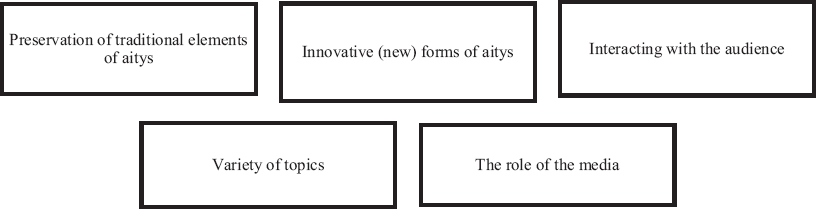
Figure 1. Main trends characterising contemporary aitys.
Source: Compiled by the authors.
At the core of aitys lie oral tales passed down from ancestors to descendants. Aqyns to this day use recognisable techniques –rhyme, metaphor, and allegory– which enrich the performances with meaning and vividness. Traditional motifs –love for the homeland, respect for elders, and Kazakh cultural foundations– retain the significance in contemporary aitys. These details connect generations, enabling young people to understand and value the cultural heritage of the land. Cultural heritage plays a key role in shaping current identity, influencing both personal and collective experiences. When comparing Eastern and Western perspectives, it is important to remember the impact of cultural heritage on the formation of modern identity. Within Turkic cultural traditions, identity formation is supported by traditional arts, rituals, and beliefs, with an emphasis on family and ancestral heritage. Western societies, on the other hand, focus on preserving material cultural heritage through museums and institutions. Both sides insist on the importance of finding a balance between preserving heritage and modern development (O’Connor, 2024: 37-45).
Contemporary aitys have gained unprecedented dynamism and appeal among young people, willingly incorporating elements from various musical styles such as rap and hip-hop. This not only broadens the audience but also gives performers the opportunity to experiment with rhythm, melody, and forms of artistic delivery. As a result, aitys has ceased to be merely a verse competition and has become a full-fledged musical performance that engages both specialised and broader audiences and a wider public interested in contemporary musical trends. The transformation of aitys into a musical show has also opened new opportunities for participants to be expressed creatively and promote the work through modern technologies and media channels. Modern aitys actively uses audience engagement techniques, making it more interactive.
The genre of aitys has historically documented across several centuries and is documented within the historical traditions of Turkic-speaking communities – among these, the Kyrgyz, Mongols, Karakalpaks, and Turks. These peoples, contributing to preservation and enriching the cultural heritage, have succeeded in elevating the art of aitys to a new level by integrating it into the format of an international oratory competition. Evidence of this is the international poets’ festival organised by Turksoy (13), held in 2021 at the Korkyt Ata Cultural Centre in Ankara, the capital of Turkey. The festival’s main goal was to introduce the international community to aitys as part of related ethnolinguistic traditions. The cultural event was attended by representatives from Kazakhstan, Kyrgyzstan, Uzbekistan, Azerbaijan, and Turkey. Kazakhstan was represented by Bekarys Shoibekov, Aibek Kaliyev, Asem Yerezhekkyzy, Mukhtar Niyazov, and Bekarys Nuriman. Kyrgyzstan – Azamat Bolganbayev and Asylbek Maratov. Azerbaijan – Ramin Garaev. Uzbekistan – Bakhtiyor Artykov. Turkey was represented by Temel Turabi, Mustafa Aydin, and Yashar Demiroglu. The competitions were held in Kazakh, Turkish, Uzbek, Kyrgyz, and Azerbaijani languages (Mursalіmova and Oralbek, 2023: 140-150).
The analysis suggests that traditional forms of aitys have gradually transformed into a more convenient and modern form –interactive. In this case, aitys performers can communicate with the audience in real time, without being tied to a specific location, ask questions, prompt responses, and even use social networks to engage viewers. This contributes to the creation of an interactive environment that allows viewers to feel part of the event –something particularly relevant for young people seeking involvement in cultural projects. Modern aitys addresses a wide range of topical issues, giving participants the freedom to express the views and emotions on a variety of subjects. Each aitys –from social difficulties to personal dramas– is distinctive in its thematic and performative realisation and serves as a reflection of contemporary life and social trends. The broad spectrum of themes ensures the relevance of aitys, keeping it aligned with the experiences and interests of the modern generations. Moreover, advances in technology and social media bring a fresh stream into the format of aitys.
4. DISCUSSION
At the present stage of global change and the widespread dissemination of innovative digital technologies, the preservation of traditions and customs of peoples is essential and becomes a goal in comprehending the spiritual heritage. This idea is supported and developed in the scholarly work of Altayev and Imanbayeva (2021: 1-24). The scholars assert that to achieve this aim for the Kazakh people, there is a wide range of materials at the disposal, from the Orkhon-Yenisei runic monuments to folk legends, heroic epics, proverbs, and sayings –documented examples of oral folk art, including the poetic and musical heritage of zhyrau-aqyns.
The validity of the conducted research is also confirmed in the article by Setiawan et al. (2025: 377-393), who adhere to the view that oral traditions serve as a means of transmitting cultural values and religious beliefs from one generation to another. Furthermore, the findings are consistent with the position of Mekonnen et al. (2022: 172), who describe cultural heritage as a public resource that reflects historically accumulated social and cultural practices. Cultural heritage reflects the present and future way of life and cultural values of society, strengthens communal solidarity and social integration.
It is also appropriate to agree with Zhalgasbayeva (2024: 99-110), who notes that the most effective way of preserving traditional forms of folk art lies in the internal flexibility and rapid adaptation to the challenges of the time. An example of such a process is the emergence, alongside classical aitys, of new formats such as internet-aitys and online-aitys. Since the 2000s, there has been an increase in the latter in Kazakhstan, which has attracted special public attention and simultaneously signals cultural changes, as aitys continues to evolve in various ways as a form of the Kazakh people’s oral literature.
A similar viewpoint is supported by Dubuisson (2021: 357-381), who states that aitys is a reflection of social texts in time and is used as an example to explain how and why oral traditions have managed to fill and assimilate even serious intertextual gaps that have emerged due to changes in the historical and political context throughout the 20th century. Similar claims to the findings of this study are found in the scholarly work of Aisyah and Rahmat (2024: 48-54), who share the view that folklore plays an important role as a means of preserving the cultural identity of indigenous communities. Folklore transmits values, beliefs, and collective memory from generation to generation and ensures cultural sustainability in the context of globalisation.
Aitys represents a widely documented genre within Kazakh oral and performative literature. It is in this form that the developed improvisational tradition of the Kazakh people is most vividly reflected, which is essential for preserving this poetic contest for future generations. This position is also supported by Lao (2024: 423-429), who emphasises that to engage young people, it is important to establish links between community members and the heritage and to create incentives that encourage young audiences to value the heritage. Creating such connections can help foster a sense of belonging and responsibility for heritage.
A similar idea to the results of this study is contained in the research of Giorgallis (2024: 76-99), who concludes that future generations are an important issue for international law in the field of cultural heritage, sociology, political science, and cultural studies. The idea of protecting cultural heritage for future generations is considered the most frequently cited justification in discussions about national principles. The academic work of Irawan et al. (2024: 02005) develops a position that is well-founded in this research –that oral literature plays an important role in preserving cultural identity. By transmitting traditional knowledge, shaping social norms, and reinforcing these norms, oral literature and art make a significant contribution to the safeguarding of cultural heritage. Therefore, efforts to preserve and revive oral literature should be continued to retain and pass on cultural identity to future generations.
The results of the conducted research show that aitys, as an integral part of Kazakh culture, is adapting to the challenges of the time. A similar viewpoint is argued in the scholarly work of Kashaka (2025: 32-35), who convincingly demonstrates that, being an essential component of cultural heritage, folklore continues to influence modern society by playing its role in preserving traditions, shaping cultural identity, and strengthening social cohesion. Folklore adapts to contemporary challenges such as globalisation and innovative technologies. Therefore, it not only connects the previous times with the present but also serves as a tool for local branding and community building, strengthening a sense of shared identity. Furthermore, the value of folklore in addressing modern social issues and its role as a dynamic force of cultural continuity is also important. The results of the study also align with the observations of Ajani et al. (2024: 35-44), who note that in the context of globalisation and the Fourth Industrial Revolution, the preservation and transmission of cultural traditions have become an important area of scholarly attention, as such traditions reflect historically formed cultural practices, diverse knowledge systems, and processes of adaptation to changing social conditions.
The position argued in the conducted study – that aitys has not only adapted but has also successfully developed thanks to innovative technologies and internet networks – coincides with the view of Praise and Grace (2024), who study the issues of folklore. The scholars point out that folklore, which includes traditional beliefs, practices, and cultural narratives, remains a vital aspect of human self-expression in modern society. The evolution of folklore under current conditions is especially important from the standpoint of technology, cultural identity, and popular culture. The emergence of digital platforms has turned folklore into a dynamic form of self-expression, and internet memes and social media have transformed traditional storytelling practices. Moreover, folklore functions as a crucial tool of cultural identity, enabling communities to keep pace with globalisation while preserving their distinctive cultural heritage. In popular culture, folklore influences literature, cinema, music, and art, allowing timeless stories to resonate with new audiences. Folklore also reflects social issues, provides insights into contemporary challenges, and strengthens bonds between communities through shared experience.
In contrast to the views of the colleagues and the results of the conducted research, Motinyane (2023: 1-14) asserts that folklore and oral literature are not as important to modern society and the preservation of its cultural heritage, because of being outdated. Despite the fact that folklore is the thread that weaves together the morals and values of societies –which are the building blocks of values such as honesty, solidarity, and human understanding, facilitating and eliminating anti-social behaviour– it no longer plays the role it once did. By reviving the ancient art of aitys, preserving it, and ensuring its further development, the Kazakh people enrich its content, improve its form and language of performance, and maintain its distinctive improvisational character. With the use of modern technical means, recordings are made in a timely manner. Artistic and creative activity becomes an analogue of human life activity, in which the main function lies in the spiritual interaction with the surrounding world, a process in which a person sees and experiences. Aitys not only serves as entertainment for spectators but also functions as a medium for the preservation and transmission of elements of Kazakh cultural tradition. It helps to maintain the traditions and values of the people and develops oratorical skills and poetic talent among young people. Moreover, aitys has been associated with the expression of dialogic interaction and the articulation of differing viewpoints within performative exchange.
5. CONCLUSIONS
A key finding of the study concerns the preservation of core performative elements of aitys alongside its transformation and adaptation to changing social, economic, and cultural contexts. The combination of preserved performative convention –such as performing aitys accompanied by instruments like the dombra and qobyz– and innovations, including interactive technologies, along with the diversity of its themes, has supported its continued functioning within diverse audience contexts. Since aitys, unlike other forms of oral literature, has largely preserved its performative character while also being documented and disseminated through contemporary media, interaction with and the use of modern media provide additional opportunities for aqyns to express themselves through aitys.
Aitys constitutes a documented form of cultural expression within Kazakh society, continuing to function as a form of cultural expression reflecting contemporary social experience by reflecting the life of modern society. Its primary forms should be defined according to the following criteria: 1) format: classical (traditional) aitys: a poetic contest in which participants perform in the traditional format, using such oral poetic devices as rhyme, metaphor, and allegory; modern aitys (modernised, interactive): elements of rap, hip-hop, and other musical genres are combined to make it more accessible to younger audiences; 2) themes: socio-political: modern aqyns often address pressing societal issues in aitys, such as corruption, environmental issues, and human rights; personal-emotional: aqyns may share the experiences, love stories, and personal struggles, making aitys more intimate and relatable; 3) audience: traditional audience: those who value the cultural heritage and traditions; youth audience: new formats and themes of aitys are attractive and help to popularise it among young people.
Modern poetics of aitys actively incorporate new stylistic approaches and techniques while preserving many traditional elements. This combination of continuity and transformation supports its ongoing presence within contemporary cultural communication. Accordingly, further scholarly exploration may be directed at a more detailed study of its historical development, typology, and contemporary transformations.
FUNDING
The article was written within the framework of the state scientific project Ministry of Science and Higher Education of the Republic of Kazakhstan IRN AR19574645 «Typology and poetics of modern Kazakh aytis» for 2023-2025.
REFERENCES
ADEBIPORTAL.KZ (2026): Aitys: Birzhan-Sara aitys. https://adebiportal.kz/kz/audiobooks/view/575
AISYAH, Siti Nur and RAHMAT, Dedi (2024): «The role of folklore in preserving indigenous cultural identity: A case study of oral traditions in Asia», Proceeding of the International Conference on Language, Literature, and Culture Studies, 1/2, pp. 48–54.
AITYS SONG AND KUI LISTENING (2025): Birzhan-Sara aitys. https://www.youtube.com/watch?v=3p-872iE95A
AJANI, Yusuf Ayodeji, OLADOKUN, Bolaji David, OLARONGBE, Shuaib Agboola, AMAECHI, Margaret Nkechi, RABIU, Nafisa and BASHORUN, Musediq Tunji (2024): «Revitalizing indigenous knowledge systems via digital media technologies for sustainability of indigenous languages», Preservation, Digital Technology & Culture, 53/1, pp. 35-44. https://doi.org/10.1515/pdtc-2023-0051
ALMAS ORALBEK, AUYESBAYEVA, Pakizat, MAMBETOV, Zholdasbek, DARIBAEV, Samal and KARBOZOV, Yerkhan (2025): «Preserving cultural heritage: A study of Abdygali Sariyev’s poetic vision», Journal of Ecohumanism, 4/1, pp. 632–642. https://doi.org/10.62754/joe.v4i1.5871
ALSALEH, Abdullah (2024): «The impact of technological advancement on culture and society», Scientific Reports, 14, p. 32140. https://doi.org/10.1038/s41598-024-83995-z
ALTAYEV, Zhakypbek and IMANBAYEVA, Zhuldyz (2021): «The values of traditional Kazakh culture», Central Asian Journal of Art Studies, 6/2, pp. 10–24. https://doi.org/10.47940/cajas.v6i2.373
BERDIBAYEVA, Sveta, SYRGAKBAYEVA, Akmaral, ABDUALIYEV, Akan, BERDIBAYEV, Sveta and GARBER, Alena (2020): «Psychological nature of the art of aitys», Bulletin of the National Academy of Sciences of the Republic of Kazakhstan, 1/383, pp. 235–241. https://doi.org/10.32014/2020.2518-1467.999
BI, Jiancheng (2023): «Symbiotic nurture between literature, culture and nature in Gary Snyder’s meta-picto-poetry of landscape», Trans/Form/Ation, 46/4, pp. 163–182. https://doi.org/10.1590/0101-3173.2023.v46n4.p163
CHEN, Zhe and YU, Tianqi (2024): «Festivals and digitalisation: A critique of the literature», Tourism Critiques, 6/1, pp. 2–17. https://doi.org/10.1108/trc-05-2024-0022
DUBUISSON, Eva Marie (2021): «Mapping participant frameworks in The Aitys of Birzhan and Sara», Journal of Linguistic Anthropology, 31/3, pp. 357–381. https://doi.org/10.1111/jola.12349
DWIVEDI, Yogesh K., HUGHES, Laurie, BAABDULLAH, Abdullah M., RIBEIRO-NAVARRETE, Samuel, GIANNAKIS, Mihalis, AL-DEBEI, Mutaz M., DENNEHY, Denis, et al. (2022): «Metaverse beyond the hype: Multidisciplinary perspectives on emerging challenges, opportunities, and agenda for research, practice and policy», International Journal of Information Management, 66, p. 102542. https://doi.org/10.1016/j.ijinfomgt.2022.102542
FIVEASH, Anna, FERRERI, Laura, BOUWER, Fleur, KÖSEM, Anne, MOGHIMI, Sanar, RAVIGNANI, Andrea, KELLER, Peter E. and TILLMANN, Barbara (2023): «Can rhythm-mediated reward boost learning, memory, and social connection? Perspectives for future research», Neuroscience & Biobehavioral Reviews, 149/3, p. 105153. https://doi.org/10.1016/j.neubiorev.2023.105153
GIORGALLIS, Andreas (2024): «The idea of protecting cultural heritage for the benefit of future generations in international cultural heritage law», International Journal of Cultural Property, 32/S1, pp. 76-99. https://doi.org/10.1017/s0940739124000171
ILLINGWORTH, Sam (2022): «The poetry of science», in Science Communication through Poetry, Cham, Springer, pp. 29–50. https://doi.org/10.1007/978-3-030-96829-8_3
IRAWAN, Dody, SUHARDI, Suhardi, DWI LEONI, Tessa, ZAITUN, Zaitun, MUSLIHA, Musliha, PATRIA, Robby, KURMALASARI, Tety, ONYXI TAMPUBOLON, Rines and ATMADINATA, Atmadinata (2024): «The role of oral literature in preserving the maritime cultural identity of the Malay community in the Riau Islands», SHS Web of Conferences, 205, p. 02005. https://doi.org/10.1051/shsconf/202420502005
ISSABEKOVA, Gulnur, NAZARBEKOVA, Alua, KUDABAYEVA, Perizat, ABDYKADYROVA, Tursynai, RIZAKHOJAYEVA, Gulnara, KUDAIBERGENOV, Arman and AKESHOVA, Madina (2024): «Teaching the linguistic aspects of ethnocultural units employing comparative-historical method», Eurasian Journal of Applied Linguistics, 10/3, pp. 33–46. https://doi.org/10.32601/ejal.1030
JATI, Rocky (2023): «Cultural identity and community media: Empowering the cultural community», in Guest Lecturer in «Media and Identity» Seminar, pp. 1-9. https://doi.org/10.13140/RG.2.2.24621.46560
KANALINA, Gaukhar, TLEUBERDINA, Gulden, BATYRGALIEVA, Gulim and BERIKBOL, Taslima (2024): «Educational and moral meaning of aitys akyns in solving social problems», Bulletin of the Khalel Dosmukhamedov Atyrau University, 72/1, pp. 45–54. https://doi.org/10.47649/vau.2024.v.72.i1.05
KASHAKA, Nyiramukama Diana (2025): «The role of folklore in modern society», IDOSR Journal of Arts and Management, 10/1, pp. 32–35. https://doi.org/10.59298/idosrjam/2025/101.323500
KELLEY, Kathryn, CARTOLANO, Mattia and FERRARA, Silvia (2024): «Seals and signs: Tracing the origins of writing in ancient South-West Asia», Antiquity, 99/403, pp. 64–82. https://doi.org/10.15184/aqy.2024.165
KOZHABEKOVA, Zhyldyz and PANGEREYEV, Abat (2024): «National idea of Kazakh aitys of the XIX–XX centuries», Yasaui University Reporter, 130/4, pp. 126–138. https://doi.org/10.47526/2023-4/2664-0686.11
LAO, Teng Wai (2024): «Approaching heritage preservation for future generations», in germanà, M. L.; akagawa, N.; versaci, A.; cavalagli, N. (eds.), Conservation of Architectural Heritage (CAH): Developing Sustainable Practices, Cham, Springer, pp. 423–429. https://doi.org/10.1007/978-3-031-33222-7_35
MANDRI, Hajri (2024): «Allegory as the function of literary parables», Anglisticum. Journal of the Association-Institute for English Language and American Studies, 13/2, pp. 25–30.
MEKONNEN, Habtamu, BIRES, Zemenu and BERHANU, Kassegn (2022): «Practices and challenges of cultural heritage conservation in historical and religious heritage sites: Evidence from North Shoa Zone, Amhara Region, Ethiopia», Heritage Science, 10/1, p. 172. https://doi.org/10.1186/s40494-022-00802-6
MOTINYANE, Mantoa (2023): «Reimagining the role of folklore in the 21st century: Don’t we need new ones?», Southern African Journal for Folklore Studies, 32/2, pp.1-14. https://doi.org/10.25159/2663-6697/13481
MURSALІMOVA, Nassikhat and ORALBEK, Almas (2023): «Characteristics of the Aitys genre among Kazakh and Turkish people», Keruen, 80/3, pp. 140–150. https://doi.org/10.53871/2078-8134.2023.3-12
NURGALIEVA, Agila and NURGALIYEV, Kenes (2022): «Kazakh traditional riddles as a specific form of transmission of cultural and historical experience», Cultural-Historical Psychology, 18/4, pp. 59–69. https://doi.org/10.17759/chp.2022180406
O’CONNOR, David (2024): «The role of cultural heritage in shaping modern identity: A comparative study of Eastern and Western perspectives», Journal of Education, Humanities, and Social Research, 1/1, pp. 37-45. https://doi.org/10.70088/rda9re42
OMAROVA, Alua, KAZTUGANOVA, Ainur, AKIMZHANOV, Termibolat, SULTANOVA, Aidana and ZHAMANBALINOV, Yerbek (2020): «Kazakh musical and poetic art in the context of globalization», Option, 36/26, pp. 387–406.
OROSA, Miguel A. and GALARZA-LIGÑA, Viviana Noemí (2024): «Fable (plot, composition) and mimesis (imitation, mimetic illusion): The theoretical-factual crisis of both terms on the European (post-)dramatic context», European Public & Social Innovation Review, 10. https://doi.org/10.31637/epsir-2025-740
PISHENBAYEVNA, Nasirova Ayzada (2025): «The antroponyms in Karakalpak folk aitys», International Journal of Literature and Languages, 5/1, pp. 32–35. https://doi.org/10.37547/ijll/volume05issue01-08
PRAISE, Peace and GRACE, Donald (2024): «Folklore in modern contexts». https://www.researchgate.net/publication/385896357_Folklore_in_Modern_Contexts
SETIAWAN, Irma (2025): «The role of language in preserving cultural heritage and religious beliefs: A case study on oral traditions in the indigenous Sasak community of Lombok, Indonesia», Pakistan Journal of Life and Social Sciences, 23/1, pp. 377–393. https://doi.org/10.2139/ssrn.5015020
SHIM, So Hee (2023): «Reception and transformation of ancient East Asian linguistic thought», Journal of Chinese Language and Literature, 94, pp. 231–259. https://doi.org/10.15792/clsyn..94.202312.231
SULTANOVA, Zhypar and ABASBEKOVA, Aigerim (2024): «Trends in the development of the «aitysh» genre in the modern context», Bulletin of Osh State University, 4, pp. 243–253. https://doi.org/10.52754/16948610_2024_4_23
TLEUBERDINA, Gulden, BERIKBOL, Taslima, BOKEN, Gulnaz and KANALINA, Gaukhar (2024): «Artistic and thematic features of modern aitys», Bulletin of Toraighyrov University. Philology Series, 3, pp. 390–404. https://doi.org/10.48081/NNRD1489
ZHALGASBAYEVA, Kanagat (2024): «Development of internet aitys in Kazakhstan», National Folklore, 18/143, pp. 99–110. https://doi.org/10.58242/millifolklor.1316671
ZHOLDASBEKOV, Myrzatai and ALMUKHANOVA, Raushan (eds.) (2014): Anthology of Kazakh art, Astana, Publishing House «Kultegin». https://qazcorpus.kz/_oqu-ishorpus/Dengeilyk/pdf/%D0%90%D0%B9%D1%82%D1%8B%D1%81-II.pdf
ZHUMAEVA, Gulnura (2022): «Reflection of religious and mystical views in the work of Kyrgyz folk akyns», Bulletin of Science and Practice, 8/8, pp. 476–482. URL: https://doi.org/10.33619/2414-2948/81/51
Fecha de recepción: 15 de agosto de 2025
Fecha de aceptación: 17 de febrero de 2026
