Epilogue. Language and Communication
DOI:
https://doi.org/10.17561/blo.vextra8.9821Keywords:
chapbook literature, blind person, puppeteer, reading, interpretation, oralityAbstract
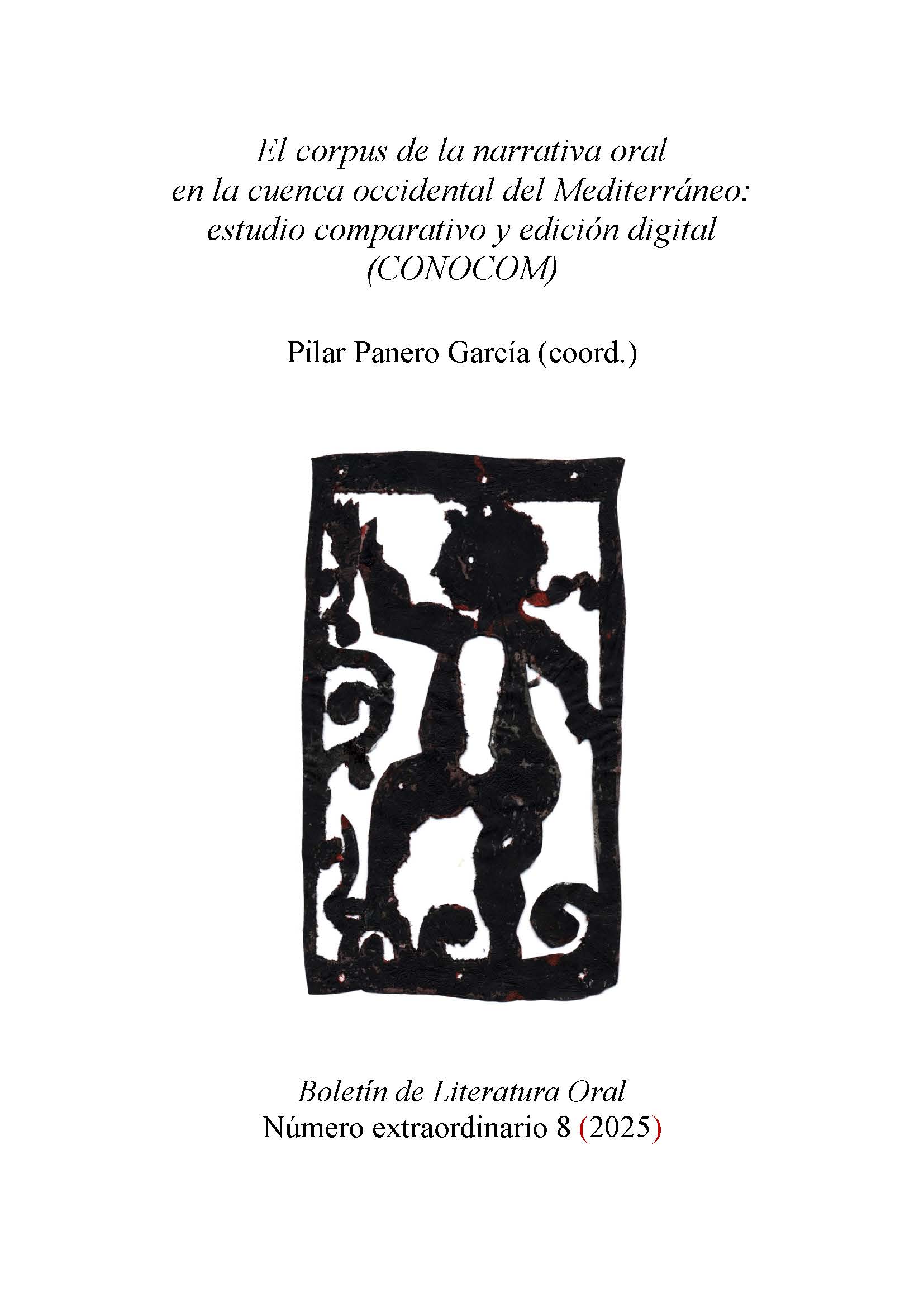
Studies on popular literature have shown that pliegos—those folded and printed sheets of paper containing various content, sold hanging on cords with sticks or clothespins—have been distributed by the millions since the advent of the printing press in European culture. However, it is also known that the practice of exchanging prayers for alms emerged much earlier, and that it was the blind who adopted it as a strategy to avoid being classified as beggars or vagrants, categories that forced them to remain within a six-league radius of their place of residence. The use of illustrated papers to explain the world has very ancient roots, supported both by custom and practical logic. The interpretation of images to facilitate the understanding of texts—or even the use of substitute resources such as puppets, which enhanced and beautified what was learned orally—fueled a true industry of pliegos. Through them, knowledge and culture reached even the humblest strata of society.
Downloads
References
ÁLVAREZ-BARRIENTOS, Joaquín (1987): «Literatura y economía en España. El ciego», Bulletin Hispanique, 1/4, 313-326. https://doi.org/10.3406/hispa.1987.4624
ANÓNIMO (2006): Lazarillo de Tormes, Madrid, Espasa Calpe.
COHEN, Gustave (1977): La vida literaria en la Edad Media, Madrid, Fondo de Cultura económica.
DÍAZ, Joaquín (1996): El ciego y sus coplas. Selección de pliegos en el siglo XIX, Madrid, Escuela Libre Editorial/Fundación ONCE.
DÍAZ, Joaquín (2022): «Prólogo», en La literatura de cordel en la sociedad hispánica (siglos XVI-XX), Inmaculada Casas-Delgado y Carlos M. Collantes Sánchez (coords.), Sevilla, Universidad de Sevilla, pp. 19-36.
FERRER DEL RÍO, Antonio y PÉREZ CALVO, Juan (1843-1844): «El ciego», en Los españoles pintados por sí mismos, vol. II, Madrid, Imprenta Boix, pp. 471-482.
GARCÍA DE ENTERRÍA, María Cruz (1971): «Un Memorial, casi desconocido, de Lope de Vega», Boletín de la Real Academia Española, 51/192, pp. 139-160.
MENÉNDEZ Y PELAYO, Marcelino (1961): Orígenes de la novela. III. Cuentos y novelas cortas. La Celestina, Santander, Aldus, D.L.
PÉREZ GALDÓS, Benito (1906): Episodios Nacionales. Cuarta Serie. Prim, Madrid, Perlado, Páez y Compañía.
VALLE-INCLÁN, Ramón (1930): Farsa infantil de la cabeza del dragón, en Tablado de marionetas para educación de príncipes, Madrid, Cía. Iberoamericana de Publicaciones, S. A., Imp. Rivadeneyra, Opera Omnia, pp. 109-223.
Published
Issue
Section
License
Copyright (c) 2025 Joaquín Díaz González

This work is licensed under a Creative Commons Attribution 4.0 International License.
Authors who publish with this journal agree to the following terms:
- Authors retain copyright and grant the journal right of first publication with the work simultaneously licensed under a Creative Commons Attribution License that allows others to share the work with an acknowledgement of the work's authorship and initial publication in this journal.
- Authors are able to enter into separate, additional contractual arrangements for the non-exclusive distribution of the journal's published version of the work (e.g., post it to an institutional repository or publish it in a book), with an acknowledgement of its initial publication in this journal.
- Authors are permitted and encouraged to post their work online (e.g., in institutional repositories or on their website) prior to and during the submission process, as it can lead to productive exchanges, as well as earlier and greater citation of published work (See The Effect of Open Access).