The classroom as a laboratory for visual experimentation
introducing new visualities into initial teacher training through Projection – Based Augmented Reality
DOI:
https://doi.org/10.17561/rtc.extra2.5755Keywords:
projection based augmented realityd, new visualities, laboratory, initial teacher training, Val del OmarAbstract
This visual essay tries to share some solutions for two problems related to the triad ‘Art - Education - Technology’. The first one is the existing disconnection between the contents taught in Art Education subjects in relation to the new visualities or forms of artistic creation linked to the new technologies. The second is the lack of use of technological resources available in classrooms in relation to the teaching of visual arts.
The starting point to solve these deficiencies is located in the projectors as eminently visual technological resources that can be found in most educational centers and that in addition are the base of the contemporary creations which use the Projection-Based Augmented Reality (PBAR).
Taking as a reference some didactic ideas of the Granada filmmaker José Val del Omar (1904-1982), we detail six examples that propose the adoption of educational strategies based on the experimentation with these technologies in the initial training of teachers, transforming the classroom into a laboratory where learning is close to the creative processes of professional artists.
Finally, it is important to highlight that images which have a frame with a grey dotted line contain a hyperlink that allows access to eleven video essays that expand the visual information in each section.
Downloads
References
Bimber, Oliver. (2002). Interactive rendering for projection-based augmented reality displays [Universidad Técnica de Darmstadt]. http://diglib.eg.org/bitstream/handle/10.2312/8153/bimber.pdf?sequence=1&isAllowed=y
Brossa, Joan. (1970). Sin título. Serigrafía. 700x500 mm. Museo Caja Granada, Granada.
Cabrera, Laia y Duverger, Isabelle. (2013). Untitled Mind. The Wonder Bread Factory, Washington DC. https://www.laiacabreraco.com/untitledmind
Clang, John. (2014). Blind Spot- Who Am I . http://johnclang.com/blind-spot-who-am-i
De Koning, Edwin, Van der Ploeg, Bart, Walther, Tim, De Jong, Joris, Vink, Menno, Van Swieten, Danny, Cox, Sander, Lo-A-Njoe, Andreas, y Pálffy, Zoltán. (2020). Resolume Arena (7.1.2.). Resolume B.V. https://resolume.com/
Dewey, John. (2008). El arte como experiencia. Paidós.
Dewey, John. (2010). Experiencia y Educación. En Javier Sáenz Obregón (Ed.), Experiencia y Educación (Segunda ed). Biblioteca Nueva.
Eisner, Elliot Wayne. (2004). What Can Education Learn from the Arts about the Practice of Education? International Journal of Education & the Arts, 5(4). http://www.ijea.org/v5n4/v5n4.pdf
Gaillot, Bernard André. (2005). La Formation Des Enseignants En Art Entre Theorie Didactique Et Pratique Didactique : L ’ Experience Francaise. Repenser la formation à l’enseignement des arts : exploration de nouveaux itinéraires théoriques et pratiques, 1-10. http://gaillot.ba-artsplast.monsite-orange.fr/ensembledesreferences/chi.pdf
Kafati, Samir. (1962) Mi amigo Ángel. Tegucigalpa: Sami Kafati.
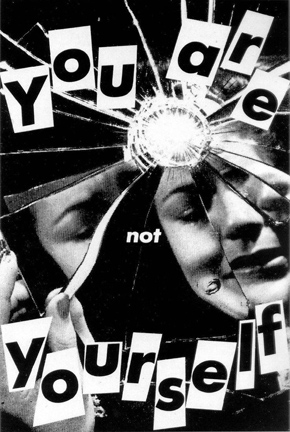
Kruger, Barbara. (1981). You Are Not Yourself. Hirshorn Museum, Washington DC. https://upload.wikimedia.org/wikipedia/en/d/d2/You_Are_Not_Yourself.jpg
Haesaert, Paul. (1949). Visit to Picasso. [Cortometraje]. Bélgica: Art et cinema.
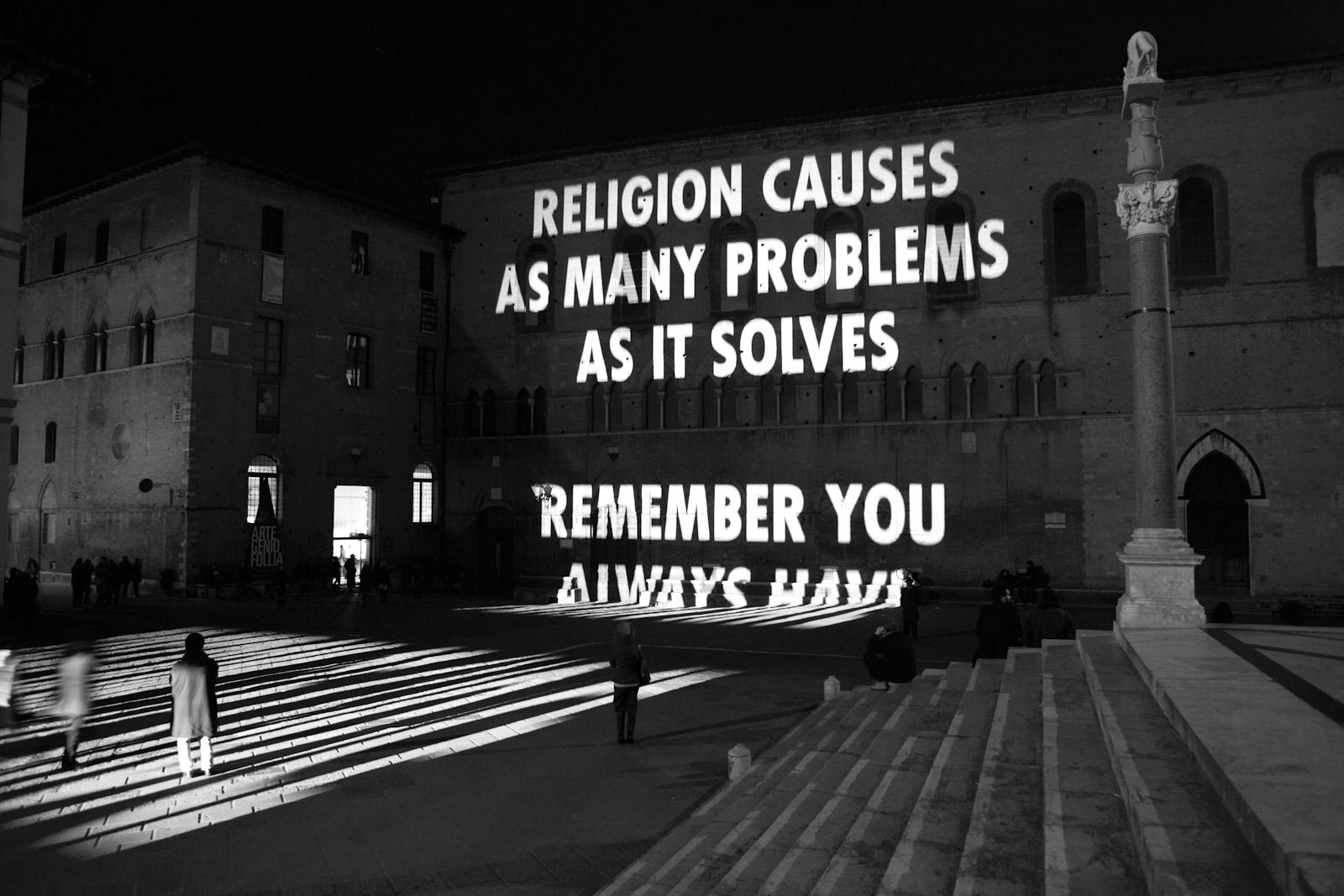
Holzer, Jenny. (2009). Religion Causes as many problems as it solves. Santa Maria della Scala, Siena. https://projects.jennyholzer.com/uploads/project/image/attachment/402/large_2D11_113_19.jpg
Irwin, Rita L., y Springgay, Stephanie. (2008). A/r/tography as practice-based research. En M. Cahnmann-Taylor y R. Siegesmund (Eds.), Arts-Based Research in Education (pp. 103-124). Routledge.
June Paik, Nam. (1993). Untitled. MoMA, Nueva York. https://www.moma.org/collection/works/81152
Kolb, David A. (1984). Experiential Learning: Experience as The Source of Learning and Development. Prentice Hall, Inc.
Lemieux, Michel y Pilon, Victor. (2017). Cité Mémoire. Vieux Port, Montreal. http://www.montrealenhistoires.com/en/cite-memoire/
Macgregor Wise, John, y Koskela, Hille. (2016). New Visualities, New Technologies: The New Ecstasy of Communication. Routledge.
https://doi.org/10.4324/9781315598178
Marín Viadel, Ricardo. (2019). Microteorías Inestables sobre Artes Visuales y Educación. En D. Ramos Delgado (Ed.), Miradas caleidoscópicas: educación artística visual en las culturas contemporáneas (pp. 13-20). Universidad Pedagógica Nacional. https://doi.org/10.17227/ae.2019.3243
Molinet Medina, Xabier. (2015). El retrato fotográfico como estrategia para la construcción de identidades visuales: Una investigación educativa basada en las artes visuales [Universidad de Granada.]. http://hdl.handle.net/10481/44251
Moment Factory. (2017). AURA. Basílica de Notre Dame, Montreal. https://momentfactory.com/work/all/all/aura
Nomad Art. (2019). El Oro de Klimt. Pabellón de la Navegación, Sevilla. https://www.elorodeklimt.es/
Rincón Rosales, Milagros. (2009). Mutaciones de discursos. Nuevas visualidades en el Arte Contemporáneo. Revista de Artes y Humanidades UNICA, 10(1), 38-60. https://www.redalyc.org/pdf/1701/170118870003.pdf
Roldan, Joaquin, Lara-Osuna, Rocio, y Gonzalez-Torre, Antonio. (2019). The Project ‘Art for Learning Art’ in Contemporary Art Museums. International Journal of Art and Design Education, 38(3), 572-582. https://doi.org/10.1111/jade.12245
Triggs, Valerie, e Irwin, Rita L. (2019). Pedagogy and the A/r/tographic Invitation. En Richard Hickman, John Baldacchino, Kerry Freedman, Emegen Hall, y Nigel Meager (Eds.), The International Encyclopedia of Art and Design Education (pp. 1-16). John Wiley y Sons, Inc. https://doi.org/10.1002/9781118978061.ead028
Val del Omar, José. (1935). Vibración de Granada. En María J. Val del Omar (productora). (2010). Val del Omar, elemental de España. [Colección de DVDs]. Barcelona: Cameo Media.
Val del Omar, José. (1960). Fuego en Castilla. En María J. Val del Omar (productora).(2010). Val del Omar, elemental de España. [Colección de DVDs]. Barcelona: Cameo Media.
Val del Omar, José. (1971). Una mística propia. Multidoc 3.0. Servicio de documentación multimedia. https://drive.google.com/open?id=1h9Vr_6d-tZiF3cNVeN8fQ0IYtkQoNRsB
Val del Omar, José. (1972). Enosa, el niño y los instrumentos educativos para experimentar en directo. Multidoc 3.0. Servicio de documentación multimedia. https://drive.google.com/file/d/14Ga5ffARuzzntyx5C4kSm7V8_G0JKRmI
Val del Omar, José. (1976a). Carta a Subdirector de promoción Cinematográfica. Petición de ayuda. Multidoc 3.0. Servicio de documentación multimedia. https://drive.google.com/open?id=1LNXme6WltbSsM9RFAV2Ebpq6blOVI2OB
Val del Omar, José. (1976b). Patrimonio artístico. Multidoc 3.0. Servicio de documentación multimedia. https://drive.google.com/open?id=1uPvLXpV0FfmXEWBBcV_P9QKV0t34nPQj
Downloads
Published
Issue
Section
License
Those authors who have publications with this magazine, accept the following terms:
The authors will retain their copyright and will guarantee to the journal the right of first publication of their work, which will be simultaneously subject to the Creative Commons Attribution License that allows third parties to share the work whenever their author is indicated and its first publication is this journal.
Authors may adopt other non-exclusive license agreements to distribute the version of the published work (eg to be deposited in an institutional telematic file or published in a monographic volume) provided the initial publication is indicated in this journal .
Authors are encouraged to disseminate their work via the Internet (eg in institutional telematic files or on their website) before and during the submission process, which can produce interesting exchanges and increase the number of citations of the published work..
In case of being accepted works will be published under Creative Commons license.